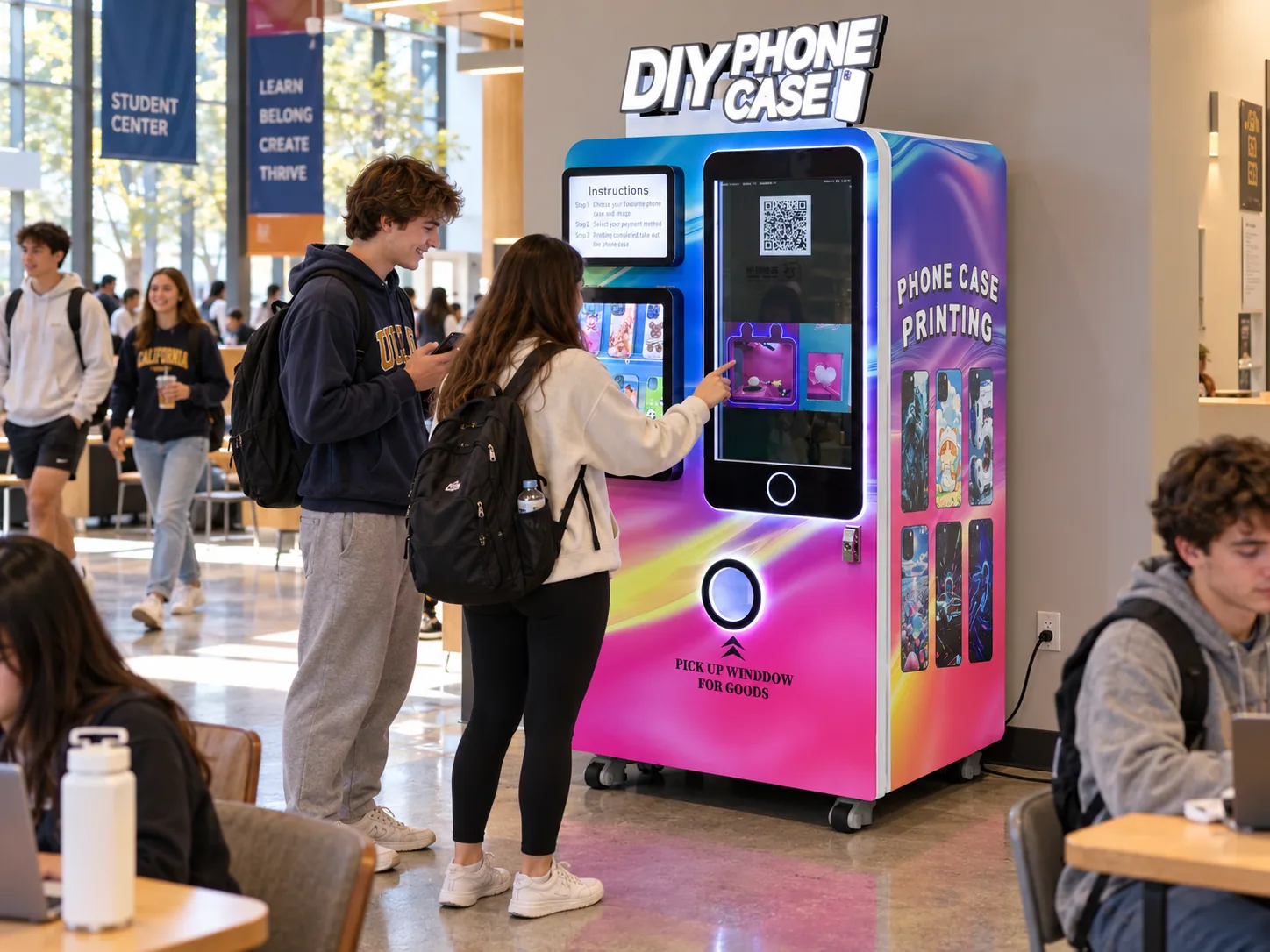
A phone case printing vending machine looks simple on the surface. A customer walks up, picks a design or uploads their own, and a minute later a custom case drops into the tray. The idea is so clean that it attracts two opposite kinds of buyers. Some think the machine is a set-and-forget money printer. Others think it is a gimmick that will be collecting dust within a month. Both groups are working from the same set of wrong assumptions, and those assumptions cost real operators money and time. Here are six of them, taken apart one by one.
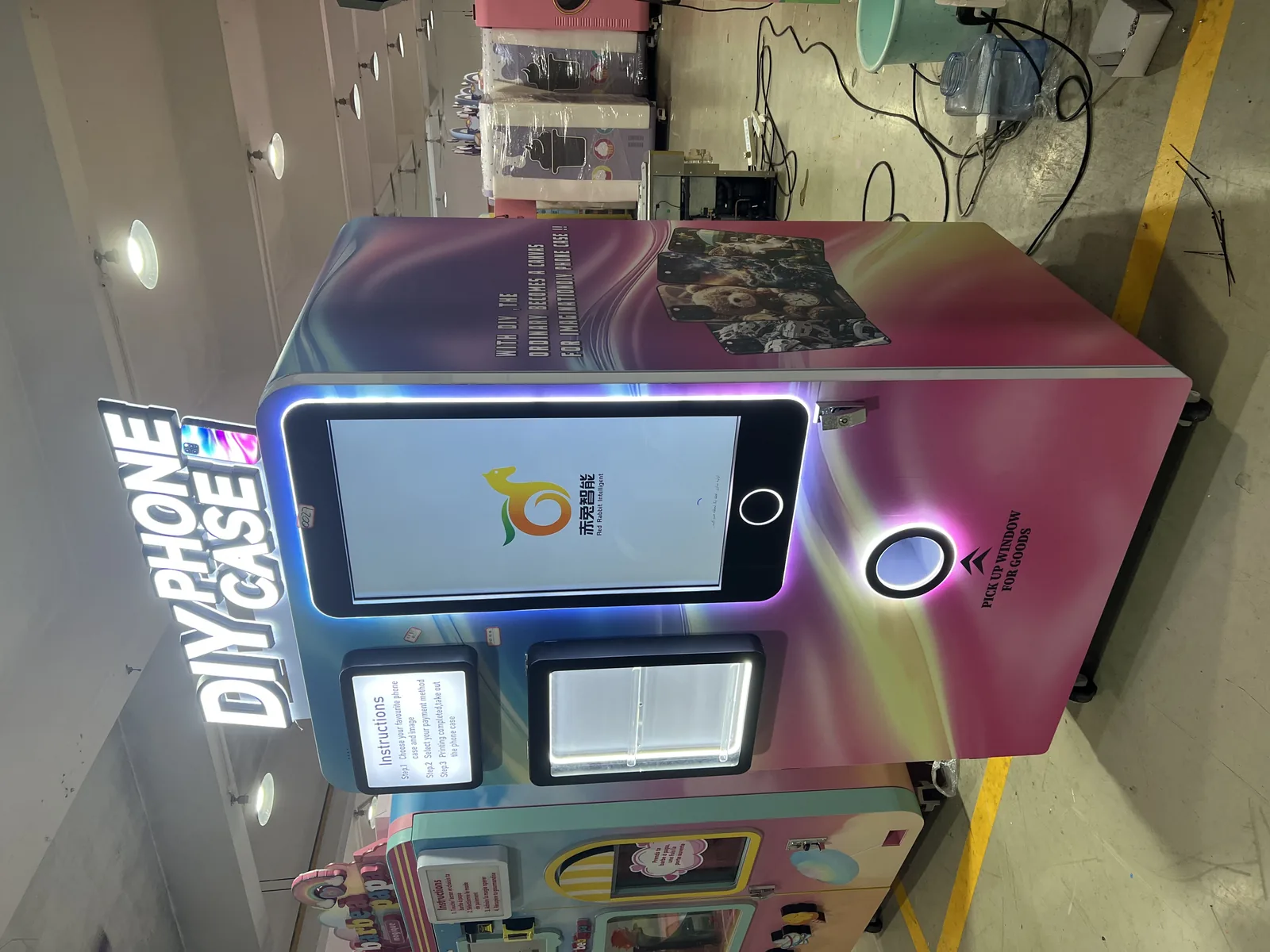
Myth 1: It is passive income, so you can set it and forget it
The phrase passive income does more harm than good here. A phone case printer does not need a cashier standing beside it all day, and that is the honest part of the appeal. But it still needs a person. Blank cases run low, the ink cartridge empties, the paper roll for the preview needs replacing, and someone has to clean the print head. Ignore those things for a month and the machine quietly turns into an expensive decoration.
The operators who do well treat it as a small route, not a lottery ticket. They check the machine on a schedule, read the usage data it sends, and restock before they run out. The machine removes the hardest part, which is paying someone to stand there. It does not remove the operator.
Myth 2: It only works in big shopping malls
Malls are one good place for these machines, but they are not the only place, and they are often not the cheapest place once you factor in rent and foot traffic that is actually shopping rather than lingering. Phone case printers earn their keep anywhere people are killing time and want something personal. Tourist attractions, trampoline parks, arcades, bowling alleys, university common areas, and event venues all work.
What the location needs is not size, it is dwell time and a younger crowd. A student union with a steady flow of people waiting between classes can outperform a mall kiosk, because those people have phones, they have ten minutes, and they like showing off something made just for them. Judge a spot by how long people stay and how much they fiddle with their phones, not by how grand the building is.
Myth 3: Printing is too slow, and customers will not wait
Speed used to be a real problem, and early machines were slow enough that people walked away. Modern UV printing is fast, and the machine prints and finishes a case in about a minute or two. That is well within what a person is willing to wait when the result is a custom product they designed themselves.
The waiting itself can even work in your favor. Watching the print happen is part of the show. A small crowd forms, someone points, and the next customer steps up because they just watched someone else walk away happy. If the machine sat in a corner and finished instantly with no visible process, it would be easier to ignore. The visible few seconds of printing are marketing.
Myth 4: Blank cases are expensive and you need a huge inventory
Blank cases are one of the cheapest parts of the whole setup, and you do not need a warehouse full of them. You stock a modest range of the most common phone models, and the machine prints whatever design the customer picks on top. Because the case itself is a blank, you are not stuck with unsold designs. A case with a dated meme on it that does not sell is a loss. A blank case can become anything the next customer wants, so it never expires the way a printed product would.
This is the whole logic of print on demand, and it is why the model works as a small operation. You carry a little stock, you sell variety without holding variety, and you top up when the data tells you a model is running low.
Myth 5: Everyone already has a phone case, so there is no demand
People do not buy a new phone case because their old one wore out. They buy a new one because it is new, because it matches their mood, because their kid drew something they want to carry around, because they want a photo of their dog on the back of their phone. A phone case is closer to fashion than to a utility purchase, and fashion refreshes constantly.
Customization is the part a plain retail shelf cannot offer. A store sells the same few cases to everyone. This machine sells a case that no one else has, made in front of them, with their own photo on it. That is a different product, and it pulls in a different buyer. The person who owns three cases already is often the best customer, not the worst.
Myth 6: It is a novelty, and demand fades after the first month
Any machine will fade if you plant it somewhere and never tend to it. A faded machine is a symptom of a neglected machine, not proof that the category is a gimmick. Operators who refresh their design library, update the sample case in the window, and move the machine when a location stops producing do not see a novelty cliff. They see a steady baseline with spikes around gift seasons and school holidays.
The technology keeps the category fresh on its own. New phone models, new case styles, and new design trends give people a reason to come back. The machine that prints whatever is current does not go out of date the way a shelf of fixed stock does.
What to actually worry about instead
Forget the six myths above. The real questions that matter are simpler. Does your location have dwell time and a phone-heavy crowd? Do you have a reliable way to restock blanks and ink? Are you willing to visit on a schedule and read the data the machine sends? If the answers are yes, the machine will do its part. The phone case printing vending machine page goes into the specifics of what the unit does, and the laser engraving vending machine page is worth a look if you want to compare it against another keepsake machine. The team at Red Rabbit’s contact page can help if you are still unsure which one fits your spot. For broader guidance on running the business side properly, the SBA business guide and the National Automatic Merchandising Association are solid non-competing resources.
Related machines from Red Rabbit