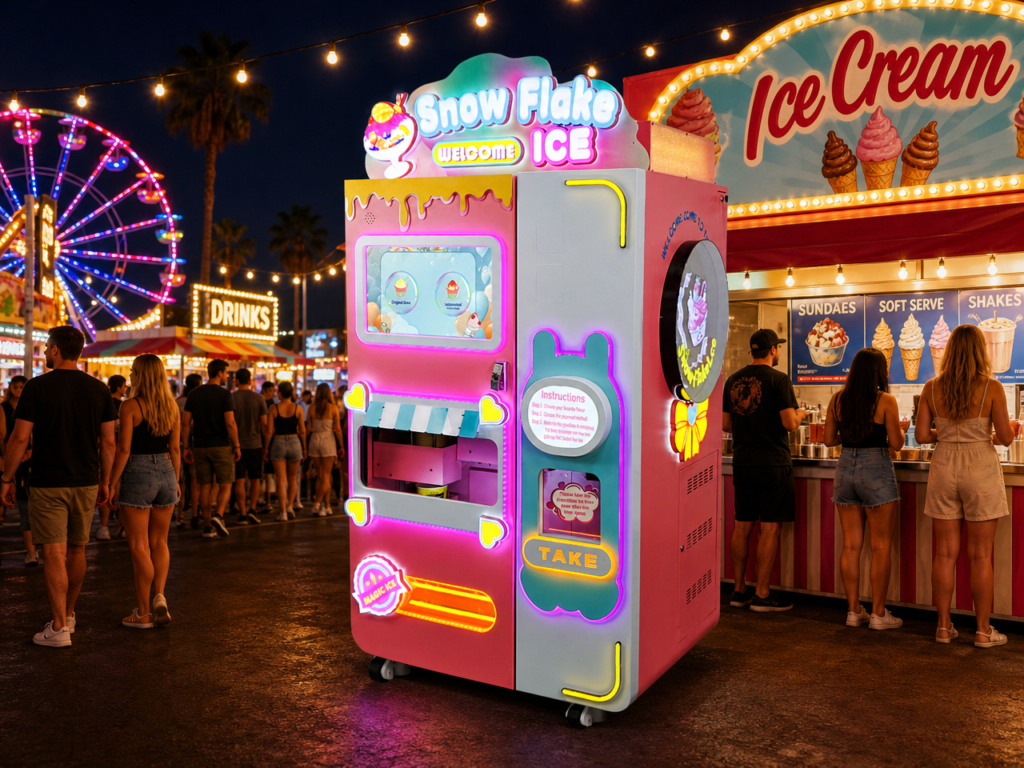
The first time I watched a snowflake ice vending machine work, I didn’t understand what I was looking at. A block of frozen cream spun against a blade, producing ribbons of ice so fine they looked like shredded coconut. The machine layered them into a cup, drizzled condensed milk from a dispenser, and dropped mango pieces on top. Total elapsed time: about 75 seconds. A ten-year-old girl took the cup, tasted it, and her eyes went wide. I’ve seen that expression before—it’s the look of someone who just realized that vending machines have gotten a lot better since they were ten.
Red Rabbit’s snowflake ice machine is called the CT-BS310. It’s a strange product to pitch because most people outside East and Southeast Asia have never heard of snowflake ice. But that’s exactly why it’s interesting from a business perspective. The category is underbuilt. The machines that exist are mostly manual, staff-operated units in dessert shops. An automated version that runs 24/7 without labor is rare enough that operators who find the right location are printing money.
Here’s the product, the numbers, and where it works.
What Snowflake Ice Actually Is
If you’ve eaten Korean bingsu or Taiwanese xuehua bing, you know this dessert. Fine ribbons of frozen milk or cream, shaved so thin they dissolve on the tongue. Topped with fruit, condensed milk, red bean, mochi, cereal—whatever the shop offers. The texture is somewhere between ice cream and shaved ice, but lighter than either.
The CT-BS310 automates the whole process. It stores 70 cups, holds enough mix for 12 liters of frozen base (roughly 70 to 90 servings per fill), and dispenses one flavor of snow ice plus two jams and two toppings. The machine produces a finished cup in 40 to 90 seconds.
Here’s the thing that matters for operators: the per-serving cost is low. The base is essentially sweetened milk that’s frozen and shaved. Material costs run about $0.40 to $0.65 per cup, including the cup, lid, spoon, jam, and topping. Retail pricing runs $5 to $8, sometimes $10 in premium locations like airports or upscale malls. Gross margins sit comfortably above 85%.
Snowflake Ice vs. Slush vs. Ice Cream: Where It Fits
I keep getting asked how the three frozen Red Rabbit machines compare. Here’s the honest version.
Slush is the volume play. Lowest price point ($4–$7), fastest serve time (40 seconds), most universal appeal. Best in high-traffic, high-temperature locations. The trade-off: lowest per-unit profit.
Ice cream is the premium play. Highest price point ($5–$8), richest product, strongest brand recognition. Best in food courts and tourist zones. The trade-off: higher machine cost ($6,200–$8,000), more complex stocking (two milk flavors, three jams, three toppings).
Snowflake ice is the differentiation play. It’s unfamiliar enough to be novel, familiar enough (in Asian markets) to have built-in demand. The texture is unique—no other automated machine produces this product. Customers who try it tend to come back specifically for it, which creates a loyalty dynamic that slush and ice cream don’t match.
| Slush | Ice Cream | Snowflake Ice | |
|---|---|---|---|
| Machine cost | $4,380–$5,500 | $6,200–$8,000 | $4,580–$5,700 |
| Serve time | 40–90 sec | 15 sec | 40–90 sec |
| Price point | $4–$7 | $5–$8 | $5–$8 |
| Material cost/cup | $0.35–$0.49 | $0.70–$0.85 | $0.40–$0.65 |
| Gross margin | 88–93% | 85–89% | 87–92% |
| Best season | Summer | Summer peak | Summer peak |
| Competitive moat | Low | Medium | High |
The “competitive moat” row is the one that matters for long-term returns. Slush machines are relatively common. Ice cream vending is growing. Snowflake ice vending is unusual. An automated snowflake ice machine in a good location doesn’t compete with a dozen other frozen drink options—it’s often the only one of its kind within miles.
The Numbers: Unit Economics
| Scenario | Conservative | Realistic | Strong |
|---|---|---|---|
| Cups per day | 12 | 18 | 28 |
| Price per cup | $5 | $6 | $8 |
| Material cost | $0.50 | $0.55 | $0.60 |
| Daily gross profit | $54 | $98.10 | $207.20 |
| Monthly gross (30 days) | $1,620 | $2,943 | $6,216 |
| Location rent | –$400 | –$500 | –$700 |
| Electricity | –$40 | –$50 | –$60 |
| Maintenance | –$50 | –$60 | –$70 |
| Monthly net | $1,130 | $2,333 | $5,386 |
At the realistic level—18 cups a day, $6 each—the machine pays for itself in about 10 to 14 weeks. That’s slower than a cotton candy machine in a comparable location, but the snowflake ice customer is stickier. They come back. A kid who gets cotton candy once a month will get snowflake ice once a week if they like the texture.
One Red Rabbit operator in a Southeast Asian shopping mall reports 22 to 28 cups per weekday, 35 to 45 on weekends. His average price is ฿180 (about $5.20). After ingredients and the mall’s 12% revenue share, his monthly net runs roughly ฿85,000 ($2,450). The machine paid for itself in about nine weeks.
Where Snowflake Ice Machines Win
Asian Night Markets and Food Streets
This is the natural habitat. Snowflake ice is a known quantity in East and Southeast Asian food culture. Night markets in Bangkok, Taipei, Kuala Lumpur—these places have foot traffic that already understands the product. You’re not educating customers. You’re offering a faster, cleaner, automated version of something they already buy from manual stalls.
The operator I mentioned in the Southeast Asian mall started at a night market. His machine sat between a grilled squid stall and a mango sticky rice vendor. “No explanation needed,” he told me. “People see snowflake ice, they know snowflake ice. The machine just does it faster and doesn’t close for dinner break.”
University Campuses With Asian Student Populations
University campuses in North America, Australia, and the UK with large Asian international student populations are underpenetrated for snowflake ice. These students know the product from home. They’ll pay $6 to $8 for it because the only alternatives are driving 30 minutes to the nearest Asian dessert cafe.
A campus machine near a student union or library generates 15 to 22 cups a day during the semester, drops to 8 to 12 during breaks and summer. Annualized, that’s roughly $18,000 to $28,000 in net profit from a single $4,580–$5,700 machine. The university typically charges $200 to $400 a month for the space—far less than a commercial mall.
Upscale Malls and Food Halls
This is where snowflake ice’s premium positioning pays off. In a food hall surrounded by $15 grain bowls and $7 coffees, a $7 snowflake ice dessert feels appropriately priced. The visual appeal of the machine—watching ribbons of ice spin into a cup—fits the premium food hall aesthetic.
A Red Rabbit operator in a high-end Singapore food hall reports 15 to 20 cups per weekday at S$8 (US$6). Monthly net after the food hall’s 15% revenue share: about S$3,200 (US$2,400). The food hall management actively promotes the machine on their social media because it photographs well.
Where It Struggles
Standard food courts where the price anchor is $3 to $5. Outdoor locations without shelter—the frozen base degrades in direct sun. Locations where the customer base has zero familiarity with the product without aggressive sampling. Snowflake ice isn’t self-explanatory the way ice cream is. In a location where nobody has heard of it, you need to invest in signage, samples, or staffed tasting events for the first month or two. Some operators do this. Most don’t want to.
The Product Experience Sells Itself
Like the cotton candy machine and the laser engraver, the snowflake ice machine has a built-in marketing advantage: it’s visually interesting to watch. The shaving blade spins at high speed. Ribbons of ice curl into the cup. Toppings cascade from automated dispensers. Customers film it. They post it.
A machine in a Bangkok mall generates maybe 8 to 12 unpaid social media posts a month from customers filming their dessert being made. At zero marketing cost, the machine gets in front of thousands of potential customers who then seek it out specifically because they saw the video.
This is not a small advantage. In vending, the biggest challenge is making people notice the machine. A snowflake ice machine makes people stop and stare without any effort from the operator. The entertainment value of watching it work is part of what you’re selling.
Maintenance and Stocking
The CT-BS310 requires about the same maintenance attention as the ice cream machine. Weekly: 30 to 40 minutes to drain residual mix, run the cleaning cycle, wipe surfaces, refill. The frozen base cylinder needs periodic defrosting—roughly every 6 to 8 weeks, depending on ambient temperature and usage volume. The IoT dashboard tracks this and alerts you.
The consumables are straightforward: pre-mixed snowflake ice base (essentially sweetened cream concentrate), two jam flavors, two topping varieties, cups, lids, spoons. One fill of the 12-liter tank produces roughly 70 to 90 servings depending on cup size. At 18 cups a day, you’re refilling roughly twice a week.
The machine ships with multi-language support covering 85 languages. For operators in diverse markets, this matters more than it sounds. A customer who can read the menu in Thai, Chinese, English, or Arabic is a customer who’s more likely to complete a purchase.
Pairing Strategy
Snowflake ice pairs naturally with bubble tea shops that don’t have dessert options, with Korean BBQ restaurants where it serves as a post-meal palate cleanser, and with any food hall where the dessert category is underserved.
One operator places his snowflake ice machine in a mall food court next to a ramen shop. The ramen is salty. The snowflake ice is sweet. “Customers finish their ramen, turn around, see the machine, and walk over,” he told me. “I didn’t plan it that way, but I’m not moving it.”
Curious about snowflake ice vending? Explore Red Rabbit’s snowflake ice vending machines with automated shaving, multi-topping dispensers, and 85-language support. Want to know if your location is a fit? Contact the team for a free assessment.