The corner by the air pump had been empty for three years. Marco runs a fuel station and a small convenience store on a commuter road just outside a mid-sized city. People stop there for coffee, a bag of chips, and gas, then leave. That corner once held a broken payphone, and after that, nothing. Marco called it his dead space. When I first met him, he told me he did not want another machine in the store. He wanted the space to stop costing him money.
What changed his mind was not a sales pitch. It was watching a competitor across town. That station had put a frozen drink machine near the door, and on hot afternoons there was always a short line. Marco did not rush in. He spent a month deciding, and he asked the kind of questions most first-time operators skip. This is the full story of what he did, what the numbers showed, and what he would do differently.
The problem Marco wanted to solve
The station already sold cold bottles, energy drinks, and canned soda from a cooler near the register. Marco assumed a slush machine would just cannibalize those sales. That was his main worry. He was also afraid of the machine breaking down, of sticky floors, and of a product that only sells when the sun is out. These were not lazy fears. They were the reasons he had said no three times before.
We sat down and looked at his actual foot traffic instead of guessing. His pump island saw around 220 transactions on a weekday. The register saw fewer, because a lot of people pay at the pump and never walk in. The goal was simple. Get more of those 220 people through the door.
Why he chose a slush machine over soft serve
Marco considered two options. A soft serve ice cream machine and a slush machine. Both are impulse items, both fit a fuel station. The difference came down to labor and mess. Soft serve needs cones, cups, and a staff member who is good at the swirl. It also needs a dairy supply that has to stay cold and dated. Slush is simpler. You pour syrup and water, the machine freezes it, and a customer can pull their own cup from a dispenser.
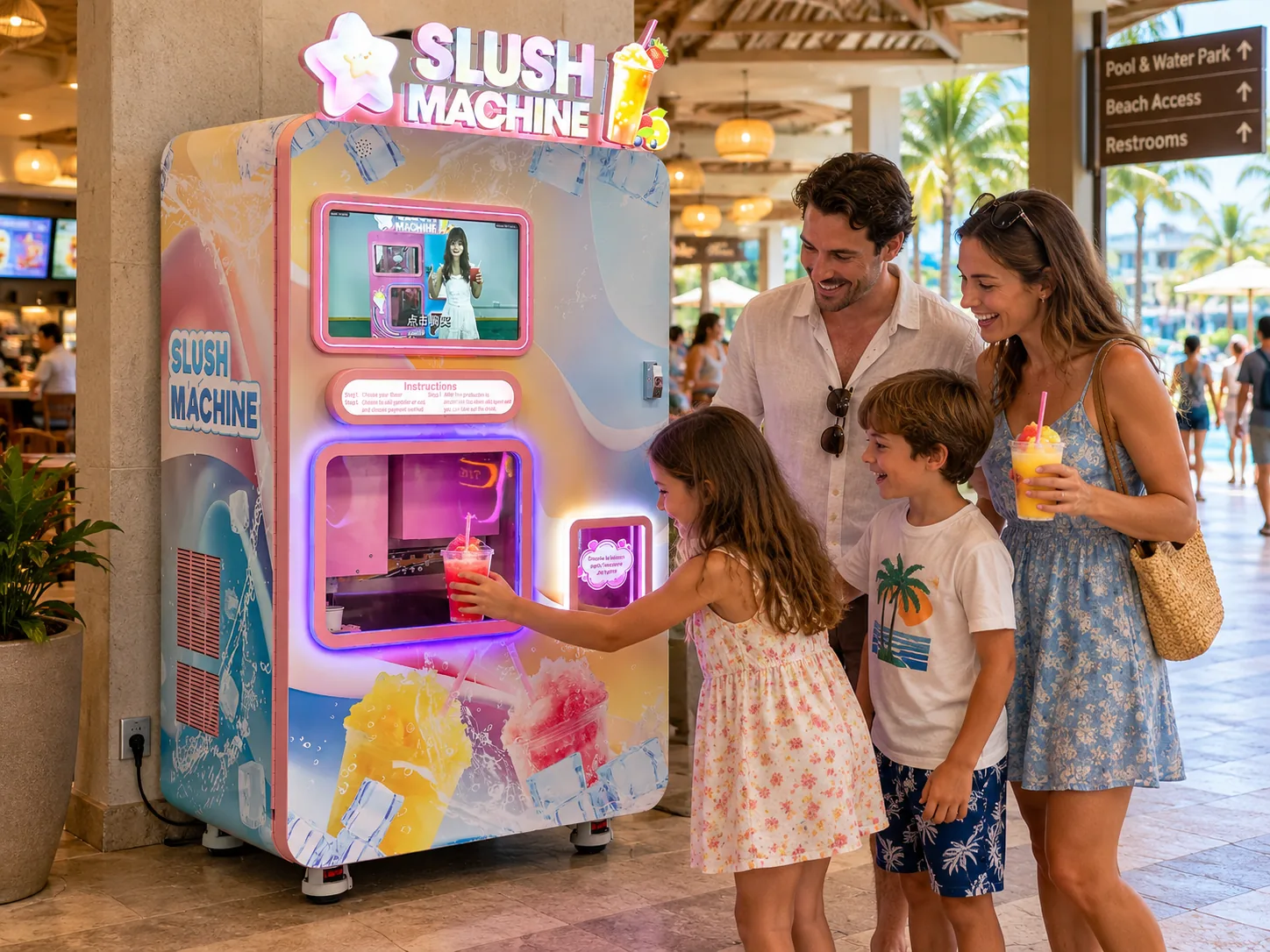
He picked a self-serve slush machine, the kind where the machine holds the syrup, mixes it, freezes it, and lets a customer fill a cup. The model we discussed was the CT-XN410, a countertop unit built for exactly this kind of self-serve setup. It runs two flavors from one machine, which meant he could offer one steady seller and one rotating flavor without adding a second unit.
Where the machine actually went
The obvious spot was by the register, next to the cooler. Marco pushed back on that. He wanted it visible from the pumps, so drivers would see the bright frozen drinks before they even walked in. He placed the machine on a short stand near the entrance, on the path from the door to the register, not tucked against a back wall.
That single decision mattered more than anything else. Drivers paying at the pump could see the machine through the glass. People walking in had to pass it. The machine was no longer competing with the cooler. It was the first thing in their line of sight.
The first two weeks, in numbers
The first week was quiet. The machine sold about 14 cups a day. Marco was not surprised, but he was nervous. His instinct was to move the machine or cut flavors. Instead he watched. The second week stayed flat at around 16 cups a day, with a clear spike on Saturday afternoon.
Two things stood out. Almost every sale happened between 2 pm and 6 pm. And parents were the buyers, buying for kids in the back seat. That told Marco the product was not a coffee replacement. It was a family treat for the afternoon school run and the weekend.
What actually moved the numbers
Marco made four small changes over the next month, and each one is worth copying.
He started with signage. A small bright sign on the pump island that said frozen drinks inside. It cost almost nothing and reminded pay-at-the-pump customers that something cold was waiting inside. The next change was cup size. He had started with one large cup, then switched to a small and a large. Most parents wanted the small for a child and the large for sharing. Sales of the small cup lifted the daily count without hurting the large.
Then came flavor rotation. He kept blue raspberry as the steady seller and rotated the second flavor every two weeks. When he cycled in a sour apple and later a cherry lime, he saw a small bump each time a new flavor landed. The last change was bundling. He put a small slush next to the hot dog and snack combo at the register, so the drink became an add-on instead of a separate decision.
By the end of month two, the machine was doing around 40 cups on a weekday and over 70 on a hot Saturday. The best single day came in at 92 cups during a heat wave. Marco tracked the weather closely and learned his demand moved almost one for one with the afternoon temperature.
The result at 90 days
The dead corner was gone. The machine had become the store’s most visible impulse item, and it pulled people through the door who would have paid at the pump and left. Marco’s cooler sales did not drop. In fact they held steady, because the slush brought in people who then also grabbed chips or a drink for the road.
The running cost stayed low. The machine needs water, syrup, cups, and a quick clean each night. Food safety is a real responsibility for any frozen drink, and Marco followed the same food code guidance he already used for the coffee station. A frozen drink machine that dispenses into a customer’s cup is no different from any other self-serve food station. Keep it clean, keep the mix fresh, and keep the temperature right. The National Automatic Merchandising Association publishes operator guidance that helped Marco build his nightly routine.
What Marco would do differently
He told me three things. He would have put up the pump island sign on day one, not week four. He would have ordered a second flavor tray so he could rotate without pausing the machine. And he would have tracked cups per day from the first hour, because the weather pattern only became obvious once he had the data in front of him.
He would not have changed the machine itself. He said the self-serve format was the whole trick. No employee has to stop what they are doing to make a drink, and that is what made it work in a station with two people on shift.
What this case tells other operators
A slush machine is not a magic box that prints money in any location. It is an impulse product, and it works best where people are already stopping for something else. Fuel stations, car washes, laundromats, and convenience stores fit that pattern. The machine needs to be seen from outside and passed on the way to the register. The product needs a steady flavor and a rotating one. And the operator needs to watch the weather and the clock, because demand follows the afternoon.
If you are weighing a slush machine against another frozen option, the choice usually comes down to labor and mess. Soft serve needs more attention. Slush is built for self-serve. You can see how a slush machine compares to a snowflake ice machine if you are deciding between frozen formats, and our full slush machine range shows the two-flavor self-serve units we build at our Guangzhou factory.
The corner by the air pump now makes Marco money every afternoon. It took one machine, four small changes, and the patience to watch the first quiet weeks instead of giving up on them.
Related machines from Red Rabbit
Red Rabbit vending machine | Red Rabbit vending machine | contact Red Rabbit