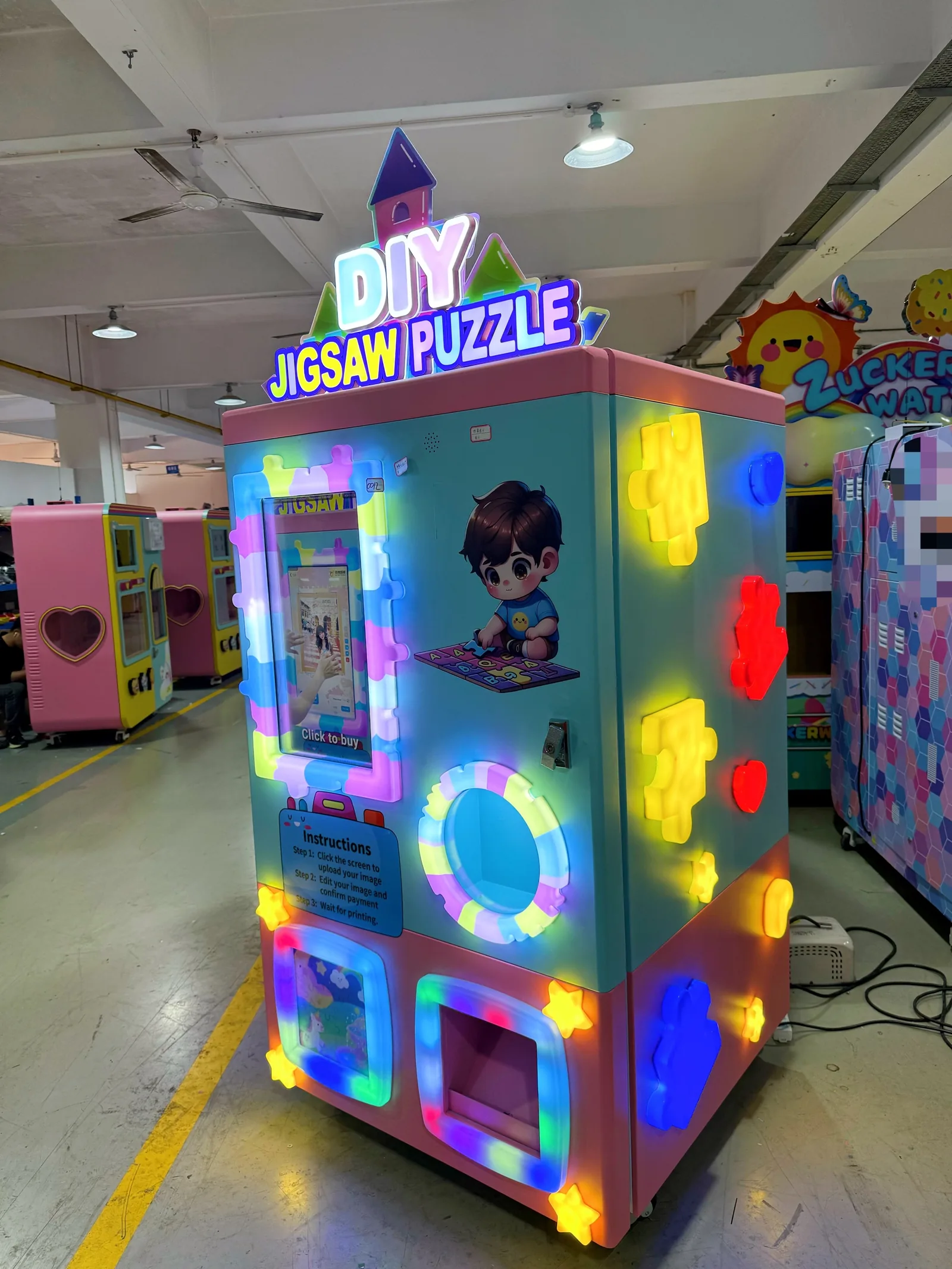
I hear the same sentence from operators who walk past a photo puzzle machine at a trade show. It looks neat, they say, but they do not think it would make money where they live. Most of the time that doubt comes from a story somebody told them, not from anything the machine actually did. Let me take apart six of those stories one by one.
Myth 1: Nobody will pay for a custom photo puzzle
The worry is that a puzzle is a cheap toy, and people will not hand over real money for one with a photo on it. The reality runs the other way. A puzzle with a family photo, a pet, or a wedding picture stops being a toy. It becomes a keepsake, and keepsakes are a different purchase entirely. A parent does not buy a puzzle of their kid’s first birthday because they need a puzzle. They buy it because they want to hold onto that afternoon.
What actually sells the product is not the puzzle itself. It is the photo the customer brings, the one already sitting on their phone. That photo already has emotional weight. The machine just turns it into something physical they can gift or frame. Operators who get this stop worrying about whether people like puzzles and start worrying about whether the machine is visible, lit, and easy to use.
Myth 2: The machine is too slow, so people walk away
There is a real number behind this fear, and it deserves a straight answer. A photo puzzle takes a few minutes to print, not a few seconds. People who have only ever seen a sticker photo booth assume that is a dealbreaker. In practice, the wait does not kill the sale, because the person is not standing there doing nothing. They pick the photo, they watch the preview, they choose a frame or a plain board, and they pay. The printing happens after the decision is already made.
Some operators lean into the wait instead of hiding from it. A sign that says “your puzzle is being made” turns a delay into a small piece of theater. Customers take a lap around the store and come back. The ones who walk away were never buyers to begin with. The ones who stay usually buy again next visit, because they remember the machine that made their keepsake.
Myth 3: The pieces get lost or the cutter jams
This one comes from confusing a puzzle vending machine with a generic photo printer. The two are not the same thing. A proper photo puzzle machine does not print a flat sheet and then chop it into pieces as an afterthought. It prints directly onto a pre-cut puzzle board, so the pieces are defined before the image ever touches them. There is no separate cutting step to jam, and there are no loose pieces rattling around inside the cabinet.
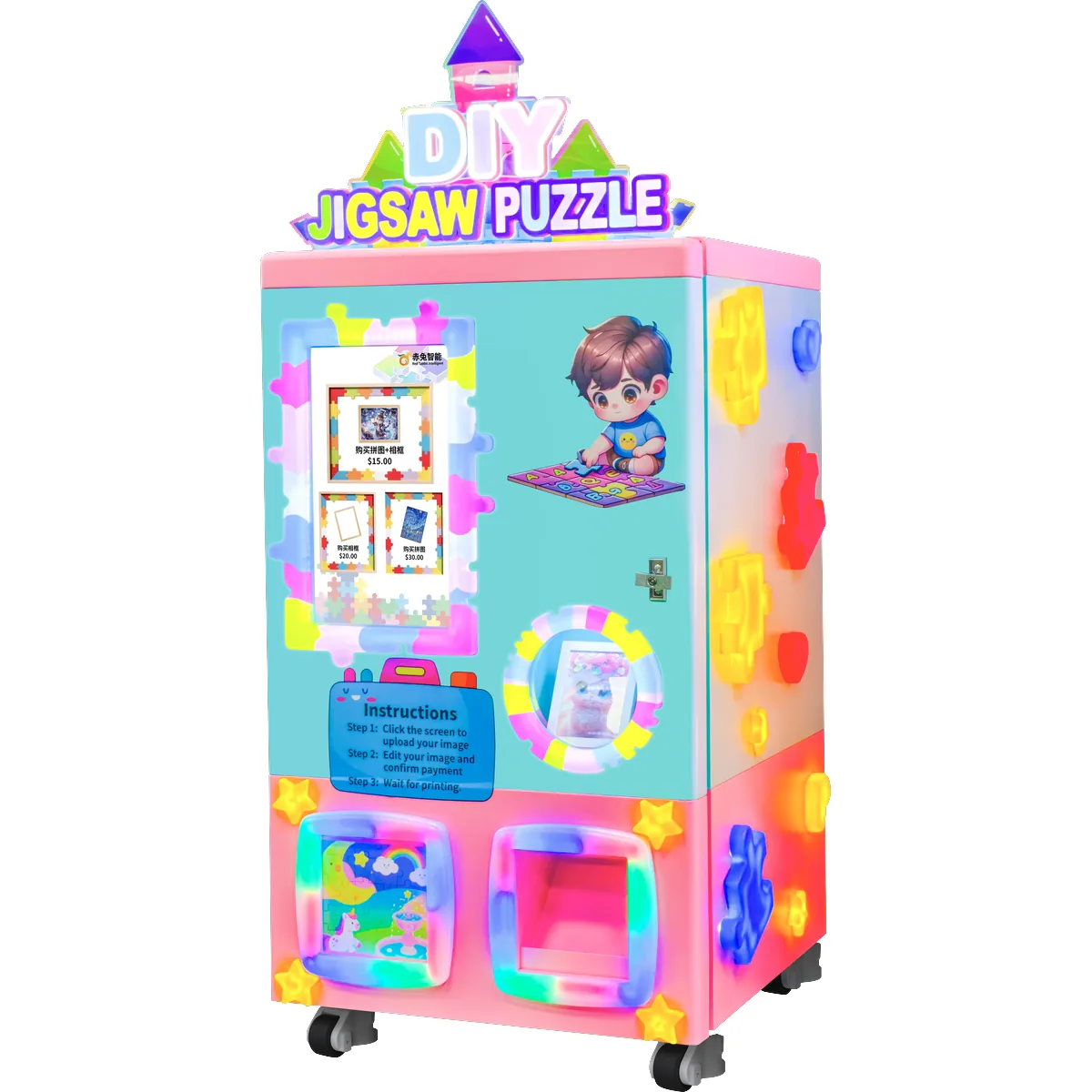
The machine this article is written around, the Red Rabbit CT-PTJ370, works exactly this way. It prints onto the puzzle board itself. It does not offer a flat or plain print option, which sounds like a limitation but is actually the whole point. By doing one thing well instead of several things poorly, it removes the mechanical failure points that made early machines unreliable. You still clean the print head and keep the board stock loaded, but the “cutter jams and pieces scatter” horror story belongs to a different machine.
Myth 4: You need a huge catalog of puzzle designs
New operators often assume they need to license hundreds of images or build a library of stock designs. That assumption comes from how poster kiosks and greeting card machines work, where the content is the product. A photo puzzle machine is the opposite. The customer supplies the content, which means you do not need a catalog at all. You stock blank puzzle boards and let the buyer bring the photo.
This is why the machine is sold as a single puzzle product with two formats rather than a long list of SKUs. One format is a standard board, the other is a framed board that costs a little more on materials and sells for more at the counter. That is the entire menu. Here is how the two formats break down:
| Format | What the customer gets | Why you offer it |
|---|---|---|
| Standard board | The photo puzzle on a plain backing | Lower entry price, keeps the impulse buyers in |
| Framed board | The same puzzle with a frame, ready to display | Higher perceived value for gifts and keepsakes |
The two-format structure matters more than it looks. It gives the customer a small upgrade decision, which raises the average sale without turning you into an inventory manager. You never stock pieces based on which photos people might bring, because the photos are theirs, not yours.
Myth 5: It only works in tourist towns
The keepsake logic makes people assume the machine belongs in a beach town or a resort, selling souvenirs to vacationers. Tourists do buy, no question, but they are not the only buyers. Any place where families gather and where people already feel sentimental works. Malls, indoor play centers, arcades, birthday party venues, family restaurants, school fundraisers, and event spaces all generate the same emotional raw material.
The difference is the trigger. A tourist buys because the location is special. A local buys because the moment is special, a new puppy, a graduation, a grandparent’s visit. Local repeat customers are often more valuable than tourists, because they come back. A family that makes a puzzle in January for a birthday might return in June for Father’s Day. The machine is not tied to geography. It is tied to the moments people want to keep, and those happen everywhere.
Myth 6: The machine is a maintenance headache
Compared to a food machine, a photo puzzle machine is a quiet roommate. There is no syrup to clean, no freezing cylinder to defrost, no waste to haul out at the end of the day. The consumables are the puzzle boards and the ink. The daily routine is wiping the screen, checking the board tray, and clearing any paper dust. The weekly routine is a print head clean and a quick test print. That is most of it.
The machines that earned this reputation were early, overcomplicated models. A purpose-built machine with a single function avoids the worst of it, because there is less to go wrong. Ask any operator who runs one next to a food machine and they will tell you which one eats their Sunday. It is usually not the puzzle machine.
What the doubt actually hides
Every one of these myths points back to a single unspoken question: is this a real business or a novelty? The honest answer is that a photo puzzle machine is a real business only when the operator treats it like one. It earns based on location, pricing, and the emotional pull of the photos people already carry in their pockets. It does not earn by magic, and it does not lose because the product is wrong.
If you are sizing one up, skip the secondhand stories. Check the placement, the price points for your area, and the two formats you will offer. Most of the objections people raise dissolve once they see a machine make a keepsake in front of a customer. The doubt was never about the puzzle. It was about not having seen one work yet.
To look at the machine itself and how it fits a location, start with our jigsaw puzzle vending machine page. If you are comparing it against a different automated retail line, see how it sits next to our phone case printing vending machine. And if you want to talk placement before you commit, reach us through the contact page. For a grounding in the basics of running any small retail business, the U.S. Small Business Administration guide is a solid place to start.
Related machines from Red Rabbit