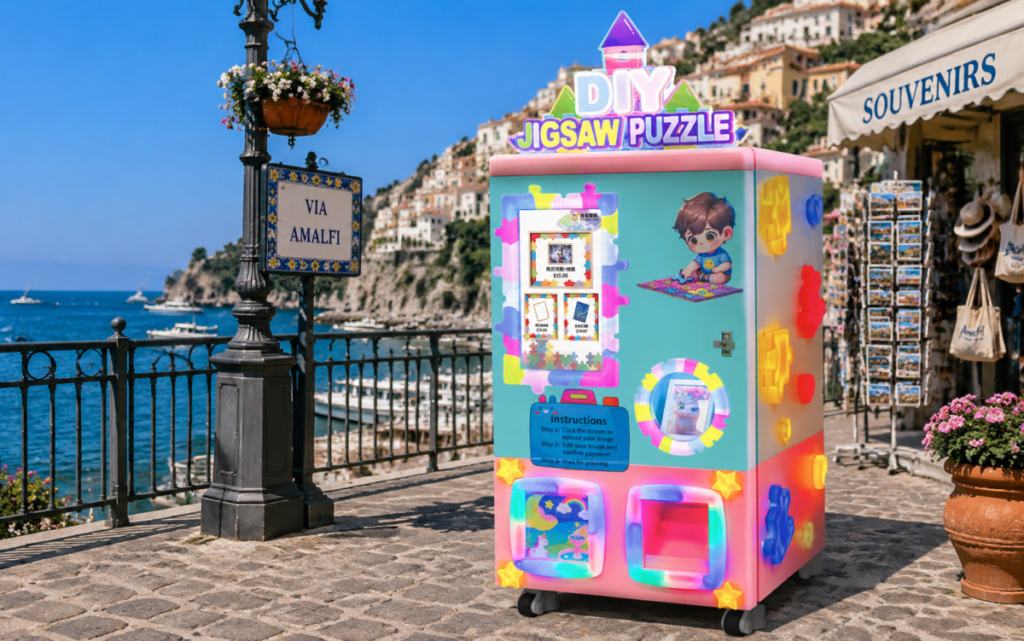
I watched a family of four crowd around a machine in a Chengdu mall last spring, and it took me a solid ten minutes to figure out why they weren’t leaving. The mother had just taken a photo of her kids on her phone. She’d uploaded it to the machine via QR code. The machine — a Red Rabbit puzzle vending unit — was printing that photo onto puzzle paper. Ninety seconds later, a finished jigsaw puzzle slid out into the pickup tray. The kids grabbed it. The father paid $12. And the family walked away with something that wasn’t just a photo. It was a toy, a memory, and a thing they’d put together later that night on the living room floor.
これは ジグソーパズル自販機ビジネス です——そして、自販機をソーダ缶やポテトチップスの袋としか見ていないなら、あなたは間違った世紀を見ています。.
Photo-to-puzzle machines occupy a space that no other vending format touches: they turn a customer’s own content into a physical keepsake in under two minutes, then sell it at 85% gross margin. In this guide, I’ll break down how the technology works, where these machines make the most money, what the unit economics look like, and how operators are building entire businesses around a single machine that fits in a mall kiosk.
写真からパズルへの機械は実際にどう動くのか
パズルのピースを切り出す機械を想像しているなら——やめてください。これらの機械は何も切り出しません。Red RabbitのPTJシリーズのようなユニット内部の実際のプロセスは次のとおりです:
印刷パイプライン——ステップバイステップ
- 写真のアップロード。. 顧客は機械の画面のQRコードをスキャンし、携帯電話から写真をアップロードするか、撮ったばかりの写真を選択します。プレビューには完成したパズルがどのようになるかが表示されます。.
- 機械が白紙のパズル用紙を取り上げます。. Inside the machine, pre-cut puzzle paper sits in dedicated channels. A vacuum arm picks up one sheet.
- 印刷。. アームが用紙を印刷ゾーンへ移動します。高解像度のプリントヘッドが写真をパズル表面に直接印刷します。フルカラーです。画像の複雑さに応じて約5分かかります。.
- 搬出。. 完成したパズルは取り出し口へ滑り込みます。裁断なし。組み立てなし。散らかりなし。お客様自身の写真が入った、すぐに使えるジグソーパズルだけです。.
- オプションのフレーム。. 約30~40%のお客様がフレームを追加します。機械は別の内部チャネルからフレームを取り上げ、パズルと一緒に搬出します。このアップセルは追加時間ゼロで、$0.80のコストで約$8の追加収益を生み出します。.
これが重要なのは、「パズル自販機」と聞いて多くの人が紙を細かく裁断する機械を想像するからです。そんな機械は騒音が大きく、信頼性が低く、しょっちゅう詰まるでしょう。そうではなく、あなたが買うのは本質的に、ロボットアームとあらかじめ装填されたパズル用紙を備えた写真プリンターです — 静かで、速く、無人販売環境向けに作られています。.
完成品の実態とは
パズルはサイズ固定・ピース数固定のジグソーパズルです。丈夫なカードストック台紙に48ピース — 千ピースの怪物ではありません。これは次のように設計されています: – 20~30分でできる家族のアクティビティ – バッグに収まるお土産 – 受け取ったその日に実際に使われるギフト – 子どもが大人の助けなしで組み立てられるもの
写真品質はフォトラボ並みです。色は鮮やか。エッジはきれい。パズルは手に取るとしっかりした重みがあります — 自販機から出てきたもののようには全く感じられません。それこそがまさに狙いです。.
この機械カテゴリーが過小評価されている理由
Most vending operators focus on food and beverage. Cotton candy. Ice cream. Slush. Coffee. That’s where the attention goes because that’s where the obvious margin is. But photo-to-puzzle machines have three advantages that food-based machines don’t:
劣化なし。. 砂糖は湿気で固まります。アイスクリームは停電すると溶けます。パズル用紙とインクカートリッジは何ヶ月も棚に置いても劣化しません。在庫が期限切れになりません。.
高い知覚価値。. A cup of cotton candy costs $0.21 to make and sells for $7. That’s a great margin, but the customer knows they’re buying spun sugar worth pennies. A custom puzzle with their family photo on it? There’s no “raw material cost” comparison in the customer’s head. They’re paying for personalization, and people overpay for personalization every time.
共有されやすさが内在。. Cotton candy gets eaten in five minutes and leaves zero trace. A jigsaw puzzle sits on the coffee table. Visitors ask “where did you get that?” The product markets itself. Every puzzle sold is a tiny billboard for the machine that made it.
消耗品の複雑さが低い。. Cotton candy: sugar, sticks, cleaning supplies, dehumidifier for humid climates. Ice cream: mix, cups, spoons, toppings, regular deep cleaning. Puzzle machine: paper, ink. That’s it. Two SKUs.
パズル機が最も稼げる場所
観光地 — 明らかな狙い目
Tourist sites are the natural habitat for photo-to-puzzle machines. People are already taking photos. They’re already buying souvenirs. The machine just connects those two behaviors.
張家界(砂岩の柱で知られる中国の国立公園)のある事業者は、ビジターセンターのギフトショップにPTJマシンを設置しました。平均日販:128元(約$18)で18個のパズル。月間売上:約64,000元($8,900)。消耗品費:約1,200元($170)。場所代:5,000元($700)。.
Monthly net: about $8,000. On a single machine. In a tourist town where foot traffic is seasonal but intense.
観光地が機能する理由は、単なる量だけではありません。すべての来訪者が、感情的に愛着のある写真をちょうど撮ったばかりだという点です。機械は誰かに買うよう説得する必要がありません。誰かが写真を見返し、「これを覚えておきたい」と思っている瞬間に見えるだけでよいのです。“
ショッピングモール — より高い量、より低い単価
Malls with family demographics work almost as well as tourist sites, but at lower price points. A machine in a mid-tier Chinese shopping mall averages 12–15 puzzles daily at 68–98 RMB ($9–$14). Monthly net runs $3,000–$5,000.
モールの力学は異なります。観光客は旅行を記念するために買います。モールの買い物客は、子どもが退屈していて、機械が面白そうに見えるから買います。写真は子ども本人、家族の犬、またはカメラロールにある何かかもしれません。購入は衝動的なものなので、価格を低く設定し、機械を滞在ゾーン(遊び場、フードコート、映画館の入口)の近くに置く必要があります。.
体験型リテールと「インスタ映えミュージアム」“
A third category has emerged in the past two years: experiential retail spaces built around photo opportunities. Think the Museum of Ice Cream, Selfie Factory, Color Factory — venues where the entire point is taking photos. Puzzle machines are a natural fit because they convert the photos people already took into an instant physical product.
One operator partnered with an immersive art exhibition in Shanghai. The exhibition drew 800–1,200 visitors daily, almost all of whom were taking photos. The puzzle machine, placed at the exit, converted roughly 3% of visitors. At 98 RMB per puzzle ($14), daily revenue averaged $340–$500. Monthly net: $7,800–$11,500 during the exhibition’s run.
ここでは提携モデルが鍵です。運営者は場所代を支払いませんでした。代わりに会場が売上の15%を受け取りました。会場はカスタムパズルがブランドのお土産になったことで恩恵を受け、運営者は休業日も場所代がゼロだったことで恩恵を受けました。.
Unit Economics — What One Puzzle Actually Costs
| 明細項目 | コスト(米ドル) |
|---|---|
| パズル用紙(裁断済みブランク) | $0.80 |
| 印刷ごとのインク | $0.25 |
| 電気 | $0.02 |
| 決済処理(2.5%) | $0.30〜$0.45 |
| 場所代(償却、月$600 ÷ 400パズル) | $1.50 |
| 修繕積立金 | $0.10 |
| Total cost per puzzle | $2.97〜$3.12 |
| 販売価格 | $10〜$18 |
| Net profit per puzzle | $7〜$15 |
Take rent out of the equation (own location or revenue share), and per-puzzle cost drops to $1.47–$1.62. Margin: 85–90%.
フレームのアップセルはこれらの数字をさらに押し上げます。フレームのコストはオペレーターにとって約$0.80で、販売価格に$6~$8を追加します。顧客の35%がフレームを購入すると、平均して取引あたり約$1.75~$2.50の純利益が追加されます。月に400個のパズルを販売すると、オペレーターの追加時間ゼロで機械が自動的に提供する製品から、さらに$700~$1,000の利益が得られます。.
事例研究:パズルマシンオペレーターの最初の5か月
Kevin placed a single puzzle machine in a Chengdu mall’s third-floor family zone in January 2026. His setup:
- Machine: Red Rabbit PTJ-370 series
- 初期投資:$5,200(マシン+送料+初期在庫)
- 設置場所:子供向け屋内遊び場とファミリーレストランの近く
- 家賃:月4,000元($560)
- 価格:標準パズル68元($9.50)、フレーム付き98元($13.70)
| 月 | Daily Sales | 月間売上高 | 消耗品 | 家賃 | 当期純利益 | 累計 |
|---|---|---|---|---|---|---|
| Jan | 8 | $2,280 | $210 | $560 | $1,510 | -$3,690 |
| Feb | 14 | $3,990 | $350 | $560 | $3,080 | -$610 |
| Mar | 18 | $5,130 | $450 | $560 | $4,120 | +$3,510 |
| Apr | 22 | $6,270 | $550 | $560 | $5,160 | +$8,670 |
| May | 24 | $6,840 | $600 | $560 | $5,680 | +$14,350 |
損益分岐点は3か月目に達成しました。5か月目までに、$5,200の投資に対して累計利益は$14,000を超えました。.
What Kevin didn’t expect: 40% of customers were repeat users. Parents would bring their kids back every few weeks with new photos. Some families had made five or six puzzles over the months. The machine had created a habit loop — take photo, make puzzle, display puzzle, take more photos. Kevin hadn’t budgeted for loyalty, and it became his biggest revenue driver.
自分のパズルマシン事業を始める
設置場所の選定
パズルマシンには滞在時間が必要です。具体的には、立ち止まって次のことができる人々が必要です: – マシンに気づく(5秒) – 何をするものか読む(10秒) – 使うと決める(5秒) – 写真をアップロードして90秒待つ
That’s roughly two minutes of “I’m not going anywhere” time. This rules out transit hubs, grocery store exits, and anywhere people are speed-walking. Best locations: – Near children’s play areas (parents are killing time anyway) – Tourist attraction gift shops (people are already in “souvenir mode”) – Cinema lobbies (20-minute pre-show dwell window) – Experiential retail / Instagram-popular venues – Hotel lobbies at family resorts
消耗品の管理
You only need two things: puzzle paper and ink. One ink set lasts for approximately 1,000 prints. For a machine producing an average of 20 puzzles a day, you would replenish the paper every 5 days and replace the ink every 50 to 60 days.
価格戦略
Tourist pricing: $15–$20 (framed). Mall pricing: $9–$13 (framed). The price ceiling is higher than you think because the product has zero direct competition — there’s no “cheaper alternative” to a custom puzzle with your own photo on it. Most operators discover the ceiling through testing: raise the price $2, watch sales for two weeks, then decide.
Kevin in Chengdu tested 68 RMB → 78 RMB → 88 RMB over three months. Sales volume barely moved. He settled at 78 RMB ($10.90) for standard and 108 RMB ($15.10) framed, netting an extra $680/month from the price increase alone.
オペレーターによくある失敗
過ち1:誰も長居しない場所に機械を設置すること。. パズルマシンは廊下やエスカレーターの近くでは失敗します。人は時速3マイルで足を止めずに通り過ぎます。座席、ベンチ、待合エリアなど、人が腰を落ち着ける場所を探しましょう。.
過ち2:機械上で製品を説明していないこと。. 驚くほど多くの顧客が、自分の写真を使えること、そしてそれが実際に分解して組み立て直せるパズルになることをすぐには理解していません。機械の画面には、プロセス全体を示す5秒のアニメーションを表示すべきです。Kevinは機械のアイドル画面にループするデモ動画を追加し、コンバージョンが23%跳ね上がりました。.
過ち3:フレームのアップセルを無視すること。. A third of customers will add a frame if prompted — but only if the prompt appears. Set the upsell to display automatically after photo selection, not buried somewhere in the checkout flow.
過ち4:印刷品質を維持しないこと。. インクレベルとプリントヘッドの清潔さは完成品に直接影響します。ぼやけたフォトパズルはパズルがないより悪く、機械の評判を傷つけます。プリントヘッドは毎週清掃し、毎月キャリブレーションし、インクが完全に切れる前に交換しましょう。.
よくある質問
パズルのサイズは? 固定サイズのパズルで、通常はハガキサイズから19.5*14.7CMの寸法で、標準的なピース数です。一貫したフォーマットにより、消耗品コストが予測可能になり、顧客体験も安定します。.
印刷プロセスにはどのくらいかかりますか? アップロードから受け取りまで約5分秒です。.
どのようなメンテナンスが必要ですか? Weekly: clean print head, check paper and ink levels, wipe down exterior. Monthly: full calibration, deep clean. Annual: . Total maintenance time: 30–45 minutes per week for one machine.
パズルマシンはフォトブースより優れていますか? まったく異なる製品です。フォトブースは財布や引き出しにしまわれる標準的な写真を印刷します。パズルマシンは知覚価値の高いインタラクティブな製品を生み出します。パズルマシンの平均取引額は通常フォトブースの3~4倍です。しかしフォトブースは処理が速く、パズルが意味をなさないバーやナイトクラブではうまく機能します。.
ジグソーパズル自販機にご興味がありますか? Red RabbitのPTJシリーズをご覧ください。無人販売向けに設計された堅牢な写真→パズルユニットです。 製品仕様 または お問い合わせ をご覧いただき、お客様の市場における設置オプションと価格についてご相談ください。.