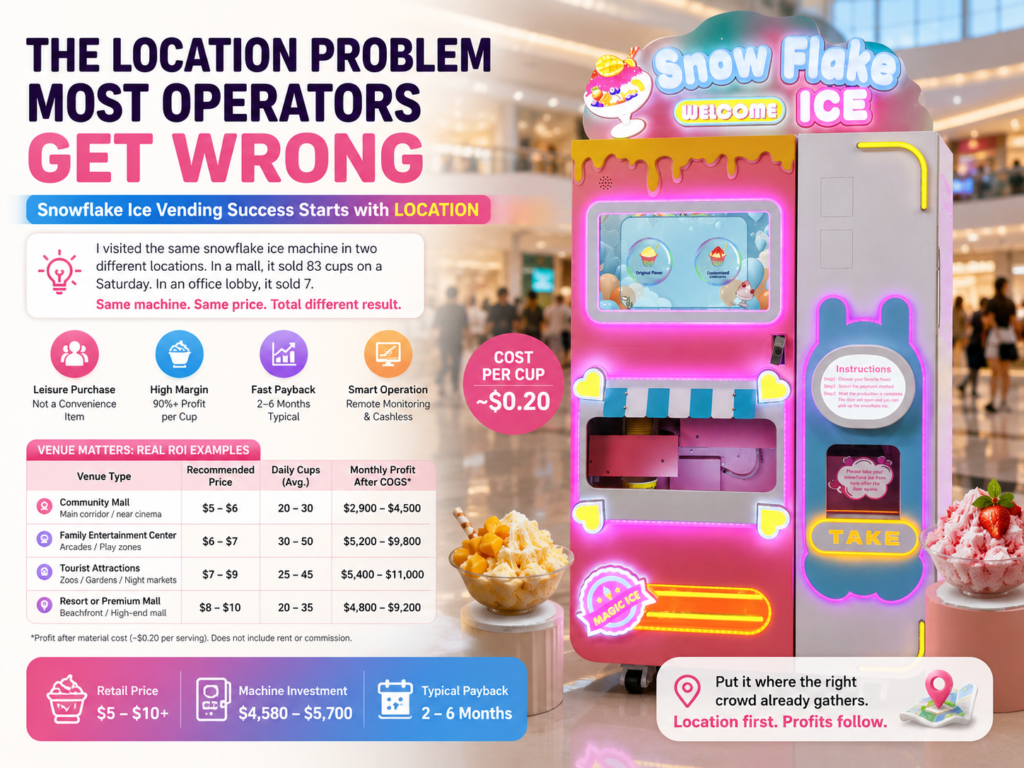
The location problem most operators get wrong
I visited a snowflake ice vending machine in a San Diego mall that sold 83 cups on a Saturday. Two weeks later I saw the same model in a downtown office building lobby. It sold 7 cups. Same machine. Same price. Same toppings. The difference was the location. Snowflake ice is not a convenience purchase. It is a leisure purchase. People do not buy it on the way to a meeting. They buy it because they are out having fun.
Red Rabbit, also known as Chitu VEM, builds the CT-BS310 snowflake ice vending machine at our factory in Guangzhou Panyu. We have more than ten years of manufacturing experience and export to over 130 countries. The CT-BS310 makes fine ribbons of frozen milk or cream, dispenses toppings automatically, and runs unattended. It is a strong earner, but only if you put it where the right crowd already gathers.
What the CT-BS310 actually does
If you have not seen snowflake ice before, picture shaved ice that is closer to frozen cotton. The machine shaves a frozen base into thin ribbons, layers them in a cup, and adds jam or toppings. The texture is light, the product looks good in photos, and the per-cup cost is low. Red Rabbit data puts the material cost at roughly $0.20 per serving, with retail prices between $5 and $10, and sometimes higher in premium venues.
| Objet | Red Rabbit CT-BS310 |
|---|---|
| Material cost per serving | ~$0.20 |
| Typical retail price | $5–$10 |
| Machine investment range | $4,580–$5,700 |
| Gross margin per serving | 90% or higher |
| Typical payback period | 2–6 months |
The four venue types that work
After talking to operators and reviewing sales data, four venue types stand out for the CT-BS310.
Shopping malls and food courts. These are the most predictable sites. Families walk slowly, children spot the machine, and parents treat a $6 cup as a low-risk impulse buy. The best position is along the main corridor near play areas, cinemas, or escalators. Avoid dead wings or basement levels with no natural footfall.
Family entertainment centers. Arcades, trampoline parks, bowling alleys, and indoor play zones produce strong sales because the audience is already in treat mode. One operator in Texas reported his CT-BS310 matched his cotton candy unit on weekends. The two products share a customer, so placing them near each other makes sense.
Tourist attractions and cultural venues. Zoos, aquariums, botanical gardens, and night markets work well because visitors stay for hours and want refreshment that doubles as an experience. Snowflake ice photographs well, which helps with organic social sharing.
Hot-climate transit and recreation. Beachfronts, boardwalks, outdoor malls, and resort pools in warm regions can produce excellent seasonal revenue. The machine needs shade and shelter from rain, but the demand is built in.
Venue-specific pricing
Not every location should charge the same price. A $5 cup sells fast in a suburban mall. A $9 cup sells just as fast near a resort pool where bottled water already costs $4. Below is a simple framework operators use.
| Venue type | Recommended price | Expected daily cups | Monthly profit after COGS |
|---|---|---|---|
| Community mall | $5–$6 | 20–30 | $2,900–$4,500 |
| Family entertainment center | $6–$7 | 30–50 | $5,200–$9,800 |
| Tourist attraction | $7–$9 | 25–45 | $5,400–$11,000 |
| Resort or premium mall | $8–$10 | 20–35 | $4,800–$9,200 |
These profit figures ignore rent or commission. Always negotiate that before finalizing the site. A location asking 25 percent of revenue can turn a winner into a break-even project.
What hurts snowflake ice sales
Poor visibility is the biggest killer. The machine looks modern and the product looks unusual, which is an advantage only if people can see it. Tuck it behind a pillar or around a corner and sales collapse. Operators who add a backlit topper or looping demo video on the screen consistently report higher traffic.
Weather also matters. Outdoor placements without shade or rain cover fail quickly. The CT-BS310 needs a stable environment. Heat makes the machine work harder, and direct sunlight fades the cabinet.
Another common issue is topping choice. Fruit jams, condensed milk, and cereal toppings perform differently by region. In Asian markets, red bean and matcha sell well. In US malls, mango and strawberry dominate. Test two or three topping combinations in the first month and let data decide the menu.
Pairing strategy
Snowflake ice pairs naturally with other Red Rabbit treat machines. In a family venue, place it beside a Distributeur automatique de barbe à papa or an distributeur automatique de glaces. The same customer buys both. In a mall with younger adults, a phone case printing machine nearby can create a mini experience zone where people linger longer.
Operator checklist before you sign a lease
Here is what experienced operators verify before committing to a location. Power supply must handle the machine load. Floor loading must support 380 kg. Internet must be stable for cashless payments and telemetry. The venue contract must spell out commission, cleaning responsibilities, and exclusivity. Finally, check local food vending rules. In the US, the FDA Food Code is a useful reference, but your local health department has final authority.
The daily operating rhythm
A snowflake ice machine is not a set-and-forget toy, but the daily workload is light. Most operators spend ten to fifteen minutes per visit checking topping levels, wiping the nozzle area, and confirming the waste bin is empty. A deeper clean of the freezing drum and dispensing path happens weekly. Refilling the base mix and cups takes another five minutes when needed. One person can service eight to twelve machines in a day if the route is planned well. Remote monitoring tells you exactly which machines need attention, so you are not guessing.
Why snowflake ice is worth the site hunt
Finding a good location takes more effort than buying a machine. That is why many new operators do the opposite and fail. A CT-BS310 in the right spot can pay back in two to four months and then generate strong cash flow with minimal labor. The product is new to many markets, the margins are high, and the machine does the work.
Start with one location. Prove the model. Then add a second machine in a similar venue. Scaling works best when the first unit already teaches you what the customer wants.
Want a location-specific profit estimate for the CT-BS310? View the Red Rabbit snowflake ice vending machine ou contacter notre équipe to review your venue.
For broader business advice, the SBA business guide covers permits, taxes, and basic bookkeeping for new vending operators.