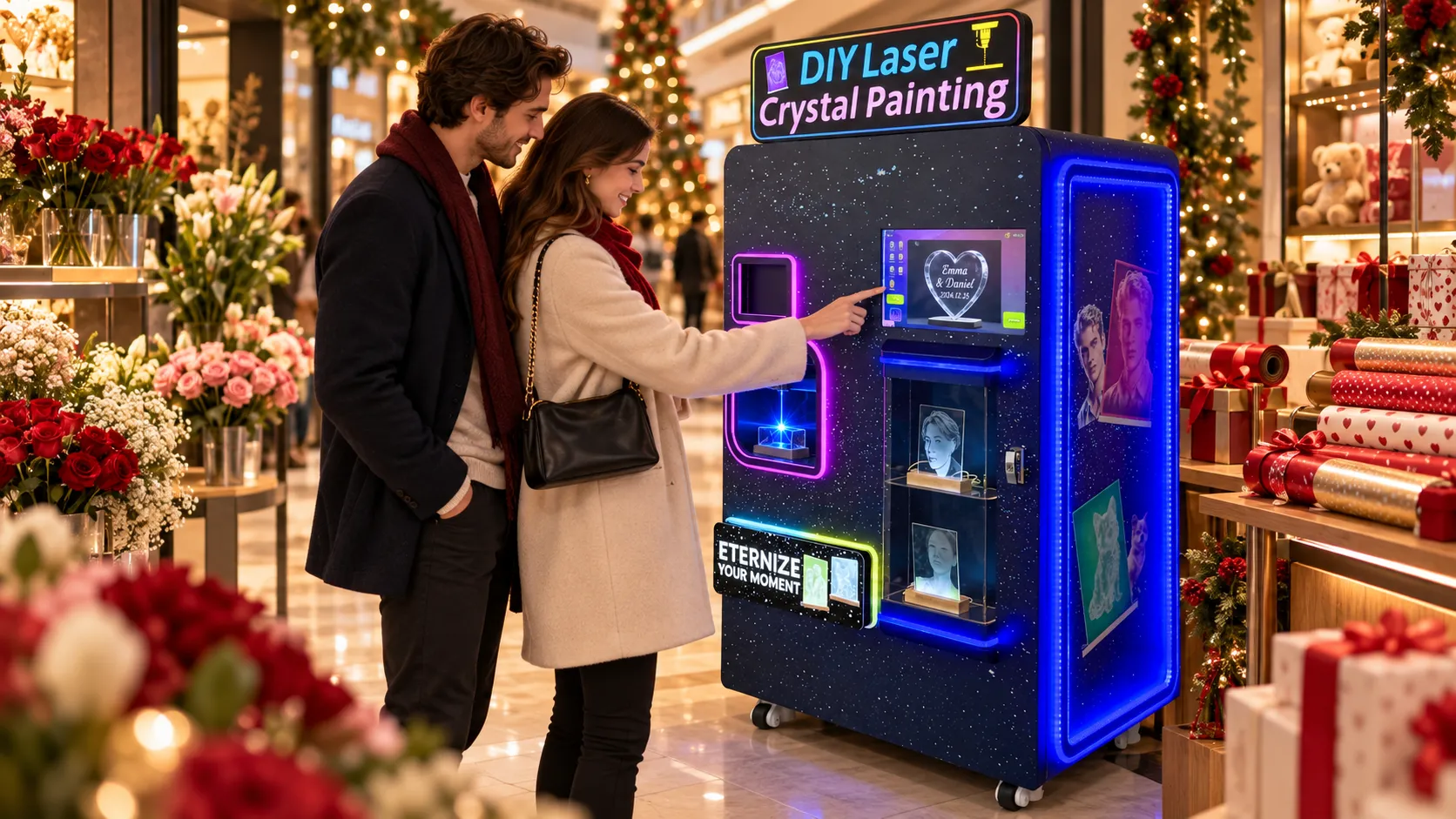
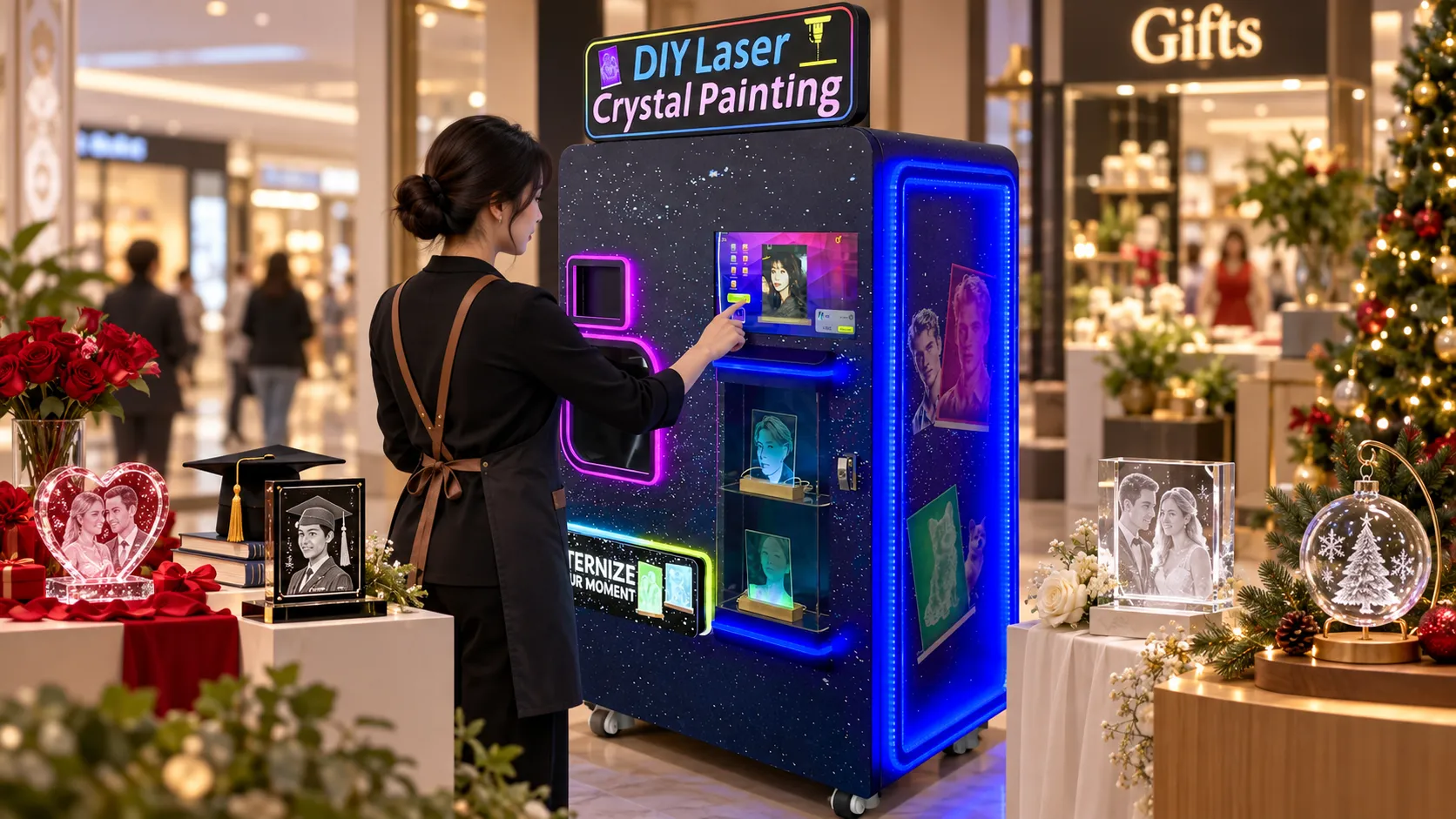
The first time I saw a glass engraving vending machine really work, it was a cold Saturday in early December. A shopping center in a mid-sized city had set the machine near the north entrance, between a coffee stand and a pop-up gift wrap station. A young couple stood in front of it, scrolling through a screen of fonts and borders. The woman typed two names and a date onto a small glass heart. About ninety seconds later the laser finished, the door slid open, and she lifted out a keepsake with both names burned cleanly into the surface. Behind her, three more people were already waiting.
That scene comes back every year. Not because the machine gets busy at random, but because engraved glass is a gift product, and gifts follow a calendar. If you operate one of these machines, you do not have to guess when the money shows up. You can read the calendar, plan the menu, and put the machine where the occasions are. This article walks through that year, season by season, and shows what to change at each step.
The gift calendar for engraved glass
Engraved glass is rarely an everyday purchase. People buy it when they have something to mark. A name. A date. A photo. A promise. That means demand clusters around a handful of moments that come back every single year.
Valentine’s Day arrives in February, and couples want two names on a pair of glasses or a small heart-shaped plaque. Mother’s Day and Father’s Day follow in spring. Graduation season lands in May and June, and that is a big one, because a graduate wants something with their own name and a year on it. Wedding season runs through late spring and summer, and weddings are a double market. The couple wants keepsakes for the tables, and guests want a small engraved favor to take home. Then summer tourism fills the gap, with visitors buying dated keepsakes from wherever they traveled. Autumn brings school events, team trophies, and early corporate gift orders. December, the biggest month of all, brings holiday ornaments, personalized gifts, and office gift exchanges.
What matters here is that these are not all the same buyer. A Valentine’s customer wants romance and a fast, small item. A wedding customer wants volume and consistency. A holiday shopper wants something that looks finished enough to wrap. You adjust the machine to each.
Why keepsakes follow the calendar
There is a reason this product behaves like a seasonal business. A plain drinking glass is a utility. It is worth almost nothing to a stranger. But put a name on it, or a date, or a photo, and it becomes a memory. The moment you make it personal, you stop competing with the kitchenware aisle and start competing with the greeting card rack and the gift shop.
One thing to get clear before you go further. This machine does surface engraving. It burns a design onto the flat face of a glass or acrylic piece, like etching a name into a window. It does not carve a 3D image inside a block of crystal. The machines you see in a gift shop that make a little 3D scene inside a cube are a different technology. A Red Rabbit glass engraving machine works on the surface, which is exactly why it fits a gift counter. The image is sharp, readable, and finished in a minute or two depending on the design.
Because the engraving sits on the surface, lighting matters. Under a bright shop light, the etched lines catch and sparkle. That is what stops a shopper walking by. A dull, shadowed corner hides your best feature. When you plan for a season, plan the lighting with it.
How to ride each peak
The operator who wins the season is the one who changes the machine before the crowd arrives. Here is what that looks like across the year.
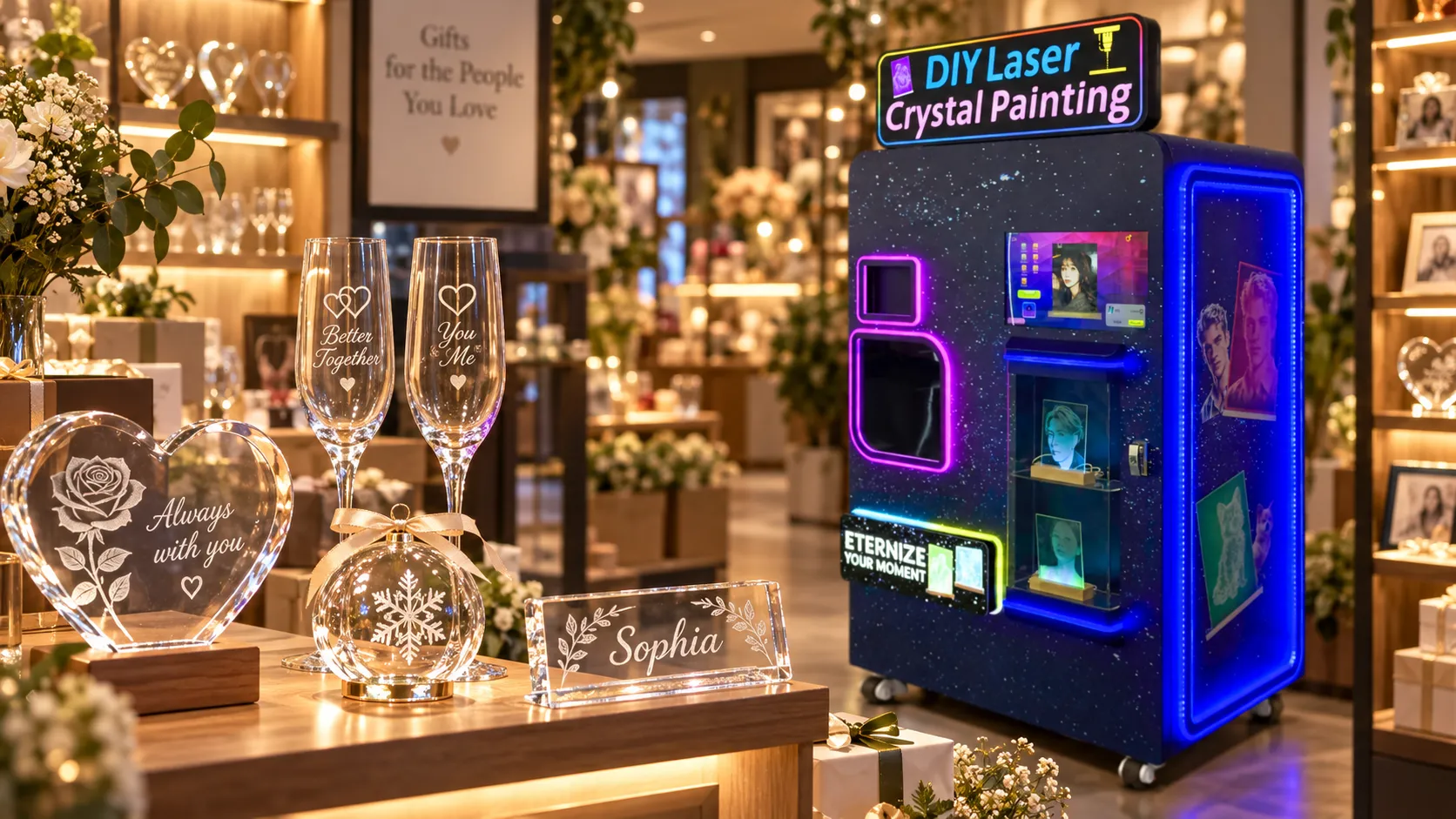
Before Valentine’s Day, load the menu with hearts, two-name templates, and short romantic lines in a few common languages. Put a sample of two engraved champagne glasses by the screen so people see exactly what they are buying. Before Mother’s Day and Father’s Day, switch the sample to a single name with a short message, and push the “best mom” and “best dad” style templates. For graduation, add year badges and school colors, and move a sample with a tassel and a year into view.
Wedding season wants a different play. Engaged couples will pre-order a batch of table favors. That is not a walk-up sale, it is a bulk order you arrange ahead of time, and the machine becomes the production tool. For summer tourists, rotate the samples to something local, a landmark or a place name, so the keepsake says where they were. In December, go all in on ornaments, family names, and year-dated pieces, and put the machine as close to the gift traffic as you can.
Surviving the slow months
Every keepsake business has dead weeks. The stretch after New Year’s and the quiet gap in late autumn can feel empty. The machine still earns, but you have to give it a reason to be looked at.
Three moves help. The evergreen buyer is always there, a “photo and date” keepsake that works for anniversaries, newborn arrivals, and team wins with no holiday required. Business orders come next, since companies buy engraved glass for employee milestones, awards, and client gifts, and those orders usually land in the months when walk-up traffic is low. Then move the machine. If summer was a boardwalk or a tourist spot, bring it indoors to a mall, an event hall, or a wedding expo when the weather turns. The machine is small enough to relocate, and a slow location beats an empty one.
| Season | Main occasion | What to feature | Where to place it |
|---|---|---|---|
| February | Valentine’s Day | Two-name hearts, couples’ glasses | Near florists and gift shops |
| May to June | Graduation, Mother’s and Father’s Day | Year badges, name plates, short messages | Near greeting cards and campus stores |
| June to August | Weddings and tourism | Table favors, place-name souvenirs | Venues and tourist corridors |
| December | Holidays | Ornaments, family names, year-dated gifts | Mall gift zones and entrances |
The small details that decide a season
Timing is the big lever, but the small things separate a good month from a great one. Keep the glass blank stock organized by season so you never run out of the one piece everyone is asking for. Test the laser focus each morning, because an out-of-focus engraving looks cheap and kills the impulse. Respect the safety side too. A laser is not a toy, and the workspace around the machine should follow the same caution you would use with any light source, with proper shielding and no direct eye exposure. The Occupational Safety and Health Administration keeps clear guidance on laser hazards, and it is worth a read before you install.
Read the calendar, set the samples, and be ready before the occasion arrives. Engraved glass sells when someone has something to say, and people always have something to say at the same times every year. If you want to talk through which seasons fit your location, get in touch with the team at Red Rabbit.