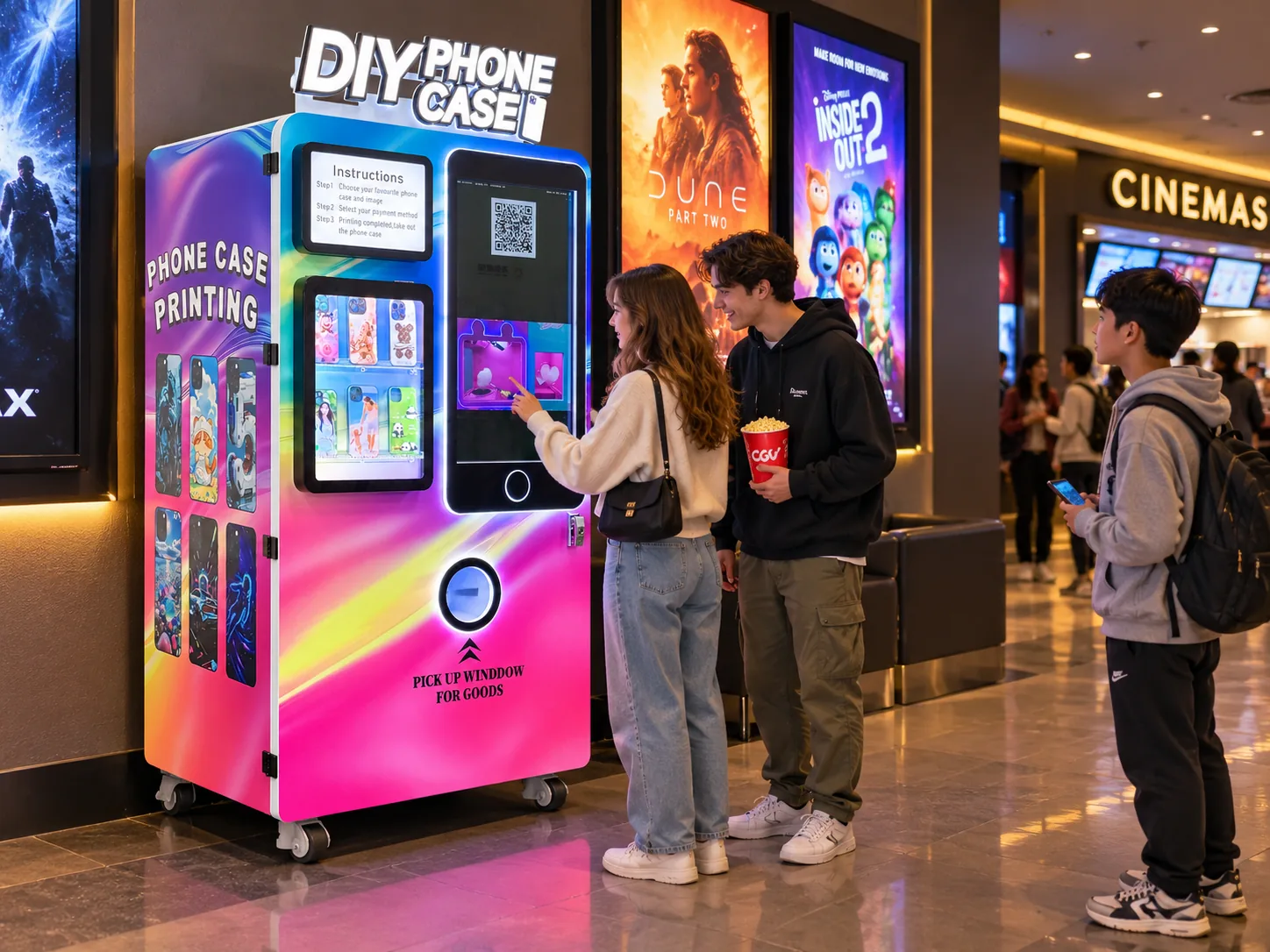
Leah did not want another machine. She ran a phone repair counter in a shopping center on the edge of town, and every machine she owned already had a job. Her wall space near the food court sat empty, and for a year she told herself that empty wall was just storage. Then a slow Tuesday changed her mind.
That afternoon she watched a group of teenagers cluster around the directory kiosk, phones out, taking turns photographing each other against a mural the center had painted the month before. They were not there to fix anything. They were there to make something to show each other. Leah looked at the empty wall again and saw it differently.
A reluctant yes
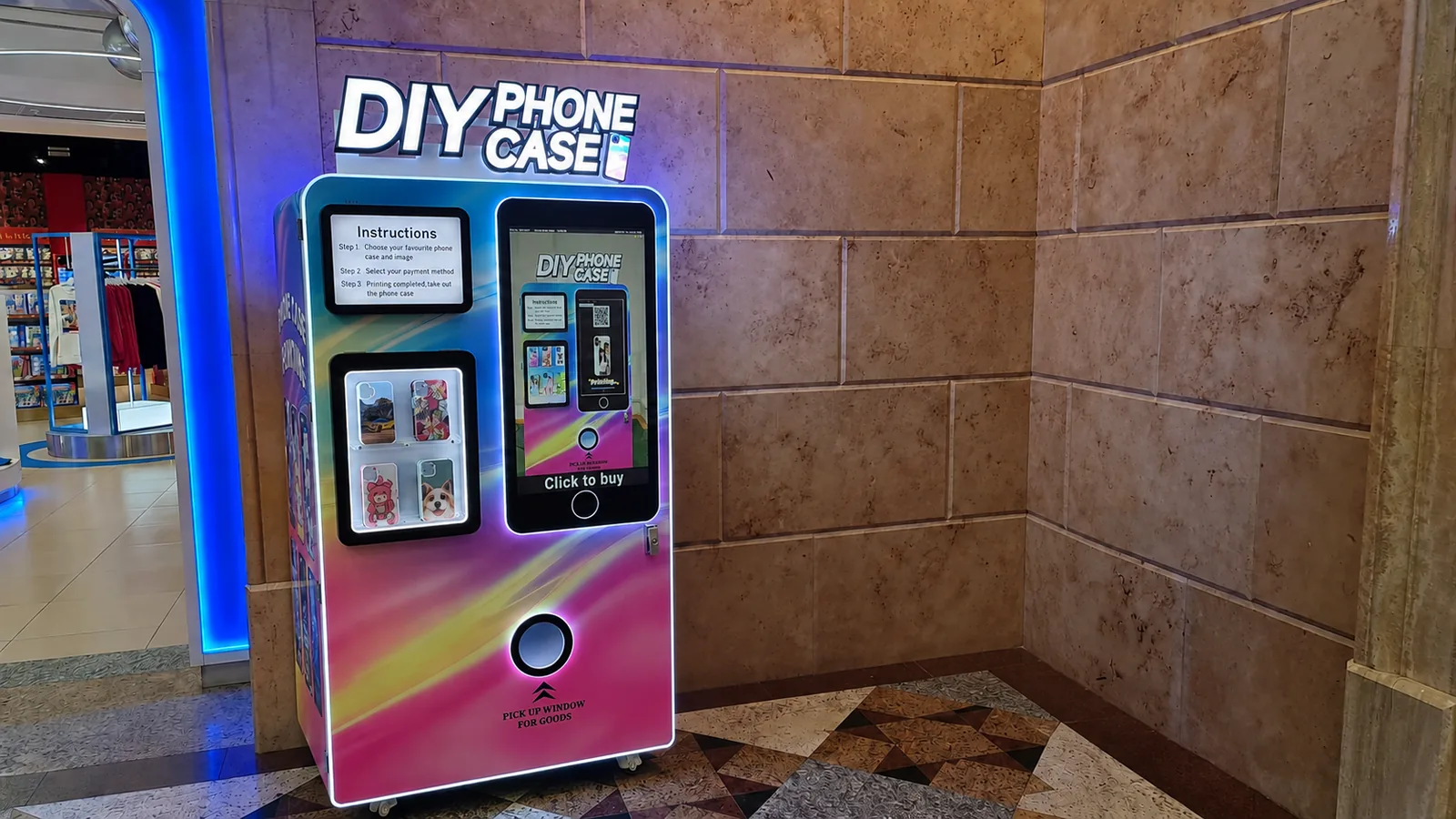
She ordered a phone case printing vending machine mostly to fill the wall, and she was honest about it. “I did not expect much,” she told me later. “I thought it would sit there like a decoration that happened to plug in.” The first week did nothing to change her mind. A handful of people tapped the screen, read the instructions, and walked away. By Friday she had sold fewer cases than she could count on one hand.
Setting the machine up had been easy, which almost made the slow start worse. She loaded the blank cases, connected the payment reader, and the screen walked her through the rest. The first customer to try it tapped around for two minutes and then gave up, and Leah stood there thinking the whole idea had been a waste. The urge to call the supplier and complain was strong. Instead she stood near it one evening and watched, which turned out to be the single most useful thing any operator can do.
The turn
A girl walked up with a photo of her dog, a scruffy little thing in a bow tie. She went through the whole flow on her own, paid with her phone, and waited while the case printed. When it slid out, she held it up like a trophy. Two friends ran over. One asked where she got it done, and then they were all queuing up to make their own.
Leah heard one of them say to another, “I want one with my gran.” That sentence stayed with her. The machine was not selling phone protection, which is a rational purchase people put off. It was selling a memory and a bit of identity, which is the thing people line up for without being asked.
Small changes, steady line
She made three changes the next week. She moved the machine off the dead wall and onto the path between the food court and the cinema. She printed a few sample cases and stood them on top of the machine so people could see exactly what they would get. And she stopped worrying about whether her price matched the phone shop on the next block. She priced for the venue and the moment, not for a competitor in a different part of town.
Sales stopped being a trickle. The machine now sells a steady line through the afternoons and a real rush on weekends. Some days the cases sell themselves while Leah is elbow deep in a screen replacement, and she only notices the takings when she runs the week’s numbers.
People do not buy a case because they need one. They buy it because the thing they care about is on it.
The weekend rush
The first big Saturday after she moved the machine, she saw what the wall had been missing. A birthday group came through the food court and stopped at the sample cases, and within ten minutes there was a short line. One of the mothers made a case with a photo of her daughter blowing out candles, then a second one for the grandmother standing right behind her. Leah watched the screen cycle through order after order without anyone asking for help.
That single afternoon did more business than the first three weeks put together, and it was not a fluke. The machine had stopped being a curiosity on a dead wall and started sitting where people with a reason to celebrate walked past. Leah stopped hovering. The machine did the explaining, the printing, and the payment, and she only came by to restock the blanks and clear the finished tray.
She noticed something else that day. People who watched a case being made wanted one of their own, and the line fed itself. A keepsake with a face on it is contagious in a way a plain phone case never is.
What Leah learned
The lesson she repeats to anyone who asks is simple. The machine works best where people are already taking photos, already celebrating, already in a mood to keep something. It works worst where people are rushing between errands with a full list in their head. She kept her repair counter, and the two businesses now feed each other. A customer who breaks a phone comes back for a case. A customer who made a case remembers Leah’s counter when the screen cracks. The machine did not replace her old income. It added a second one on a wall she had written off as storage.
She also learned to watch the first week closely instead of judging it. A new machine in a new spot needs a few days for the first person to try it, and one good photo sells more than any sign she could hang. Once the first sample cases appeared, the machine started doing its own selling.
If you have a wall like that, a spot where people are already taking pictures, a phone case printing vending machine might turn it into something better than storage. Talk to us about the venue you have in mind, and we will tell you honestly whether it is a fit. A made to order keepsake often pairs well with a jigsaw puzzle vending machine in the same gift focused area. The National Automatic Merchandising Association tracks how these made to order machines are growing, and the U.S. Small Business Administration business guide can help you sort the registration side before you place one.
Related machines from Red Rabbit