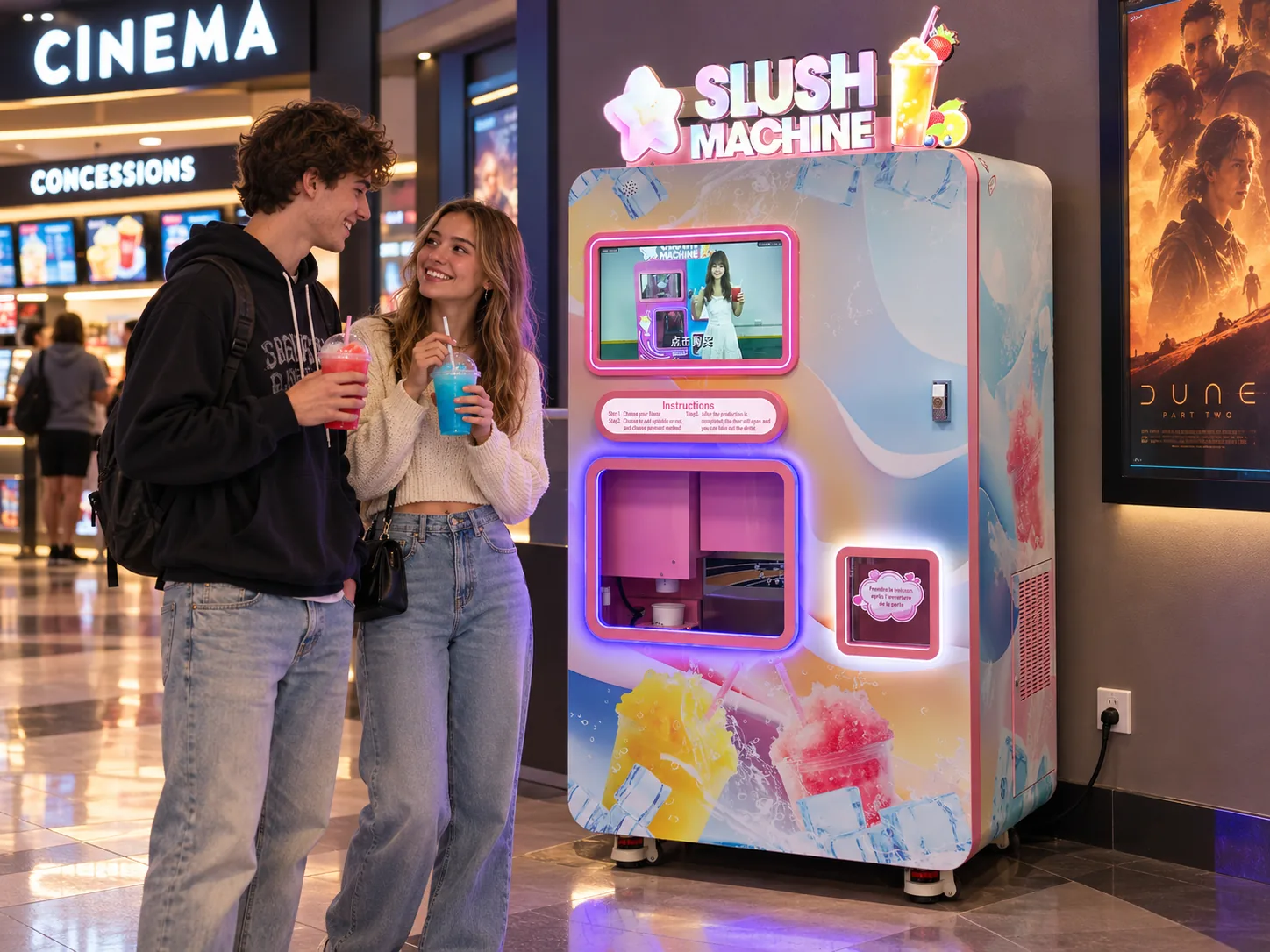
I have lost count of how many operators have walked up to me excited about a slush machine, then talked themselves out of it within a week. The reasons they give are almost always the same, and almost all of them are wrong. I want to walk through the six most common ones here, because I have watched good locations sit empty while the operator next door quietly built a living selling something cold and colorful.
Myth one: it is just sugar water, nobody pays real money for that
This is the one I hear first, and it is the easiest to break. A slush is not sold as sugar water. It is sold as a cold, bright, made-right-now treat on a hot afternoon. The cup matters more than the syrup. What an operator is really selling is the moment a kid points at a neon green cup and a parent says yes, because it costs about as much as a candy bar and still feels like an event.
The numbers hold up for a simple reason that has little to do with premium ingredients. A cup of slush costs only a few cents to produce once you account for syrup, water, and the cup, and it sells for several dollars at a busy counter. You do not need a spreadsheet to see the room in that. The real lever is volume, not markup, and volume comes from placing the machine where thirsty foot traffic already flows. The machines themselves are built to pour cup after cup without a break, which is the point I come back to when someone tells me the product is too cheap to bother with.
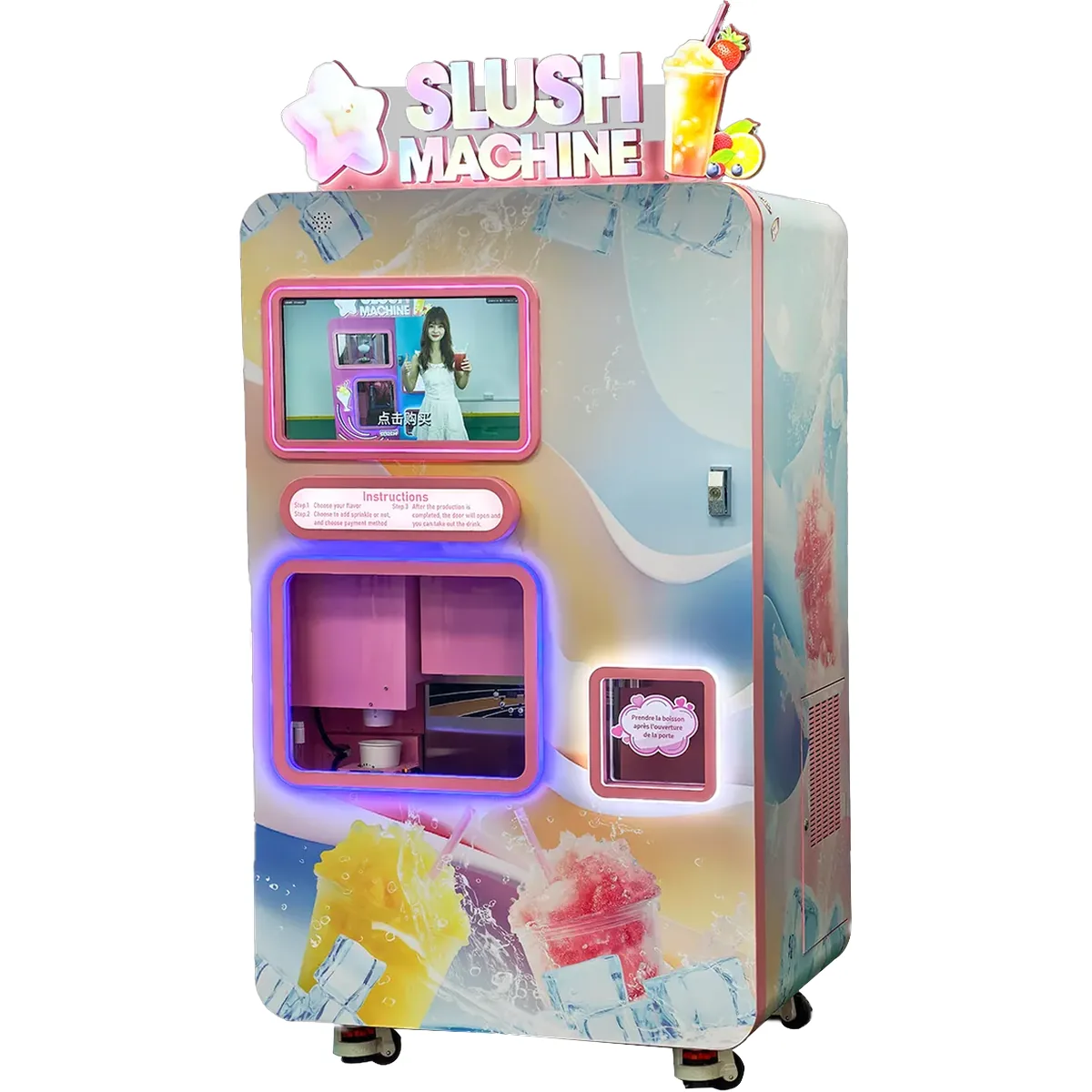
If you want to see what a properly built slush machine looks like, our 雪泥自动售货机 page walks through the models and what they are meant to handle.
Myth two: slush only works in summer, and I will be dead by October
People assume a frozen drink is a warm weather product and nothing else, so they write off most of the year before they even start. It is true that a heat wave moves cups faster than a cold Tuesday, but the machines do not stop making money when the temperature drops. The demand just moves indoors. Malls, cinemas, arcades, gyms, trampoline parks, and family entertainment centers all have climate controlled air and steady traffic in every month. A slush machine tucked into one of those does not care what the weather is doing outside.
Flavor rotation carries the slower months. In summer you run bright citrus and berry profiles, and in the cooler months you shift to flavors that read as dessert, like chocolate, coffee, or a creamy caramel. The same machine, the same footprint, a different menu. Operators who treat the product as seasonal are the ones who see seasonal results. The ones who treat it as a year round counter item are the ones who keep the revenue flat.
Myth three: the machine will jam or freeze solid and I will be stuck fixing it
This worry comes from old equipment. Early slush machines had a reputation for freezing up overnight and needing a screwdriver and patience at six in the morning. Modern machines are a different animal. They run automatic defrost and mixing cycles that keep the product at the right consistency through the day and overnight, so you do not arrive to a block of ice in the bowl.
The parts that touch the drink are stainless steel, which resists the corrosion and odor that used to plague older plastic lines. Maintenance comes down to a short daily rinse and a deeper clean on a regular schedule, not a weekly repair. When I hear someone say a slush machine is high maintenance, nine times out of ten they are describing a machine from another decade, not the one they would actually buy today.
Myth four: I need a shop and a full staff to run this thing
This is the myth that costs people the most, because it convinces them the venture is bigger than it is. A slush machine does not need a storefront or an employee watching it. It runs unattended on a counter, inside a kiosk, or as a standalone unit with a small footprint. The customer taps a card or phone, the machine pours, and the transaction ends. No register, no wages, no scheduling.
That unattended model is what makes the unit economics work for a single operator. You are not paying someone to stand there for eight hours hoping a line forms. The machine does the selling while you run the rest of your day. For a small business owner who already has a location, this is not a new store, it is a countertop addition that pays for its own corner.
Myth five: bottled drinks already own that customer
It is easy to look at the wall of bottles in every convenience store and assume there is no room for a slush machine. But a bottle is a grab and go product, while a slush is an experience. The two sit at different moments in a customer’s day. Nobody walks into a mall thinking about the bottle of soda they could buy, but a wall of swirling color and a machine pouring on demand will stop people mid stride.
Fresh made also reads differently than shelf stable. The customer watches the drink form in the cup, which makes it feel crafted rather than purchased. That moment, plus the cold and the color, is why a slush can stand next to a cooler full of bottles and still sell. You are not competing on price with a can of soda, you are competing on the experience of a cold drink made in front of you.
Myth six: keeping it clean and passing a health inspection will eat my life
Food safety scares a lot of people away from anything that touches liquid and ice, and I understand why. But the routine is far lighter than people expect. The daily tasks are rinse the parts that touch the drink, wipe the exterior, and check the mix levels. A weekly clean goes deeper into the tank and the dispensing area. None of it takes long, and none of it needs a technician.
What matters is that you build the habit, because a clean machine is also a machine that keeps working. The 美国食品药品监督管理局(FDA)《食品法典》 sets the baseline for how food contact surfaces should be handled, and a modern slush machine is designed around those expectations. The operator who follows the routine rarely has an inspection problem, and the operator who skips it is the one who ends up with a melted mess and a health officer at the door.
What actually holds an operator back
None of the six worries above is the real reason a slush business fails. The real reason is location. Put a good machine in front of thirsty traffic and it sells. Put it in a dead corner and no amount of flavor rotation will save it. So the question is not whether slush is worth it, it is where you are going to put it.
Thinking about adding a frozen drink line to your location? Reach out on our 联系页面 and we will help you figure out which machine fits your space and your foot traffic.
If you are comparing frozen drink options before you decide, our 雪花冰自动售货机 page lays out a neighboring product line, so you can see the difference between a drinkable slush and a spoonable shaved ice dessert.
来自Red Rabbit的相关机器