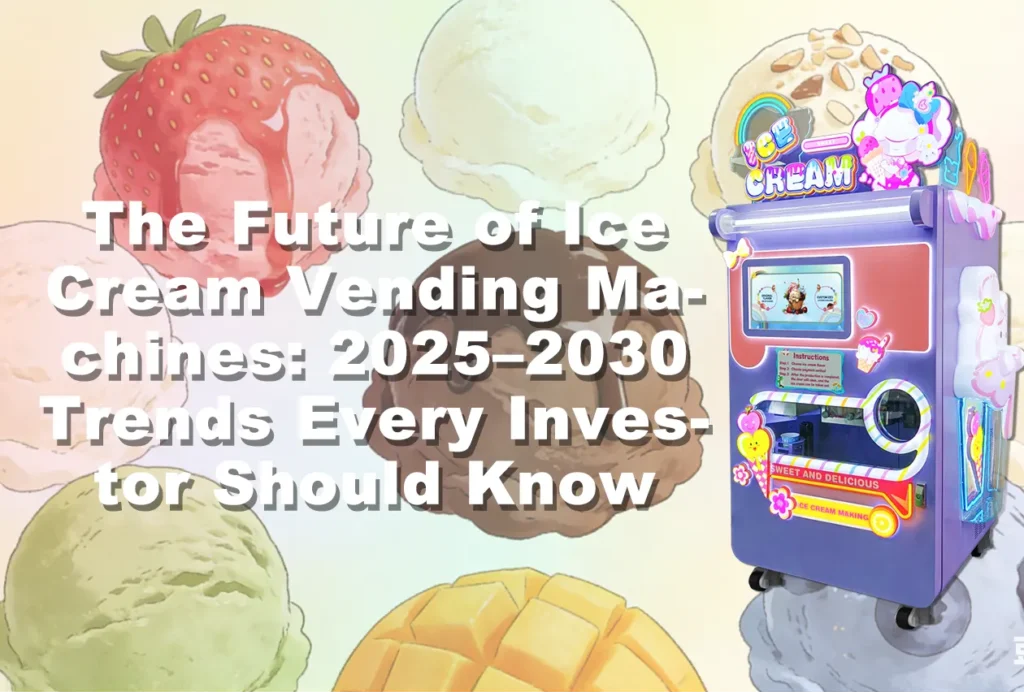
The ice cream vending machine industry has transformed rapidly over the last five years. What was once considered a fun novelty has now become one of the most powerful and profitable segments in automated retail. As an industry specialist at Red Rabbit, I’ve been able to observe global buying patterns, emerging technology, customer behavior, and investment trends — and one thing is certain:
Ice cream vending machines are becoming a long-term business model, not a temporary trend.
As we move toward 2030, several major developments will reshape how ice cream vending works, who invests in it, and how much profit operators can make. Whether you are a new investor or expanding your current vending network, understanding these trends will help you stay ahead of the market and maximize your ROI.
1. Automated Retail is Growing Faster Than Traditional Retail
Global data shows a shift in customer behavior:
✔ Customers prefer self-service
People like fast transactions without waiting in line or dealing with staff.
✔ Unmanned retail reduces business risk
No labor cost. No scheduling. No employee turnover.
✔ Shopping malls and venues want more automated options
Landlords increasingly prefer automated tenants because they improve revenue per square meter.
✔ Ice cream is one of the top-performing automated products
Frozen desserts have universal demand and strong impulse-buy appeal.
Between 2025 and 2030, the number of deployed ice cream vending machines is expected to double globally — especially in North America, Europe, the Middle East, and Southeast Asia.
2. Rising Machine Performance Standards
A modern ice cream vending machine is no longer just a “machine that dispenses ice cream.” It is a smart, connected, automated retail system.
The standards are increasing in these areas:
✔ Cooling systems must handle hotter climates
Many countries are experiencing heat waves and higher average temperatures.
Investors need machines with reinforced compressors and faster cooling cycles.
✔ Faster dispensing speed
Customers expect their order within 20–40 seconds.
✔ Cashless-first design
20% of younger customers don’t carry physical wallets anymore.
QR, NFC, Apple Pay, Google Pay, and credit cards are essential.
✔ Lower energy consumption
Energy-efficient systems reduce cost and increase profit long-term.
✔ Cloud intelligence is becoming mandatory
Operators want remote control, auto-diagnosis, inventory monitoring, and price adjustment.
✔ Better hygiene and automated cleaning
Governments and malls require safer, more hygienic food equipment.
Everything is moving toward greater reliability, automation, and operational simplicity — and machines without these features will quickly become outdated.
3. Profit Margins Remain Extremely Attractive (Updated Costs Included)
Even as technology advances, the financial model of ice cream vending remains strong.
Machine Cost:
6000–10000 USD (2025 updated pricing)
Selling Price:
5–15 USD per cup
Cost per Serving:
1.0–2.5 USD
Profit per serving:
- At $5 selling price → $2.5–$4 profit
- At $10 selling price → $7.5–$9 profit
- At $15 selling price → $12.5–$14 profit
Daily Income Scenarios for 2025–2030
| Location | Daily Cups | Selling Price | Daily Profit |
|---|---|---|---|
| Standard mall | 30 | $8 | ~$180–$210 |
| Busy cinema | 45 | $10 | ~$330–$380 |
| Amusement park | 60 | $10 | ~$420–$480 |
| Tourist hotspot | 80 | $15 | ~$1000–$1100 |
Expected ROI
- Standard locations: 2–3 months
- High-traffic locations: 1 month
- Tourist hotspots: 2–3 weeks
Even with higher machine costs and inflation, margin levels remain extremely healthy.
4. The Market Is Shifting Toward Premium Soft-Serve
Pre-packaged ice cream vending machines are still popular, but soft-serve vending is accelerating at a much faster pace.
Why?
✔ Fresh-mixed soft-serve has stronger customer appeal
Kids, teens, adults — they all prefer fresh soft ice cream over packaged bars.
✔ Higher selling price
Soft-serve supports 10–15 USD pricing in many markets.
✔ Higher profit margin
Soft-serve ingredients cost less than packaged products.
✔ Stronger “experience value”
People love watching the machine prepare their ice cream.
The trend is clear: soft-serve vending will dominate the next 5 years.
5. Better Locations Will Become More Competitive
Landlords now understand how profitable automated desserts can be. As a result:
✔ Rent in prime spots will rise
Not dramatically, but enough to encourage only serious operators.
✔ Host venues will become more selective
Malls want machines that look modern and professional.
✔ Negotiated revenue-sharing will become common
Some venues prefer profit-sharing instead of fixed rent.
This means investors with higher-quality machines, strong branding, and reliable performance will have more location opportunities.
6. Branding & Customization Will Matter More
From 2025 to 2030, branding will become a major factor in vending adoption.
Strong operators will:
- Add custom logos
- Apply themed decals
- Build recognizable vending “networks”
- Use consistent colors
- Create child-friendly characters for marketing
Red Rabbit already offers customization because we see operators using it to attract more attention and increase sales.
A machine that looks memorable performs better — especially in malls, theme parks, and tourist locations.
7. Cloud Data Will Drive Business Decisions
Vending machines are essentially becoming IoT devices.
Operator dashboards now track:
- Sales by hour
- Temperature control
- Stock usage
- Most popular flavors
- Payment preference
- Energy consumption
- Error signals
- Customer behavior trends
This data helps maximize profit by answering questions like:
- Which location performs best?
- Which flavor should be stocked more?
- What time should prices be increased?
- When should maintenance be scheduled?
By 2030, data-driven vending will be the standard — not the exception.
8. Hygiene Automation Will Improve Safety Standards
Governments continue increasing regulations on food equipment.
Machines in the future will include:
✔ Auto-cleaning cycles
✔ UV sterilization
✔ Food-safe interior materials
✔ Touchless dispensing improvements
Consumers are more hygiene-conscious than ever — especially families with children.
Machine hygiene will directly affect customer trust and repeat purchases.
9. The Industry Will Shift Toward Eco-Friendly Materials
Environmental awareness is growing globally. Expected changes include:
✔ Biodegradable cups and spoons
✔ Lower-power compressors
✔ Smarter cooling algorithms
✔ Energy-saving standby mode
✔ Recyclable packaging material
Brands that embrace sustainability will see long-term customer loyalty.
10. Final Prediction: Ice Cream Vending Will Become a Global Standard
Based on current adoption rates, customer behavior, and ROI strength, ice cream vending machines will evolve into a mainstream, internationally recognized business model similar to:
- Coffee vending
- Snack vending
- Beverage vending
Except with higher profit margins and better emotional appeal.
If you enter the market between 2025 and 2030, you are still early — and the opportunity remains extremely strong.