Why a slush vending machine is different from a soda machine
I walked past a slush vending machine at a Dubai shopping mall last July. The display showed two bright tanks, one cherry red and one electric blue, slowly churning. A family stopped. The father tapped the screen, chose two medium cups, and paid with a card. The machine filled the cups in about 35 seconds. He handed one to each child. Total transaction time: under a minute. No staff. No queue. No spilled syrup.
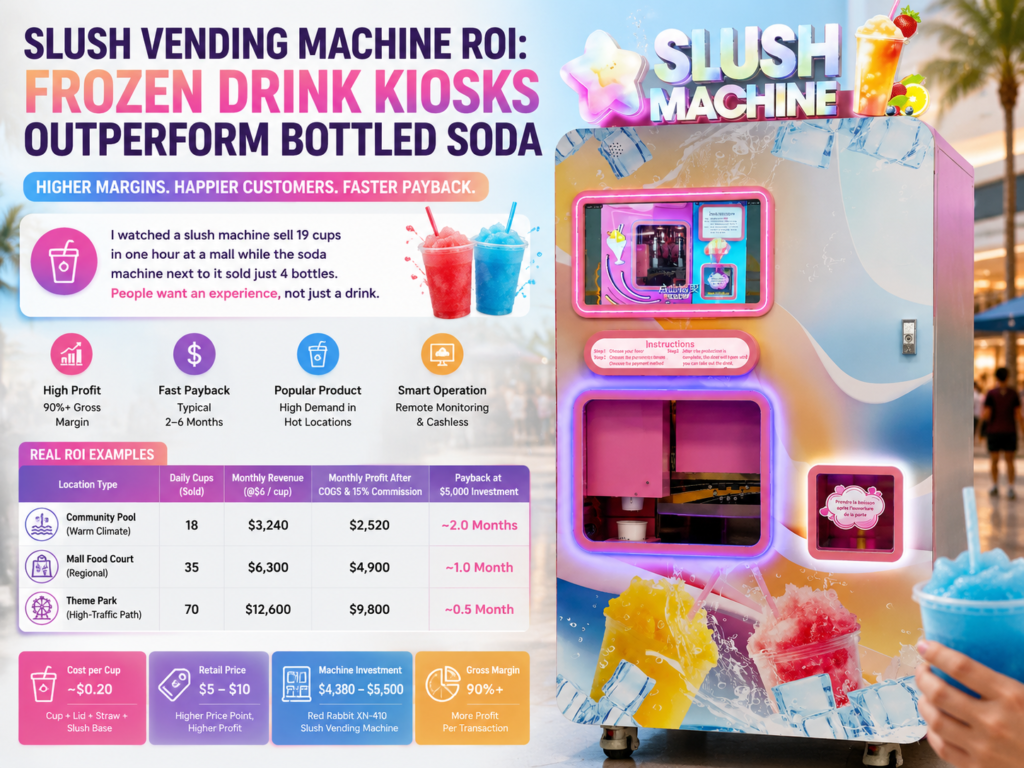
That same afternoon I watched a nearby traditional soda vending machine. It sold four bottles in the same hour the slush unit sold nineteen cups. The difference was not price. The slush cost more. The difference was that people wanted it. A frozen drink on a hot day is not a thirst fix. It is a small experience.
Red Rabbit, also known as Chitu VEM, builds the XN-410 slush vending machine at our factory in Guangzhou Panyu. We have more than ten years of manufacturing experience and export to over 130 countries. The XN-410 is designed for exactly this kind of unattended impulse sale. It runs 24 hours, accepts cashless payments, and keeps two flavors churning at the right texture.
The XN-410 unit economics
These numbers come from Red Rabbit product data, not optimistic guesses. The material cost per cup, including the cup, lid, straw, and flavored slush base, runs about $0.20. Retail pricing in most markets falls between $5 and $10, with premium venues like airports, theme parks, and resort pools at the higher end.
| Item | Red Rabbit XN-410 |
|---|---|
| Material cost per serving | ~$0.20 |
| Typical retail price | $5–$10 |
| Machine investment range | $4,380–$5,500 |
| Gross margin per serving | 90% or higher |
| Typical payback period | 2–6 months |
At $6 retail and $0.20 cost, a single cup produces $5.80 in gross profit. A location that moves 25 cups a day generates $145 in daily gross profit, or about $4,350 per month before rent and commission. Even after paying a venue 15 percent of revenue, the operator keeps roughly $3,700 monthly. At a $5,000 machine cost, that is payback in well under two months.
Where slush machines win
Slush is not a year-round product everywhere. In hot climates it is close to evergreen. In seasonal climates it peaks from late spring through early autumn. The key is matching the location to the climate and the crowd.
The best sites share a few traits. There is steady foot traffic, people are dressed casually or for recreation, and they have time to wait 40 seconds for a drink. Shopping malls, family entertainment centers, amusement parks, zoos, aquariums, public pools, beach promenades, and tourist strips all fit. A slush machine placed near an exit or a queue, where people are already warm and bored, performs better than one hidden in a quiet corner.
I spoke to an operator in Orlando who runs three XN-410 units. His best site is outside a mini-golf attraction. His worst site was inside a gym lobby. The gym crowd wanted water and protein, not frozen sugar. Location fit matters more than footfall count.
Slush versus bottled soda and coffee
Traditional vending operators sometimes ask why they should switch shelf space to a frozen drink machine. The answer is margin and differentiation. Bottled soda typically costs $0.60 to $1.00 wholesale and sells for $2.00 to $3.00. The gross margin is 50 to 70 percent, and the product is everywhere. Coffee vending can be profitable but needs frequent cleaning, milk handling, and a customer base that wants hot drinks.
Slush sits in a sweeter spot. The cost is lower, the retail price is higher, and the product is hard to replicate at home or in most convenience stores. A bottle of soda is a commodity. A cup of swirling frozen slush is an event, especially for children and teenagers.
Operating realities
Running a slush machine is not hard, but it is not zero work either. The syrup tanks need refilling every few days depending on volume. The dispensing nozzles and drip tray need daily wiping. A weekly deep clean keeps the tanks sanitary and the texture right. The FDA Food Code guidance on safe handling of prepared beverages is a useful reference for new operators, though local health departments have the final word.
One mistake I see often is choosing the wrong syrup concentration. Too much syrup and the drink is sickly sweet. Too little and the flavor is weak. Red Rabbit provides a recommended mix ratio with the machine. Stick to it. The second common mistake is turning the machine off overnight in a warm venue. If the product melts and refreezes, texture suffers and sales drop.
Three location scenarios with real numbers
Below are three realistic setups based on operator reports. They assume a $6 retail price, $0.20 cost, and 15 percent venue commission.
| Location type | Daily cups | Monthly revenue | Monthly profit after COGS and commission | Payback at $5,000 machine cost |
|---|---|---|---|---|
| Community pool, warm climate | 18 | $3,240 | $2,520 | ~2.0 months |
| Regional mall food court | 35 | $6,300 | $4,900 | ~1.0 month |
| Theme park high-traffic path | 70 | $12,600 | $9,800 | ~0.5 months |
These figures do not include syrup delivery, fuel, or maintenance, but they show why operators treat slush as a cash-flow machine rather than a side product.
Pairing slush with other lines
Slush works well alongside other Red Rabbit frozen treats. A ice cream vending machine next to a slush unit gives families two cold options. In venues that draw teenagers, a snowflake ice vending machine adds a photogenic dessert people post online. For operators who want a full treat row, Red Rabbit also makes cotton candy, phone case printing, jigsaw puzzle, and laser glass engraving machines.
Getting started
Start by finding the location, not by buying the machine. Walk the venue at different times of day. Count foot traffic. Check power availability and floor loading. Ask the venue manager about commission structure and whether food vending requires a health permit.
Once the location is locked, choose a machine with reliable support, remote monitoring, and payment flexibility. The XN-410 ships with a touchscreen, multilingual interface, and cloud backend so you can watch sales and inventory from your phone.
Ready to add frozen drinks to your vending route? View the Red Rabbit XN-410 slush vending machine or contact us for a location-specific profit estimate.
For general business setup guidance, the SBA business guide covers permits, taxes, and bookkeeping. For food safety rules, review the FDA Food Code as a starting point.