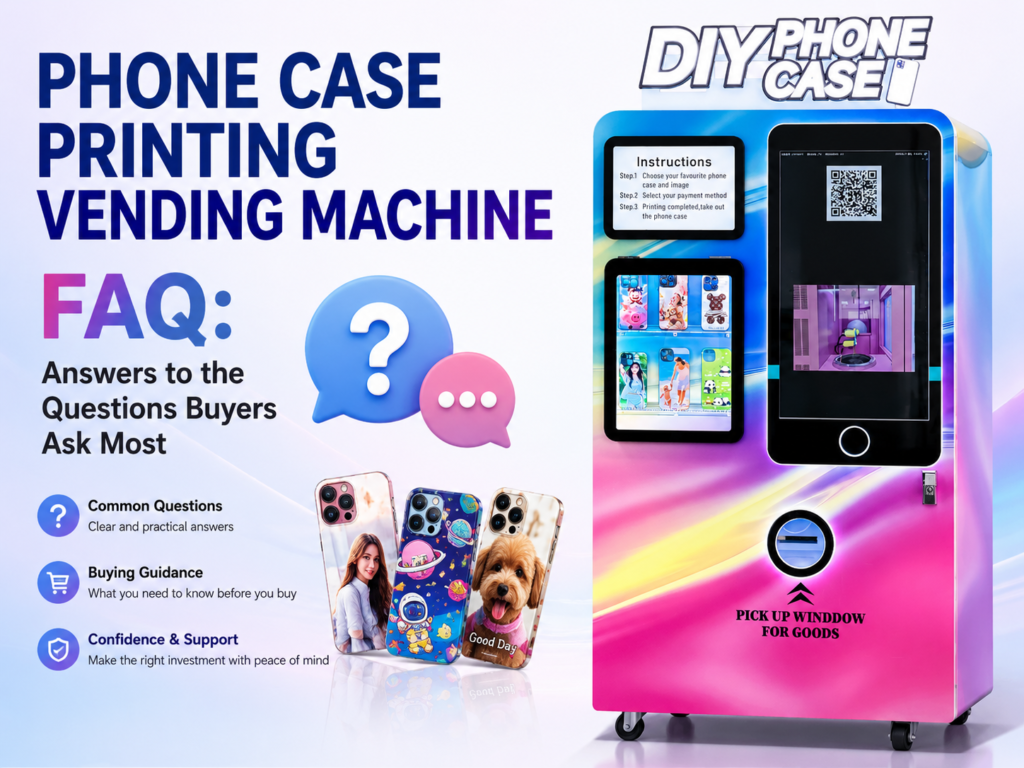
Every week the same set of questions lands in our inbox about phone case printing vending machines. Most come from people who have never run a vending route before, and a few come from experienced operators adding a new machine to an existing location. This page collects the questions buyers actually ask and answers them without the sales fluff. If you are weighing a phone case printing machine, start here.
What exactly does a phone case printing vending machine do?
It is a self-service kiosk that prints a customer’s chosen design, usually their own photo, onto a blank phone case while they wait. The customer picks a case model, uploads or selects an image, previews it on screen, pays, and watches the machine print. The whole thing takes a few minutes. There is no clerk involved and no inventory of pre-printed cases sitting on a shelf waiting to go out of style.
This is the key difference from a retail rack. A normal store sells cases with whatever designs the buyer guessed would sell. A printing machine makes the case the customer actually wants, at the moment they want it. That on-demand part is the reason the format works in the first place.
How fast does it print a case?
Most units take roughly two to four minutes from image selection to a finished case, depending on the model and the design complexity. Speed matters more than people expect. A queue that moves slowly at a busy mall is a queue that dissolves. A machine that prints in a couple of minutes keeps people standing there, and a small crowd around the machine is its own advertisement.
What phone models does it support?
A modern phone case printing machine holds a catalog of case blanks for the popular models, usually iPhone and the major Android flagships, with new models added over time. This is a supply question more than a hardware question. You want to confirm which case blanks the manufacturer keeps in stock and how often they refresh the list, because a customer holding a brand new phone wants a case for that phone, not last year’s model. Ask the supplier for their current supported-model list before you buy.
How much does a case cost to make, and what can I charge?
This is the question everyone asks first, so let me give you the honest shape of it. The material cost of a blank case and the printing consumables usually lands well under a dollar per unit, often around ninety cents. Most operators price the finished case between $10 and $20 depending on the location. The gap between those two numbers is where the margin lives, and it is a healthy gap because the customer is paying for something personal, not for a commodity.
What you charge is a location decision, not a universal rule. A machine in a tourist area or a high-end mall can sit at the top of that range and still feel like a bargain next to a $30 branded case in a phone store. A machine in a college town might price lower and win on volume. The machine itself tends to fall in the mid-four-thousand to low-six-thousand range, so the real question is whether your foot traffic can move enough cases a day, and that depends almost entirely on where you put it.
Do I need a technician on site to run it?
No. That is the point of the self-service format. The customer runs the machine, the machine takes payment, and you restock the blank cases and check the consumables on a schedule. Your main job is keeping it stocked, clean, and connected. What you do need is a plan for support when something jams or a part wears, so ask the manufacturer about replacement parts, warranty terms, and how responsive their service team is before you commit.
What kind of location works best for a phone case machine?
Locations with a lot of waiting and a lot of phone users. Shopping malls, family entertainment centers, tourist attractions, airports, and busy transit hubs all fit. The ideal spot is somewhere people already stand around with time on their hands and their phone in it. That is why these machines earn well next to waiting areas, food courts, and photo spots.
One operator I know placed a machine in a theme park gift area and another in a university student center. Both worked, but for different reasons. The park sold on impulse and souvenir value. The university sold on self-expression and price. The machine did not change. The location did, and the location is what made the difference.
How does the customer pay?
Most machines accept card payments and contactless payment out of the box, and many support app-based payment depending on the market. Cash is becoming less common for this kind of impulse purchase, and younger customers in particular expect to tap their phone or watch and be done. Make sure the unit you choose supports the payment methods your specific location needs, and check whether the payment terminal is integrated or something you have to source separately.
How good is the print quality, and does it last?
A well-built machine using proper inks produces a sharp, color-accurate case that holds up to daily handling. Quality varies between manufacturers, so the thing to ask for is a printed sample before you buy. Hold it, bend it, scratch at the edge. A case that smudges in a week will kill word of mouth faster than any advertising can build it. Red Rabbit units are built with this in mind, and the company will send samples so you can judge the print yourself rather than trusting a spec sheet.
Can it print anything besides phone cases?
Some machines in this category are limited to phone cases, while other manufacturers build units that handle related personalized products. The cleanest way to answer this is to check the exact model you are considering, because “printing machine” is a broad label that covers very different hardware. If you want a machine that does one thing well, a dedicated phone case unit is usually the more reliable choice than a multi-product machine that does several things adequately.
What maintenance and supplies should I plan for?
You will reorder blank cases, ink or toner, and occasionally a cleaning kit or a wear part. The routine is light compared to a food machine, which needs daily cleaning and health compliance. A phone case machine mainly needs restocking, a wiped screen, and a quick check of the print head. Set a weekly visit, keep a few spare parts for the common wear items, and you will avoid most downtime.
How do I know there is real demand before I commit?
You test the location before you test the machine. Spend an afternoon in the spot you have in mind and count how many people pass, how many are on their phones, and how many would stop for a two-minute purchase. Talk to a couple of nearby shop owners about their slowest and busiest days. If the foot traffic is there and people are already spending on impulse items, a phone case printing machine has a realistic shot. If the spot is empty on a Tuesday, no amount of clever pricing will fix it.
When you are ready to compare models, the phone case printing vending machine page covers the specifics of what Red Rabbit builds. For a broader look at how a personalized machine fits into a full retail or vending operation, the National Automatic Merchandising Association has operator resources at vending.org. And before you sign anything, the Small Business Administration’s business guide will walk you through the location and planning questions a lender is going to ask anyway.
If your question is not covered here, ask it directly through the contact page. A specific question about your location is always worth more than a general answer, and it costs you nothing to get one.