Most people see a cotton candy machine from the front, a glass window, a spinning head, a fluffy pink cloud. I see it from the back, because that is where it is actually made. Our factory sits in Panyu, Guangzhou, and the cotton candy machine that runs unattended in a mall halfway across the world starts its life here, on a test bench, running for days before it ever ships.
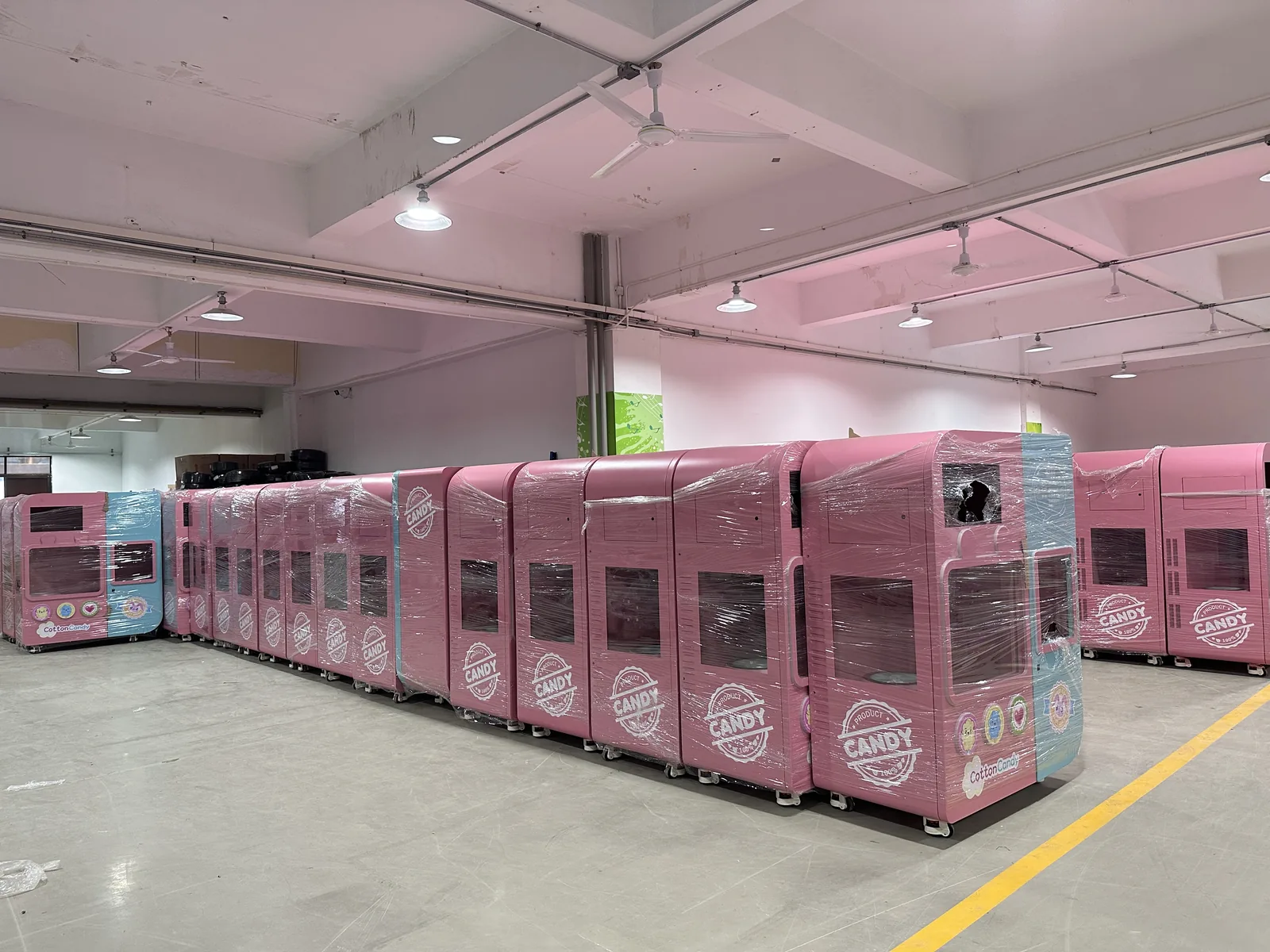
If you are going to buy a machine that has to work without anyone watching it, it helps to know how it was built. This is a look inside how we design and test the CT-606 cotton candy vending machine, the decisions we make, and why we make them.
The spinning head is where it all starts
A cotton candy machine is a deceptively simple idea. Heat sugar until it melts, spin it fast, and force the liquid through tiny holes so it solidifies into fine threads in the air. Getting that to work once is easy. Getting it to work ten thousand times, unattended, in a humid lobby, is an engineering problem.
The spinning head is the heart of it. We build it to hold temperature in a tight band, because sugar behaves badly at the edges. Too cold and it does not melt, leaving a gritty lump. Too hot and it caramelizes and burns, which smells terrible and jams the holes. We tune the heating element and the spin speed together so the sugar reaches the right viscosity every single cycle, not just on a good day.
Humidity is the silent killer. Sugar pulls moisture out of the air, and in a coastal city the air is rarely dry. A humid room makes cotton candy collapse into a sticky mat within minutes. That is why the machine does not just melt and spin. It manages the environment around the sugar, keeping the hopper sealed and the product chamber dry enough that a finished cone holds its shape after the window opens.
Designing for a machine that has to run itself
An attended cotton candy cart has a human to adjust things. Our machine has no human, so every failure mode has to be handled in the design. We think about it as three questions. Can the customer break it by pressing the wrong thing? Can the sugar gum it up over a long weekend? Can it keep running through a power sag or a voltage spike?
The answer to the first is a very small interface. The customer does not choose a temperature or a speed. They choose a size and a flavor, and the machine does the rest. The answer to the second is a self cleaning cycle and parts you can wipe down without tools. The answer to the third is the power supply work we do, designing for the voltage ranges of the 130 plus countries we export to, so the machine does not choke the first time it meets a different grid.
Food safety drives the material choices. Everything the sugar touches is food grade stainless steel. There are no painted surfaces inside the product path, no cheap plating that flakes. We know these machines sit where a health inspector might look, so the inside has to be cleanable and obviously clean.
The window is not decoration, it is the product
There is a reason the machine has a big clear front. Cotton candy sells on the spectacle. A customer watches the threads gather into a cloud and that moment is what turns a passerby into a buyer. So the window is not an afterthought. It has to be large enough to see, angled so it does not fog up from the warm sugar, and lit so the product looks good from across the room.
We spend real time on that light and glass because it is the difference between a machine that sells itself and one that needs a sign next to it saying what it does. A machine that makes its own advertisement is worth more per square foot than one that does not.
How we test before it ships
The test bench is where most of the problems get found, and finding them here is the whole point. Before a unit leaves the factory it runs a burn in cycle, hundreds of consecutive servings, day and night. We watch for drift. Does the temperature stay in band after hour six? Does the sugar start to build up anywhere? Does the cone come out consistent at cycle fifty the same as cycle one?
We test with real sugar in real conditions, not just in a climate controlled lab. We test in humidity. We test after the machine has sat idle, because a machine that starts cold in the morning is different from one that has been warm all day. We cycle the power on and off to make sure it recovers cleanly. A machine that needs a technician every time the power blinks is not ready to ship.
Then we pack it to survive the trip. These machines go by container to ports on every continent, and the machine that arrives is the one that has to work. We shake test, we drop test the packaging, and we ship the critical spares with the unit so an operator is not stuck waiting on a tiny part from the other side of the world.
What this means when you are buying
When you stand in front of two cotton candy machines that look similar, the difference is almost never visible. It is in the temperature control of the spinning head, the seal on the sugar hopper, the fog free window, the burn in hours, and the parts that come in the box. That is the part you cannot see from a brochure photo.
Ask the maker how they test. Ask what happens to the sugar in humidity. Ask what spares ship with the unit. The answers will tell you more than the spec sheet will. A machine built for unattended operation is a different product from a cart you have to nurse all day, even when the two look alike in a picture.
If you want to see the machine that comes out of this process, you can look at our cotton candy vending machine page, and if you want to ask us directly about the testing or the build, the contact page puts you in touch with our team. For the food safety side of selling a sugar product unattended, the FDA Food Code is the standard we keep in mind when we design the product path, and it is worth knowing if you are the one operating the machine in a public space.
The machine on the test bench is not glamorous. It is covered in sugar dust and running its five hundredth cone of the day. But that is what a machine that runs itself looks like before it gets pretty. The pretty part is the last thing we add.
Related machines from Red Rabbit
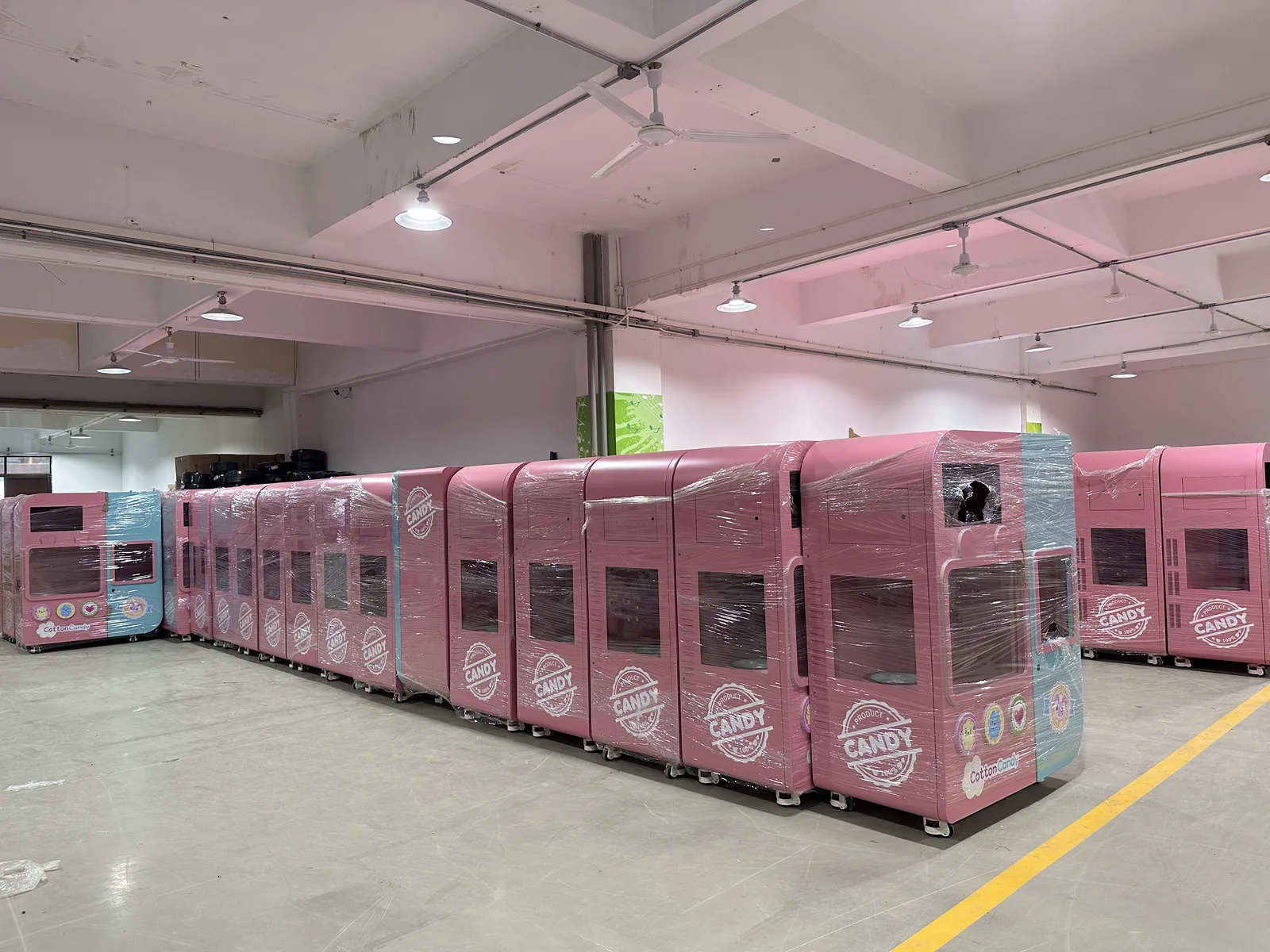
Red Rabbit vending machine | Red Rabbit vending machine | Red Rabbit vending machine