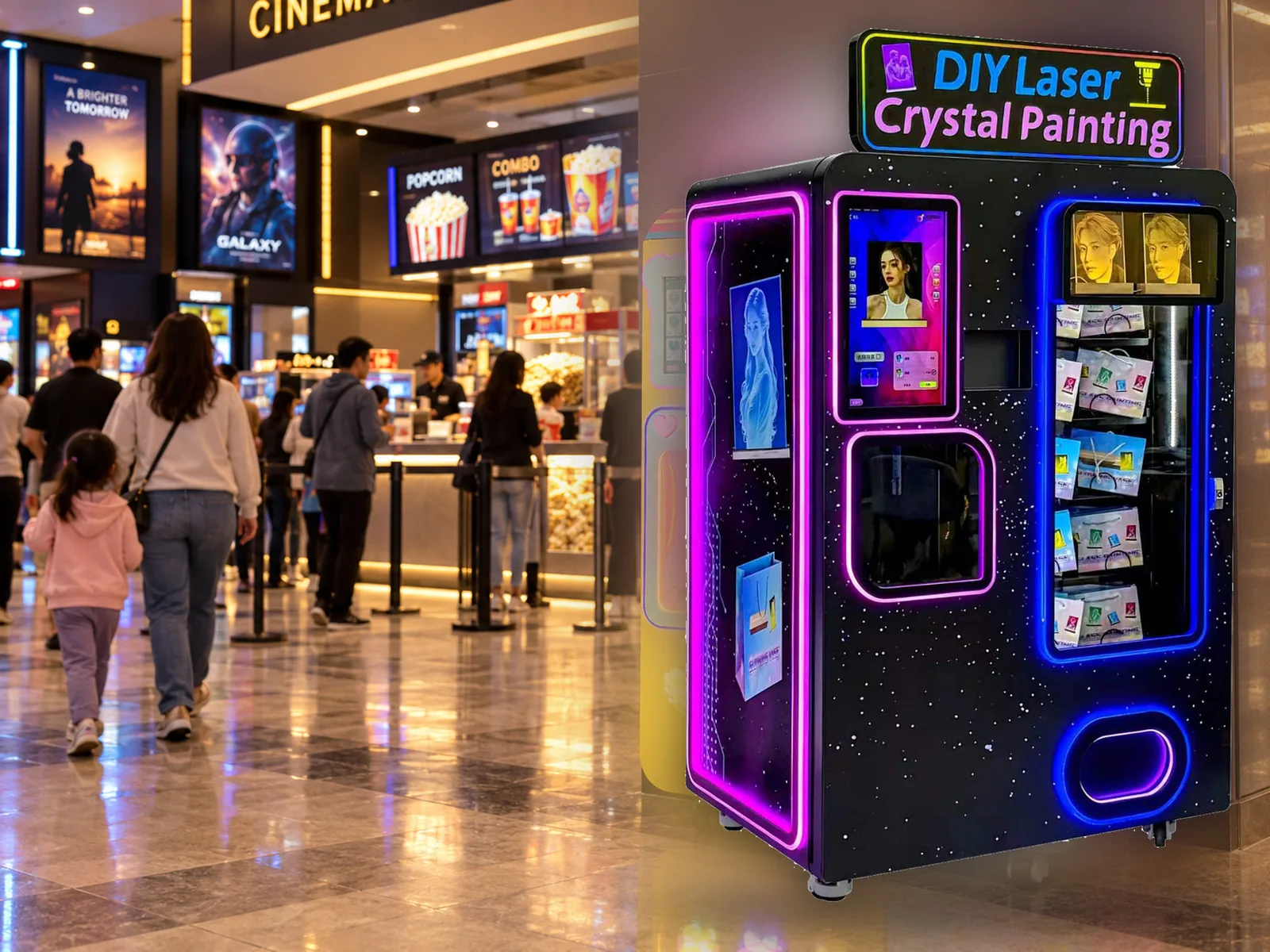
Why glass engraving machines market themselves
I stood in a Lisbon shopping center last October watching a Red Rabbit CT-DK320 engrave a family photo onto a glass plaque. Within two minutes, a small crowd had gathered. Three people were recording on their phones. One of them walked up and started browsing the template menu. The operator told me that videos of the laser working had been shared on local Instagram accounts and brought in weekend tourists who specifically came to find the machine.
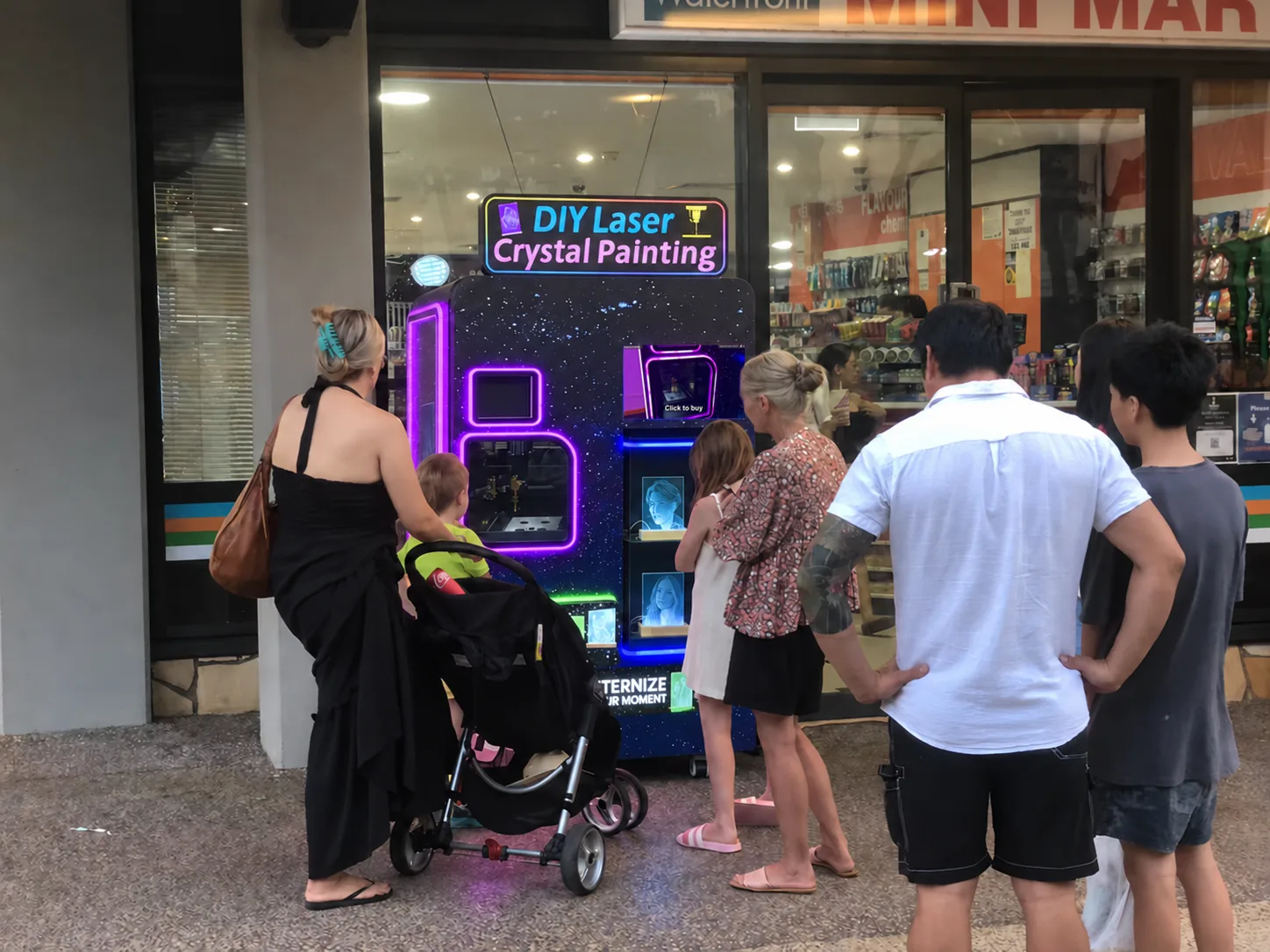
This is the core marketing advantage of glass engraving vending. The machine creates its own visibility. People stop because the laser is interesting to watch. They film it because the process looks satisfying on camera. The video gets shared because personalized products feel meaningful. All of this costs the operator nothing.
The glass engraving machines market is growing. A 2026 industry report valued the global glass engraving machines market at roughly $8.95 billion in 2025, with laser engraving accounting for 46.2 percent of revenue. The market is projected to grow at about 6 percent annually through 2033. That growth is driven by demand for personalization, which is exactly what a vending machine in a public space can capture.
The crowd effect explained
Laser engraving is a visual process. The beam moves across the glass surface, and the image appears line by line. People who would never stop for a snack machine will stop to watch this. In retail psychology, this is called the crowd effect. When one person stops, others slow down to see what caught their attention. When three or four people are watching, even more join.
I spoke to an operator in Dubai who placed his CT-DK320 near the entrance of a family entertainment center. He told me that on Friday evenings, the machine drew crowds of eight to twelve people at a time. About one in four would end up making a purchase. His daily sales on Fridays were triple his weekday average, and he spent zero on advertising.
The lesson is that placement matters more than promotion. A machine visible to passing foot traffic will market itself if the engraving process is visible to bystanders. Enclosed or hidden machines lose this advantage entirely.
Turning the process into social media content
Operators who understand social media can amplify the crowd effect. The engraving process is ideal for short-form video. The laser moves, the image appears, and the finished product is revealed. This creates a natural before-and-after narrative that works on TikTok, Instagram Reels, and YouTube Shorts.
One operator I know in Manila posts a daily time-lapse of a different engraving. Each video shows a photo being uploaded, the laser working, and the finished glass product held up to the camera. His account has grown to 12,000 followers in six months. He told me that customers now come to the mall specifically because they saw his videos and want to try the machine themselves.
The content does not need to be polished. Authentic, raw footage of the laser working is enough. What matters is consistency. Post the same type of content regularly so viewers know what to expect and where to find the machine.
Location-specific marketing tactics
Different locations call for different marketing approaches. Here is what I have seen work across several markets.
| Location type | Marketing angle | What to post |
|---|---|---|
| Shopping mall | Couple and family gifts | Engraved wine glasses with names and dates |
| Tourist attraction | Travel souvenirs | Landmark photos engraved on glass ornaments |
| Wedding venue | Personalized favors | Champagne flutes with guest names |
| Corporate event | Branded merchandise | Company logos on acrylic plaques |
| Airport terminal | Last-minute gifts | Quick engravings with city names |
At tourist attractions, the marketing writes itself. Visitors want a souvenir that reminds them of the trip. A glass item with a photo from that day, engraved on the spot, is far more personal than a mass-produced keychain from a gift shop. Operators should emphasize the location in their social posts. Tags like the city name or landmark help tourists find the machine when they search for things to do.
At wedding venues, the host often promotes the machine to guests before the event. One operator in Bali told me she gives the bride a free engraved champagne flute as a sample, and the couple shares it on their event page. Guests arrive expecting to engrave their own glass, and conversion rates are high because the intent is already there.
Seasonal and event-based promotion
Engraving demand spikes around holidays and events. Christmas ornaments are obvious. Valentine’s Day drives couple-name engravings on wine glasses and acrylic hearts. Graduation season in May and June sells plaque engravings with school names and dates.
Smart operators plan their template inventory and social content around these cycles. In November, switch the displayed templates to holiday ornaments and post gift-oriented content. In February, feature couple designs. In late spring, highlight graduation plaques. The machine stays the same but the marketing message rotates with the calendar.
Trade shows and conventions are another opportunity. A machine placed at a booth can engrave company logos or event names on glass or acrylic items. Attendees get a memorable keepsake, and the operator gets concentrated high-intent traffic for two or three days. Some operators make more at a single convention weekend than in a month at a permanent location.
Building a content routine
The most successful operators I have met treat their social media as a daily habit, not a campaign. The routine is simple. Film one engraving per day. Edit it into a 15-second clip. Post it with a location tag and a short caption. Reply to comments. Repeat.
The machine does not need to go viral. It needs to be findable. If someone searches for things to do at a specific mall or tourist spot and finds a video of an engraving machine there, that is a conversion. Local search visibility is more valuable than global reach for a location-based business.
Pairing with other personalization machines
Operators who run multiple machines can cross-promote. A customer who watches a glass engraving might also want a custom phone case or a personalized jigsaw puzzle. Red Rabbit offers the laser glass engraving vending machine alongside the phone case printing vending machine and the jigsaw puzzle vending machine so operators can build a personalization route.
Each machine generates its own social content. A phone case being printed, a puzzle being cut, a glass being engraved. Operators can run a single account that showcases all three, or separate accounts for each location. The cross-referral between machines in the same venue is free.
What to avoid
Do not pay for advertising until you have exhausted organic content. Paid ads for a single-location vending machine are rarely cost-effective. The audience is too local for broad ad targeting, and the organic content from the machine itself is usually stronger than any ad creative would be.
Do not hide the machine. Some operators place it in a corner to save on rent, and then wonder why nobody finds it. The CT-DK320 is a visual attraction. Put it where people walk past and can see the laser working. The rent premium for a visible spot pays for itself in daily sales.
Do not neglect templates. A machine with five templates gets boring. A machine with fifty templates gives customers reasons to come back. Rotate them, add seasonal designs, and watch which ones drive the most engagement on social media.
Resources for operators
The National Automatic Merchandising Association offers industry guidance on vending placement and operations. The SBA business guide covers the legal and tax basics for new operators in the United States. For laser safety compliance, the OSHA laser hazards resource explains classifications and workplace requirements.
Want to learn more about the CT-DK320 glass engraving vending machine? Contact Red Rabbit for specifications, blank suppliers, and marketing support for your location.