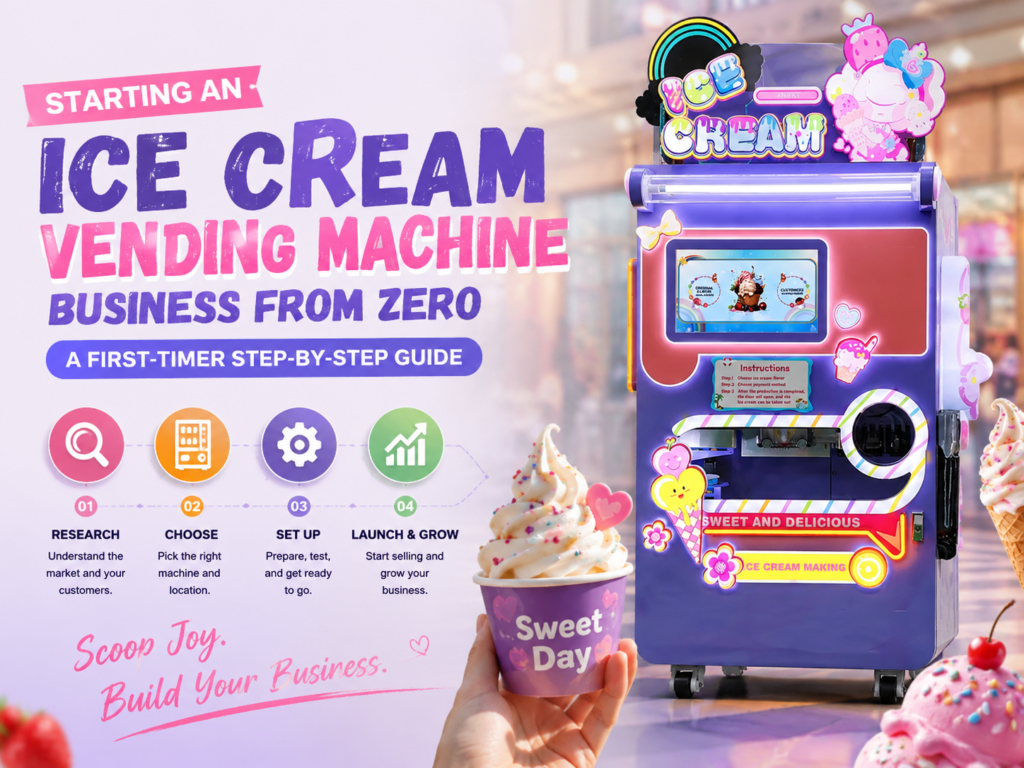
Every operator I have met started the same way, with a phone full of questions and no clear idea where to begin. Starting an ice cream vending business is not complicated, but it is not obvious either. This is the walkthrough I wish I could hand to someone who has never owned a machine before, written in the order you actually do the work.
Step one. Pick a machine you can restock in an afternoon
Before you think about locations or profits, look at the machine itself. There are soft serve machines, scoop style freezers, and automated machines that hold frozen novelties and hand them out on a conveyor. Each has a different restocking rhythm and a different failure mode. For a first timer, the smartest choice is a machine you can refill and clean by yourself without a technician on speed dial.
Ask the supplier three questions before you pay for anything. How many servings can it hold, how long does a full refill take, and what breaks first when it is used hard. If the salesperson cannot answer the third question, keep looking. A good place to start is an máquina expendedora de helados built for unattended retail, because it is designed around the exact problems a beginner faces, portion control, temperature holding, and simple cleaning.
Step two. The location question most beginners skip
Beginners pick a spot because it looks busy. Experienced operators pick a spot because the people walking past are the right kind of busy. An ice cream machine outside a gym has a different customer than one in a trampoline park, and a machine at a beach entrance is a different business from one in an office lobby.
Walk the location at the times you plan to operate. Count foot traffic for an hour, note the ages, note whether people are already carrying food. Look for two things that quietly decide your revenue, a power outlet within reach and somewhere to stand while you restock. A machine that needs a hundred foot extension cord is a machine that will frustrate you every single day.
Step three. Paperwork before you spend a dollar on stock
This is the part everyone wants to skip, and it is the part that protects you. Frozen dessert is food, so your local health authority will want to know how the product stays at a safe temperature and how the machine gets cleaned. The federal FDA Food Code is the reference most states build their rules on, and it is worth reading the sections on temperature control and equipment before you sign a lease.
You will also need a business structure, a tax registration, and possibly a permit for the machine itself. The SBA business guide walks through the basics of registration and licenses in plain language. Get these sorted early, because a landlord will not hand over a good spot to someone who cannot show paperwork, and a health inspector will not care that you planned to get licensed next week.
Step four. Stock, suppliers, and the two-week learning curve
Your first two weeks are less about selling and more about learning how fast product moves. Start with a small order and restock often rather than filling the machine to the brim on day one. You want to learn which flavors sell and which ones sit, because unsold product in a freezer is money frozen in place.
Line up a backup supplier before you need one. Ice cream and frozen novelties are bulky, and a distributor can run short in a heat wave exactly when you are busiest. Having a second source, even a nearby wholesale club for emergencies, means one missed delivery does not turn into an empty machine on a Saturday afternoon.
Decide on portion and price before your first delivery. Single serve cups and wrapped novelties are the easiest to start with, because they need no scooping and no extra packaging. A simple price structure helps you too. Pick one price for a small cup and one for a premium novelty, then keep the change making math simple so a busy line keeps moving. You can get fancier with combos later, once you have a month of real sales to look at.
Step five. Launch week and the numbers to watch
Your first week will not look like a normal week, and that is fine. Watch three numbers and ignore the rest for now. Servings sold per day, the time of day people buy, and the percentage of stock that goes unsold or expires. Those three numbers tell you whether your location, your product mix, and your ordering are right.
Write the numbers down every evening for the first month. A simple notebook works better than an app, because the act of writing forces you to notice patterns. After two weeks you will see a shape emerge, busy right after school, dead before noon, whatever it is. Then you adjust, move your restock to match the rush, trim the flavors that do not sell, and add a second round of product for the peak hours.
The three mistakes that sink first-time operators
The first mistake is overstocking. New operators fill the machine to impress themselves, then throw away product when it expires. The second mistake is ignoring the machine for days at a time, because a frozen machine that trips a breaker turns into a puddle of ruined stock by the time anyone notices. Check it daily, even briefly. The third mistake is staying in a dead location out of stubbornness, because a bad spot does not become a good one just because you invested in it. If the foot traffic is wrong, move the machine, that is the whole advantage of unattended retail.
None of this requires a business degree. It requires a machine you can run without fear, a spot where the right people actually walk, and a habit of writing down what happens every day. Start there, and the rest of it, the flavors, the promotions, the second machine, comes later. If you want to talk through your specific setup, reach out through the contact page and someone will walk you through the machine options without a hard sell.