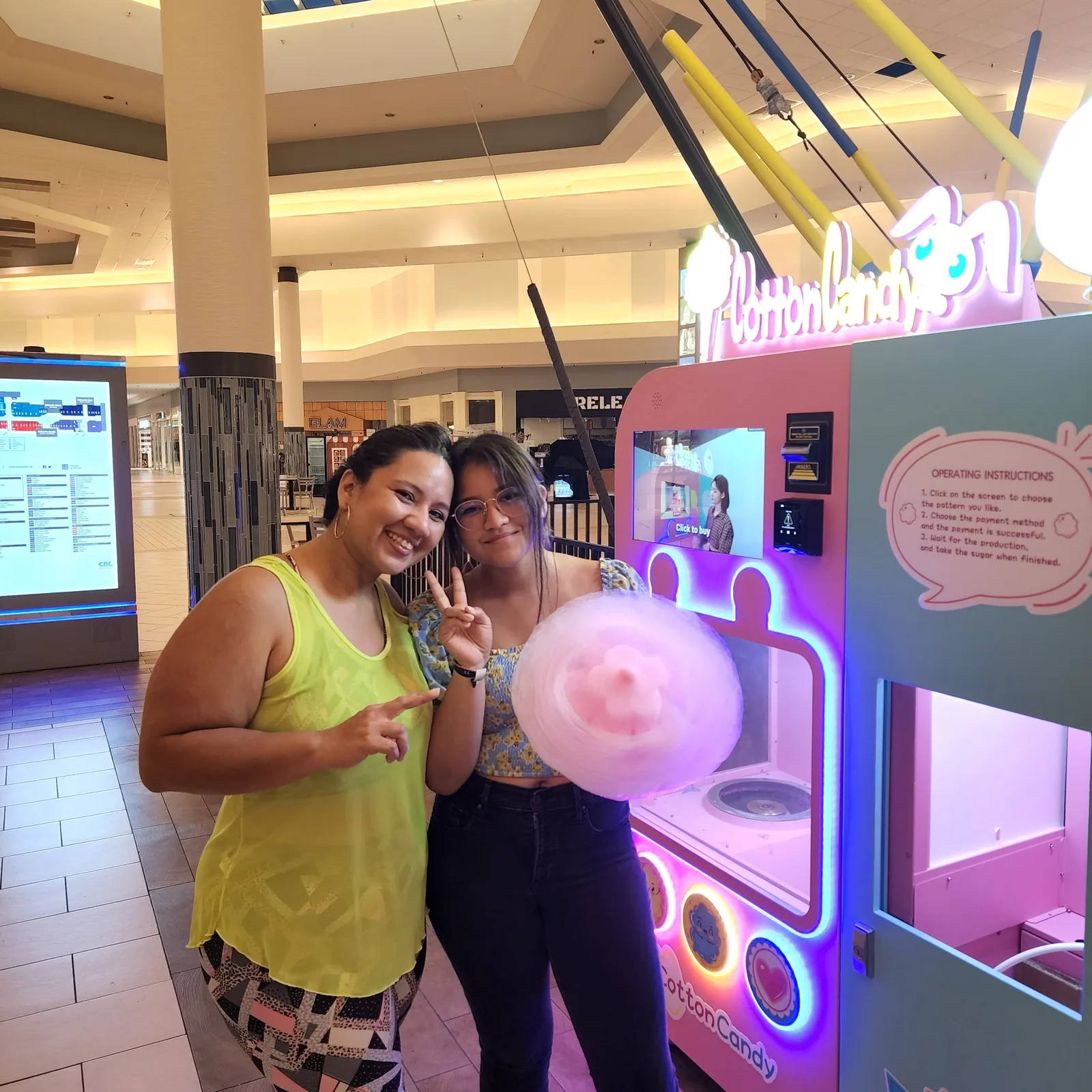
The first time Marta saw a cotton candy machine do its job on its own, she did not trust it. She had spent four summers behind a stainless steel bowl with a spinning head, feeding it sugar and hoping the wind stayed calm. A machine that made the whole cloud by itself, with a clear dome and a robotic arm, looked like a carnival trick. So she stood there for twenty minutes and watched it finish cone after cone, pink and blue and even a two-tone swirl, while the queue in front of her never broke.
“You look like you want to climb inside and check the motor,” the distributor said, laughing.
“I want to see it drop one,” she said. “Just one cone, badly. If it can make a bad cone, it is a real machine.”
Marta ran a small fairground business in the north of Spain. For four summers she had sold cotton candy from a stall that followed the local fiesta calendar, and every year she made good money for four months and then watched it stop. The rest of the year the machine sat in her garage under a tarp. She liked the work. She liked the smell of hot sugar and the way a finished cone made a kid’s whole afternoon. What she did not like was that her entire income depended on the weather and the calendar.
The problem was never the sugar
Her real problem was simpler. Cotton candy is almost pure impulse. People buy it at a fair, at a match, at a beach, in the ten seconds after their kid points at the machine. Her skill was spinning it fast and pretty. What she could not control was everything around the sale: the queue, the wind, the rain, and the fact that she could only ever be in one place at a time.
One rainy Saturday in late summer, a whole day was nearly a write-off. She made a handful of cones between downpours and spent the rest of the afternoon under the canopy, watching the tarp flap. That evening she told her husband she was done with weather. “I want a machine that sells while I am not there,” she said. “And I want it to work in winter.”
He laughed at the second part. “Nobody buys cotton candy in winter.”
That was the exact assumption she was about to test.
The machine changed where she could sell
What she found, when she started looking, was that the new automatic cotton candy machines had changed the whole shape of the business. A traditional booth needs a person, a canopy, a power source, and enough floor space for a queue. The automatic version sits in a footprint not much bigger than a fridge, makes the cone with a robotic arm, and runs on a card tap or a phone. It does not get tired, it does not take a break, and it does not care that it is January.
Marta bought one, a Red Rabbit model that makes fresh cones to order, and put it in a shopping centre a few streets from her house. The mall had never had a cotton candy machine before. The manager agreed to a short trial in a corner near the cinema entrance, a spot where families walked past on the way to the movies.
The first week was quiet. She checked the sales report from her phone each evening and the numbers were modest, nothing like a summer fair. She started to worry the winter joke would turn out to be true.
The turning point was a birthday
Then a woman stopped her while she was refilling the sugar one afternoon. “Can it make a blue and white one for a party?” she asked. “My daughter saw it last week and has not stopped talking about it.”
Marta switched the machine to a two-tone swirl and handed over a cone. The woman filmed the whole thing on her phone. By the end of that month, Marta had taken four small orders for birthday parties and two for a local football club’s junior tournament. The machine was not just selling cones anymore. It was selling a moment that people wanted to capture and share.
That was the part she had never put into words in her fairground years. At a fair, cotton candy is one treat among a hundred. Inside a mall or at a party, the machine itself is the attraction. Kids press their hands against the dome and watch the arm spin. Parents film it. The cone is almost secondary to the show.
She moved the machine once, after the first month, to a spot with better afternoon light near the entrance. Sales climbed. She added a second sugar colour. She learned which days were slow and stocked less. In February, the slowest month at the fairground, the mall machine quietly made more than her best single week of the previous summer had, without her standing next to it.
What she would tell another operator
When people ask Marta whether an automatic cotton candy machine is worth it, she gives the same answer now. “It is not a fairground booth that works harder. It is a different business.” The booth earned when she was there and the weather cooperated. The machine earns in the hours she is asleep, in the rain, and in a season when she used to have nothing to sell.
She kept the fairground stall, by the way. It is still her favourite four months of the year. But now it is the extra income, not the whole year. The machine is the backbone.
If you are weighing the same move, the practical questions are the same ones she asked. Where is there steady foot traffic all year? Can the machine run unattended and card-only? How fast can you get someone to refill the sugar and clean the dome? If you can answer those three, the rest is just watching the numbers and learning your own busy hours. You can see the machine Marta uses, and the full cotton candy range, at Red Rabbit’s cotton candy vending machine page. If you are also looking at frozen treats for the same indoor spot, the snowflake ice machines are built for the same year-round indoor work. And if you want to talk to someone who actually runs these, get in touch here.
Cotton candy is food, and the same care you put into a fairground stall applies to a machine: clean the dome and the spinning head daily, and follow your local food safety rules. If you are setting up in the United States, the FDA Food Code and the SBA business guide are good places to start.
Related machines from Red Rabbit
Red Rabbit vending machine | Red Rabbit vending machine | Red Rabbit vending machine