Nobody walks into a shopping center planning to buy cotton candy. That is the whole point. The purchase does not exist in the shopper’s head until the machine puts it there. A soda machine sells to a person who is already thirsty. A cotton candy machine has to create the want first, and it does that with a few very reliable tricks.
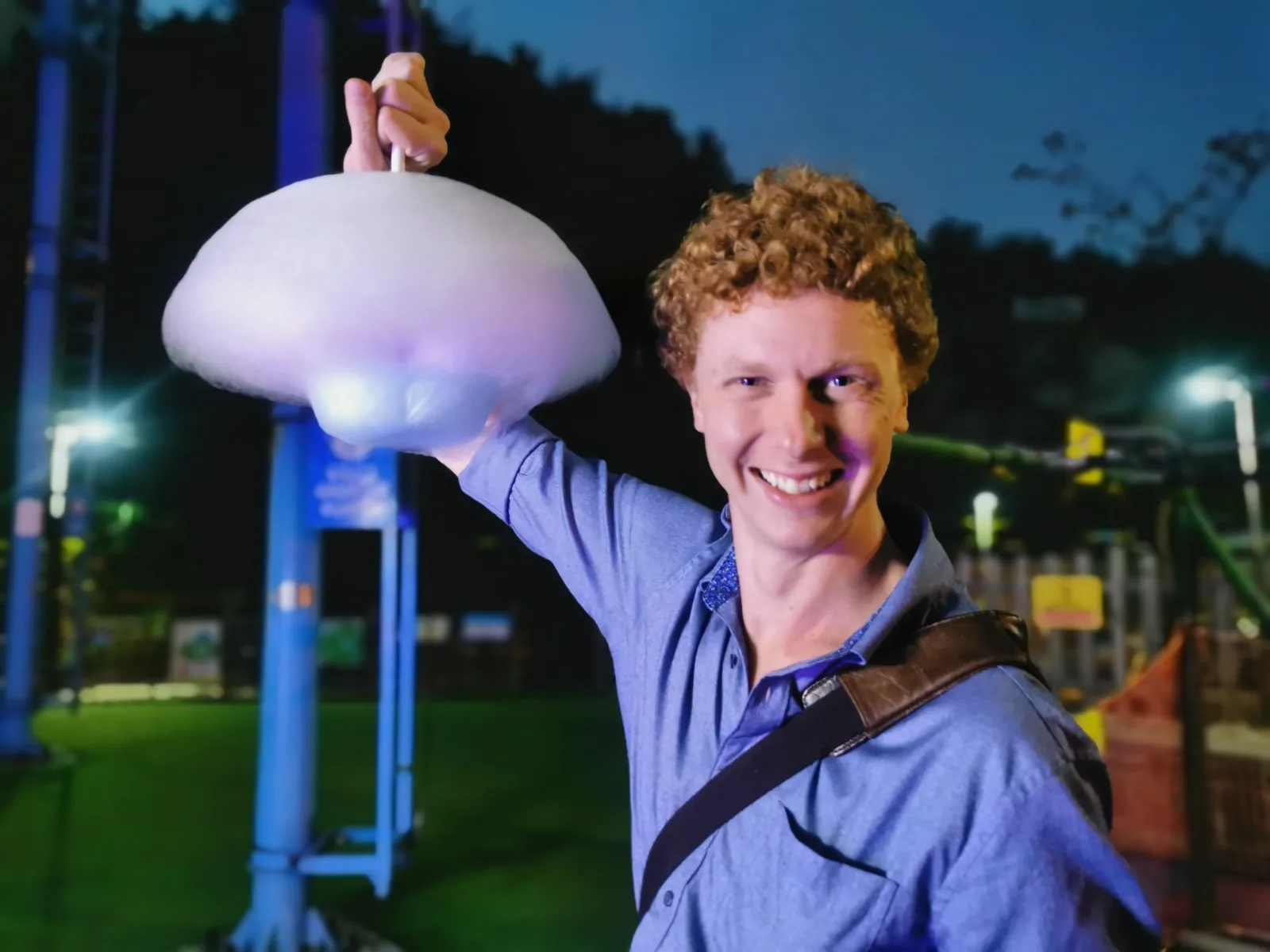
Understanding those tricks matters more than most operators realize, because cotton candy is a pure impulse product. It is not a need. It is not even a planned treat. It is a small, emotional yes that happens in the space of about ninety seconds. If you know why that yes happens, you know how to place the machine, light it, and price it so the yes happens more often.
A Want, Not a Need
Most vending is need driven. A person is thirsty or hungry and solves it at the nearest machine. Cotton candy reverses the flow. The machine creates desire first and then fulfills it. That is a completely different job, and it is why the product behaves differently in the wild.
Because the purchase is emotional rather than practical, a few things stop mattering. Customers do not compare cotton candy prices the way they compare a bag of chips. They do not read the menu carefully. They see the color, hear the hum of the spinner, and react. This is also why the product can sit at a healthy price point without resistance. The buyer is paying for a moment, not for sugar.
The Machine Is the Show
Here is the part plain dispensers cannot match. A cotton candy machine does its work in the open. A stick drops, a head spins, and sugar turns into a cloud while the customer watches. That process takes a minute or two, and it is the whole reason the machine works.
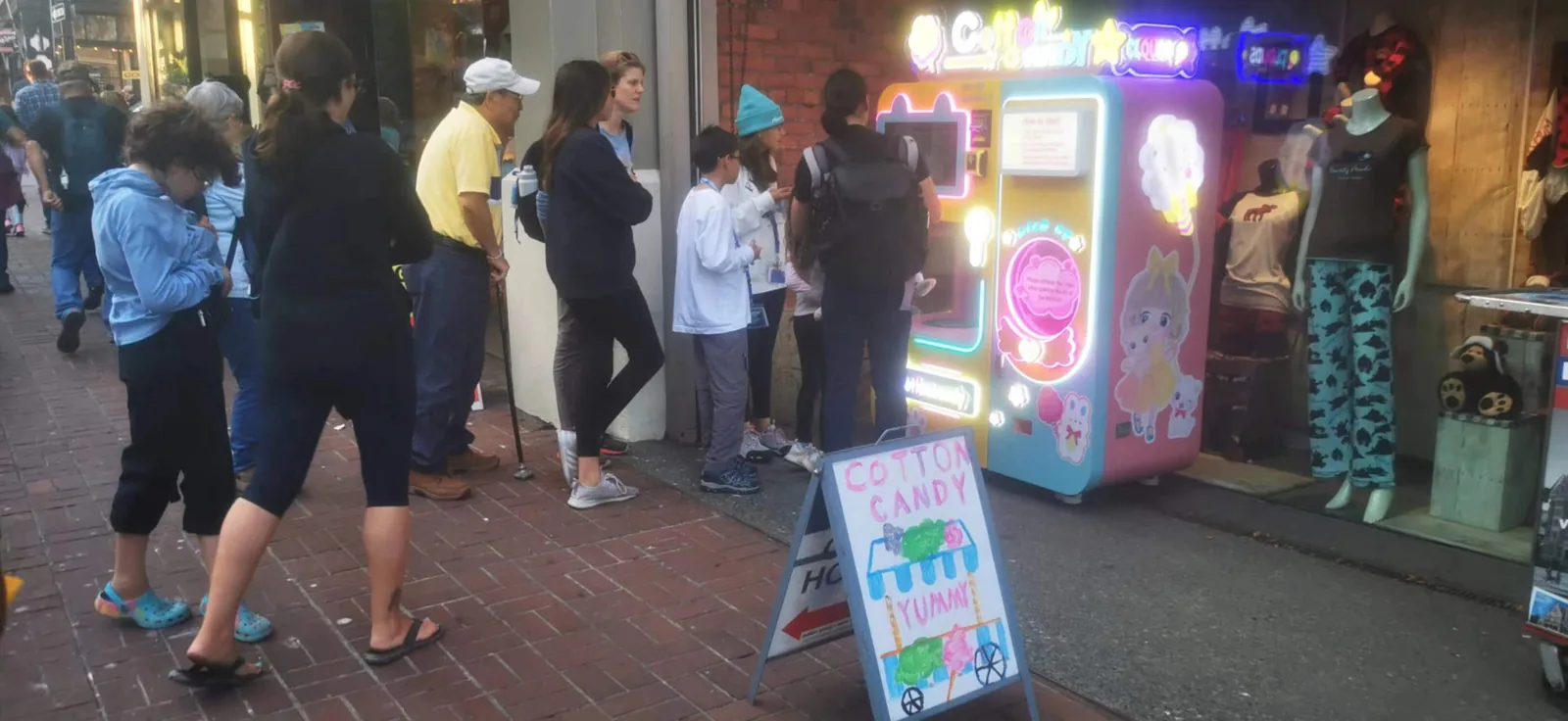
People stop to watch. A person stopping draws a second person, and a second draws a third. The production becomes a tiny piece of street theater, and the theater is free marketing. It also creates dwell time, the minutes a shopper spends standing still near the machine. Dwell time is the raw material of impulse sales. The longer someone stands and watches, the more likely they are to buy, and the more likely the people behind them are to buy too.
This is why the machine works best where people already have time to linger, not where they are rushing past. A mall corridor between stores beats a commuter exit. A ride exit at a fair beats a parking lot. The show needs an audience with nothing else to do.
Nostalgia and the Color Cue
Cotton candy carries a strong memory load. For a lot of buyers, pink spun sugar is a carnival, a childhood birthday, a summer fair. That association lives below the conscious level, but it does real work. When the machine lights up and the first strands of pink appear, the brain reaches for that memory before the wallet does.
Color is the trigger that starts it. Pink and blue are not random choices. They are the two colors most people associate with the treat from childhood, so they read as familiar and safe. Operators who offer a clear color choice on the screen, pink, blue, maybe a mixed swirl, give the customer one more small thing to participate in. That participation matters. Choosing the color turns a passive purchase into a tiny act of creation, and people value things they had a hand in making.
The Child Is the Real Customer
In family settings the buyer is often not the person who decided. A child sees the machine, points, and tugs a sleeve. The parent is the one who pays, but the child did the selling. This matters because the pitch a child makes is hard to refuse, and the parent’s calculation is different from a normal purchase.
A parent is weighing one thing, mostly. Is this a cheap yes or an expensive yes. A five dollar treat after a ride or a meal is a cheap yes, and cheap yeses keep the day pleasant. A thirty dollar toy is an expensive yes and gets negotiated. Cotton candy sits firmly in the cheap-yes zone, which is why it converts so reliably when a child is involved. The machine just has to be visible at the moment the child is already wound up and happy, right after a ride, right after a show, right outside a gift shop.
The Small-Price Yes
Even without a child, cotton candy works on a pricing trick. It is an add on, not a main event. After a family has spent sixty dollars on lunch or forty on a toy, a few dollars for a treat feels like rounding, not spending. The shopper’s mental budget is already open, and a small, visible, immediate reward slips through without triggering the usual resistance.
This is a form of anchoring. The larger purchase sets the scale, and the cotton candy looks tiny by comparison. The machine benefits from being near other spending, which is why it does well beside food courts, arcade entrances, and gift shop exits. Place it in a dead, unspent corner and it has to create the whole mood from nothing. Place it next to money already moving and it rides the momentum.
Placement Follows Psychology
The psychology dictates the map. Cotton candy sells where people are already happy, already spending, and already standing still. Ride exits at an amusement park are near perfect, because the rider steps off with the excitement still high and a child already looking for the next thing. Gift shop exits catch people in an open wallet mood. Food court perimeters catch the dessert moment without fighting the main meal. Even a spot near restrooms can work, because a parent managing tired kids will often buy a cheap treat to smooth the moment over.
The common thread is emotional readiness plus dwell time. If the location has both, the machine sells. If it has neither, the machine sits. This is not a product you scatter and hope. It is a product you place deliberately where the psychology is already on your side.
The Shareable Moment
There is one more layer that has grown in the last few years. Cotton candy is extremely photogenic, and the machine itself is fun to film. A customer who watches a cloud form and then holds it up for a photo is doing your marketing for you. That photo goes to friends and feeds the next visit. The machine’s look, the lighting, and the color all feed this, which is why a clean, well lit unit with a bright screen quietly outperforms a dull one in the same location.
Food safety still runs underneath all of it. A sealed production chamber keeps the process clean and gives parents one less reason to hesitate. Operators should follow the same food handling standards that apply to any vended food product. The FDA Food Code is the reference to keep on hand for that side of the operation.
If the psychology makes sense for your venue, the machine itself is worth a close look. A well built cotton candy vending machine turns all of this, the show, the color, the ninety second cloud, into a repeatable sale. For planning the rest of the business, the Small Business Administration business guide is a good place to work through the setup, and the contact page is the fastest way to ask whether a spot you have in mind would actually convert.
The machine does not sell sugar. It sells a ninety second memory that happens to be cheap, colorful, and impossible to resist when the moment is right. Place it where the moment already exists, and the machine does the rest.
Related machines from Red Rabbit
Red Rabbit vending machine | Red Rabbit vending machine | Red Rabbit vending machine