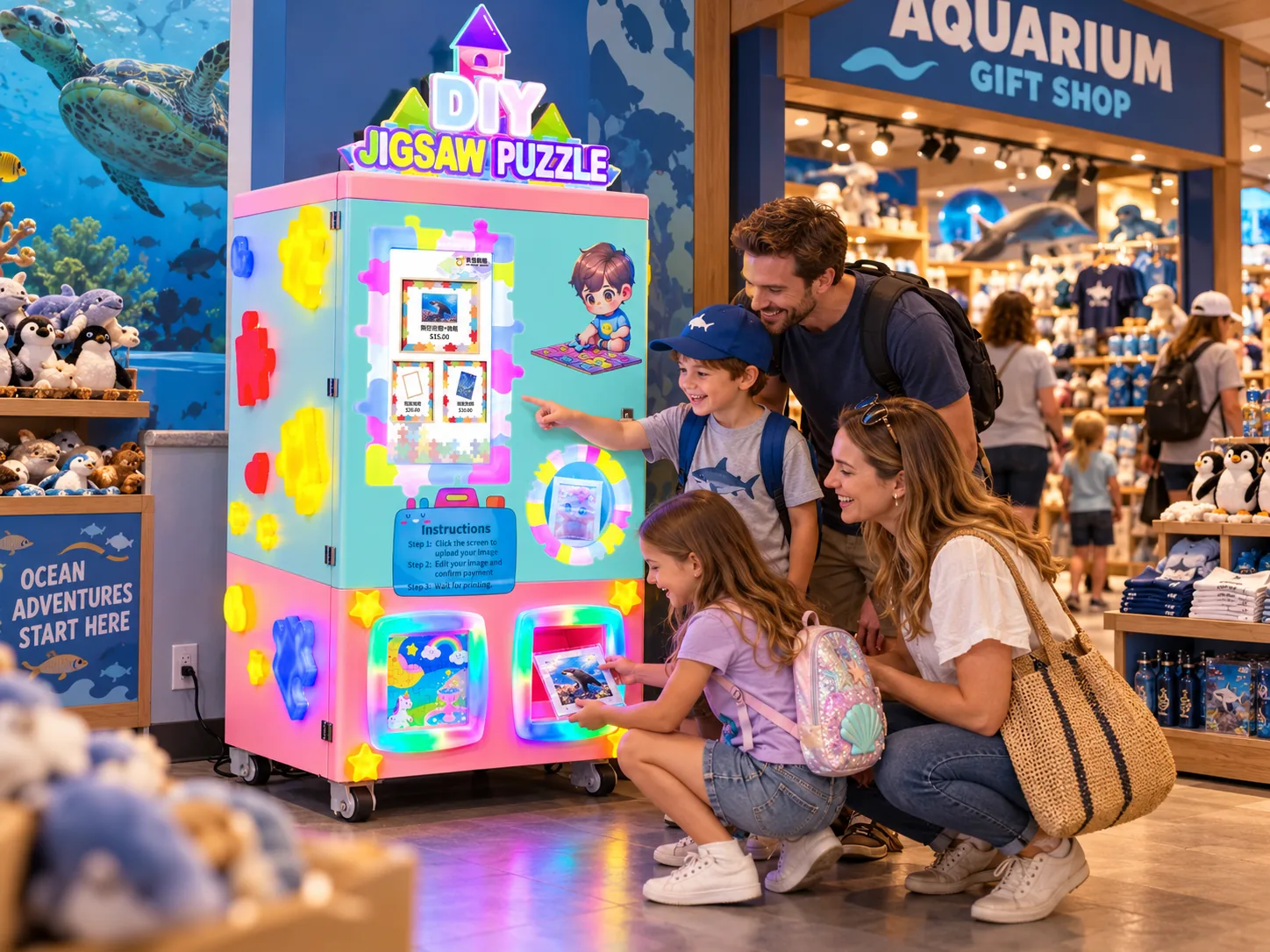
Most people who buy a photo jigsaw vending machine have never operated any vending machine before. They like the idea of a machine that turns a family photo into a keepsake, and they picture placing it somewhere busy and watching it run. The good news is that this is one of the friendlier machines for a first timer to learn on. It does not need refrigeration, it does not need a fryer, and it does not need daily ingredient runs. The honest part is that beginners still make the same handful of mistakes, and those mistakes almost always come down to skipping the unglamorous setup steps.
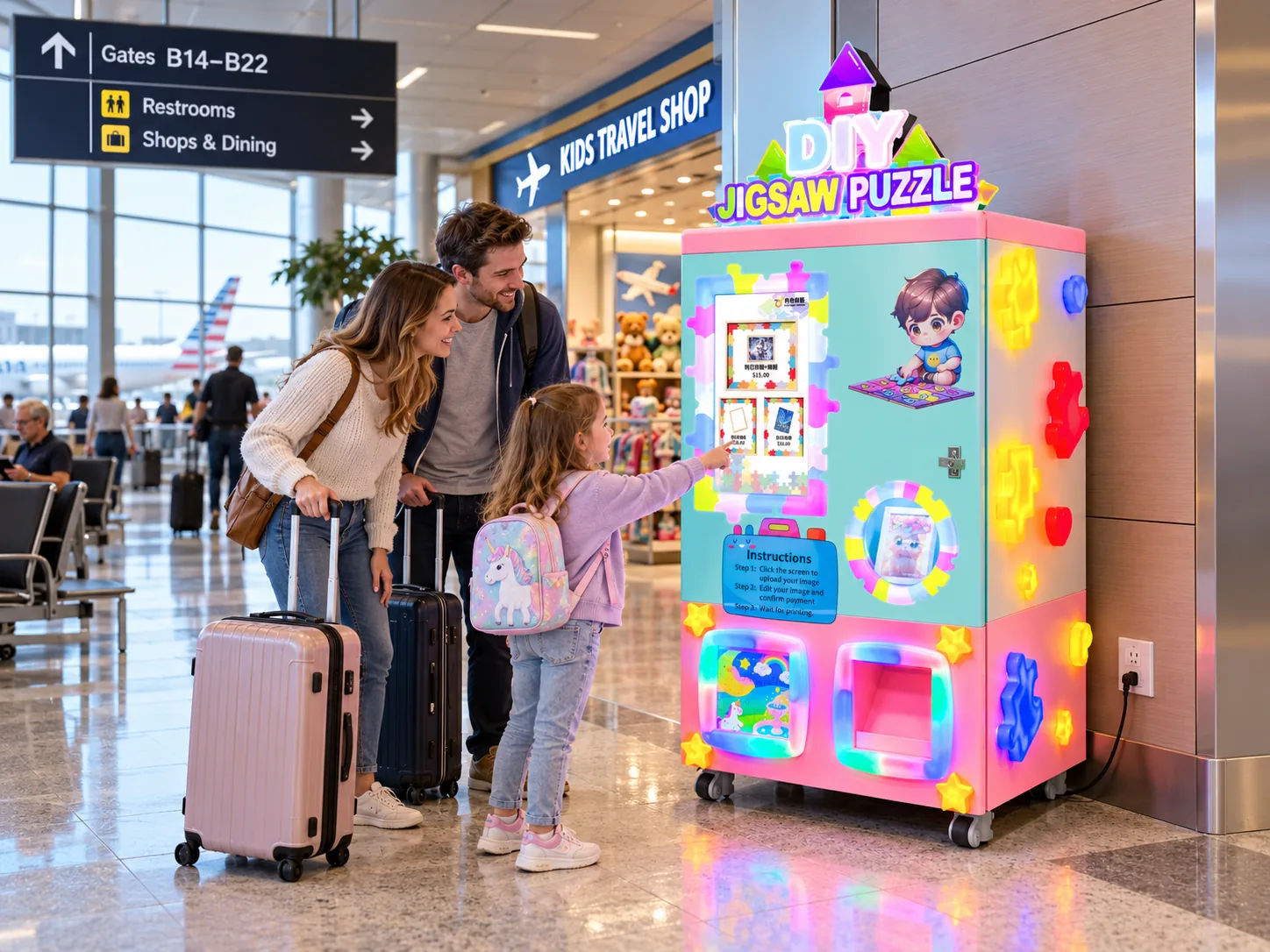
This guide walks through the process in order, written for someone who has never switched on a vending machine. I keep the steps concrete and flag the traps as they come up.
Why a photo jigsaw machine makes sense for a beginner
A jigsaw puzzle is not a snack you buy on reflex. It is a keepsake, and that changes everything about how you run the business. People buy snacks when they are hungry. People buy a photo puzzle when they have just had a good moment and want to hold onto it. That means you are not competing with the corner store on price. You are selling a small piece of a memory, and that is a much easier thing to stand behind.
It also means your machine has a built in reason to exist in places where other vending machines do not. A candy machine in a zoo is fine, but a photo puzzle machine in a zoo is a natural fit. The customer already has the photo. The machine just turns it into something they can keep. That fit is what makes this a good first machine. You are not fighting for attention, you are completing an experience that is already happening.
Step 1: Choose a machine that prints on puzzle boards, nothing else
Not every photo printer is the same. A photo jigsaw vending machine is built to print an image onto a jigsaw board and then cut it into pieces, so the customer walks away with a working puzzle. Some machines also advertise flat photo printing or postcard printing. Red Rabbit’s CT-PTJ370 does not do those things, and that focus is a feature rather than a limitation. The machine does one product well instead of three products halfway. When you are new, one product is exactly what you want. It keeps your inventory simple and your menu easy to explain.
There is also only one puzzle format to learn, offered in two finishes. The customer picks a standard board or a framed board. That is the whole menu. You do not stock different sizes by photo type, and you do not manage a catalog of options. The machine handles the printing and cutting, and the customer does the rest.
Step 2: Find a location where people stop, not just walk past
This step decides most of your revenue, so give it more time than any other. A jigsaw puzzle is not an impulse snack, it is a keepsake, and keepsakes sell best where people are already in a slow, happy frame of mind. Tourist stops, zoos, aquariums, family entertainment centers, and seasonal fairs all fit. A family has just spent the afternoon together, they have a photo on their phone they actually like, and now there is a machine that will turn it into something they can keep.
Foot traffic alone is not enough. A busy train station has thousands of people every hour, but almost all of them are rushing. A small aquarium has fewer people, but those people wander, take photos, and stay for an hour or two. That lingering time is what a photo keepsake needs. When you scout a location, stand there for twenty minutes and count how many people slow down, look around, and pull out their phones. That number matters more than the raw headcount.
Step 3: Sort out power, internet, and permits before you commit
Beginners often sign a location agreement and only then discover the machine has no outlet nearby or no signal for its payment terminal. Check the practical stuff first. The machine needs a standard power supply, a stable internet connection for card payments and remote monitoring, and enough clear space for customers to stand in front of it without blocking a walkway.
Permits and taxes depend on where you are and how you structure the business, so do not guess. The U.S. Small Business Administration business guide is a solid starting point for registration, licensing, and choosing a business structure. For industry-specific questions, the National Automatic Merchandising Association is the trade body for vending operators and has resources on standards and best practice. Sort these out before you buy so you are not surprised later.
Step 4: Set up blank boards and a simple, location-based menu
Your recurring inventory is blank jigsaw boards and ink. The standard board and the framed board are your two options, and you price them for the location, not for the photo on them. The same puzzle costs you the same to make whether it carries a family portrait or a sunset, so the price should not change with the image. Price for the venue instead. A premium tourist destination can support a higher price than a neighborhood arcade, and that difference is normal.
Keep the menu to two or three lines. Too many choices make people hesitate and walk away, and a first timer does not need the complexity of a long product list anyway. The machine already does the hard work. Your job is to keep it stocked and keep the pricing clear.
Step 5: Run a soft launch week and watch how people actually use it
Do not announce the machine and leave. Spend the first week nearby, not hovering, but present. Watch where people stand, whether they understand the instructions, how long the print takes, and where they hesitate. You will catch small problems that would otherwise cost you sales for months. Maybe the screen wording confuses older customers. Maybe the lighting makes the preview photo hard to see. Maybe people assume it only takes coins. Note everything and fix the easy ones first.
A soft launch also builds your first reviews and word of mouth. When a family makes their first puzzle and holds it up, other people notice. That single visible happy customer is worth more than any sign you could hang.
Step 6: Fix the first-week mistakes that almost everyone makes
There are a few recurring traps. The first is under-stocking. New operators order a small batch of blank boards to save money, then run out on a busy Saturday. Order enough for at least a full weekend of peak traffic, and set a reminder to restock before you hit the last few. The second trap is ignoring the machine’s remote status. If it can report ink level, print count, and errors to your phone, check that data. It tells you when to visit instead of guessing.
The third trap is giving up on a slow location too fast. A keepsake machine builds familiarity over weeks. The family that walked past in week one might come back in week three when their kid asks for the puzzle they saw. Give a good location a full season before you judge it, unless the foot traffic clearly is not there.
What to expect from your first season
Your first season is about learning, not maximizing. You will learn which days are busy, which locations convert, and how many boards you burn through in a week. That data is the real asset. By the second season you will know exactly how much stock to carry and when to visit, and that is when a single machine starts to feel easy to run.
If you want the machine itself settled before you commit, the jigsaw puzzle vending machine page walks through what the CT-PTJ370 does, and the team at Red Rabbit’s contact page can answer the questions that come up when you are comparing options. If you are weighing it against another keepsake machine for the same space, the phone case printing vending machine is a different product that suits a different crowd, so it is worth understanding both before you decide.
Related machines from Red Rabbit