I watched a retail operator stand in a dead corner of a Florida outlet mall not long ago, phone in hand, scrolling between two quotes. One was for a glass engraving vending machine. The other was for a row of traditional souvenir shelves. He looked up and asked the question every operator asks when they face an empty corner. Which one actually earns its floor space? The honest answer is that it depends on the corner, not the machine. Here is how the most common keepsake options compare, side by side, so you can pick without guessing.
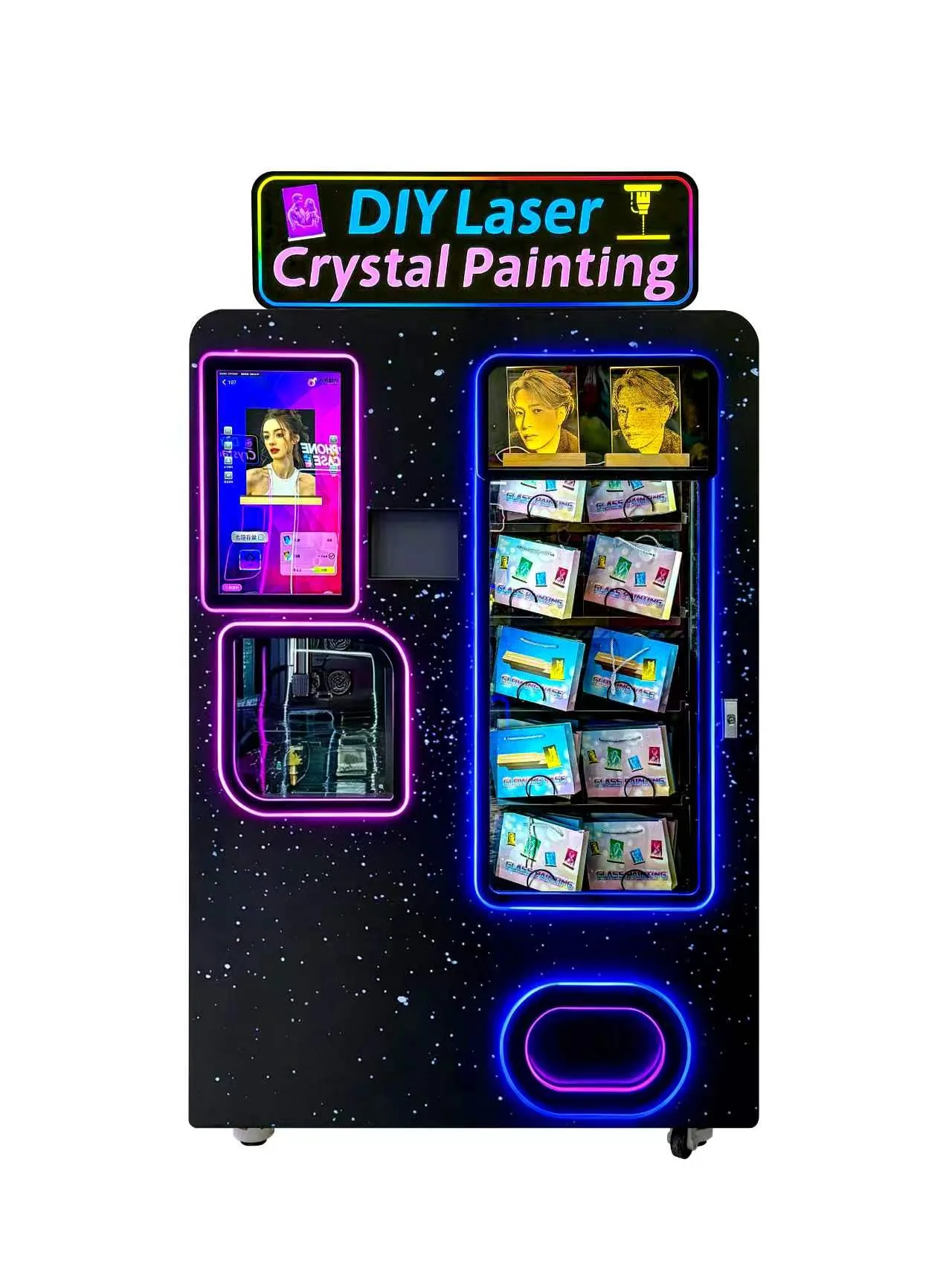
A personalized keepsake machine does not compete with a soda machine. It competes with the souvenir shop, the phone case printer down the hall, and the staffed engraving booth at the craft fair. Understanding those three rivals tells you most of what you need to know before you spend a dollar.
Glass engraving machine vs a traditional souvenir shelf
A souvenir shelf sells finished goods. Shot glasses, picture frames, keychains, magnets with the city name printed on them. The operator buys inventory, stocks the shelf, and hopes the product moves. What usually happens is that the top two or three designs sell out and the rest sit there gathering dust. The operator is left holding dead stock and has no way to respond to what customers actually want. The customer, meanwhile, sees the same gift ten other stores in the same mall sell.
A glass engraving machine flips that order. The machine carries no finished inventory. It holds blank glass and acrylic pieces, and the customer chooses a name, a date, or a design on the touchscreen. The laser etches it onto the surface in front of them, and they walk away with something that did not exist sixty seconds earlier. That is the difference between a product and a keepsake. A keepsake has a name on it. It cannot be bought anywhere else.
Who fits the shelf? High foot traffic, low average spend, impulse buyers who grab a magnet on the way out. Who fits the engraving machine? Gift buyers, couples on a date, families marking an anniversary, corporate clients who want branded glassware for an event. If your corner is on the way to a gift store, the machine wins. If it is beside a tourist bus drop off, the shelf might hold its own.
Glass engraving machine vs a phone case printer
These two are the comparison I hear most often, because both are automated and both make something personal. The difference is what the customer is buying. A phone case printer sells a fashion accessory. The case protects a device the customer already owns and updates their look. It is a repeat purchase. Someone might buy a new case every few months, and the price point is low enough that the decision takes seconds. That is a volume business. It rewards locations with young, returning foot traffic, like a mall near a college or a busy transit area.
A glass engraving machine sells a gift and a memory. The engraved glass, a wine glass, a photo frame, a small acrylic award, is not a repeat purchase for the same person. It is a one time purchase made for someone else. That makes it slower but heavier. Fewer transactions, higher value per transaction, and a much stronger connection to events like weddings, anniversaries, graduations, and corporate gifting.
The practical takeaway is that these two machines do not fight for the same spot. They feed different moments. Plenty of operators run both, a phone case printer near the entrance for the volume, a glass engraving machine near the gift section for the margin. If you can only afford one, match the machine to the moment your location already creates.
Glass engraving machine vs a staffed engraving booth
A staffed engraving booth is flexible in a way a machine is not. A person can take a custom order, discuss fonts, hand finish an edge, and handle odd requests. If a customer wants a one of a kind design, the human booth can usually say yes. The cost of that flexibility is labor. Someone has to stand there for every shift, and the booth can only take one order at a time. When the shop closes, the revenue stops.
A vending machine trades that flexibility for coverage. It runs without a shift, opens when the mall opens, and keeps working through lunch and dinner. It can sit in a second location that could never justify a salary. The tradeoff is that the machine does 2D surface engraving on glass and acrylic. It does not carve into the inside of a solid crystal block. That distinction matters, because some buyers arrive expecting a 3D crystal portrait and are surprised to learn the machine etches the surface instead. Set that expectation on the menu screen and the confusion disappears. Surface engraving is what keeps the machine affordable, safe to operate unattended, and fast enough to finish a gift in under two minutes.
Who fits the booth? A single high value location with steady custom demand and a trained operator. Who fits the machine? An operator who wants several locations, or a site where labor would eat the entire margin.
Side by side at a glance
| Feature | Glass engraving machine | Phone case printer | Souvenir shelf | Staffed booth |
|---|---|---|---|---|
| What the customer buys | A named keepsake | A fashion accessory | A finished souvenir | A custom finished item |
| Labor needed | None, self service | None, self service | Restocking | Full time staff |
| Operating hours | Runs unattended | Runs unattended | Store hours | Store hours |
| Best location | Gift and event traffic | Young repeat traffic | Tourist impulse | One high value site |
| Repeat purchase | Rare, gift driven | Frequent | Rare | Occasional |
How to decide for your corner
Three questions settle it faster than any spreadsheet.
What moment does your location already create? If people come to your corner to mark something, a birthday, a trip, a wedding, the engraving machine fits. If they come to spend ten minutes waiting for a bus, the phone case printer fits.
Can your margin carry a salary? If paying someone to stand there eight hours a day leaves nothing left, skip the booth and take the machine. The machine is the only option in the list that runs unattended.
What does the customer leave with? A named keepsake earns word of mouth, because people show it off and mention where it was made. A generic souvenir does not. If you want your corner to build a reputation, lean toward personalization.
None of these is a wrong business. They are wrong only when matched to the wrong corner. Most of the operators I talk to who regret a purchase did not buy a bad machine. They bought a machine for a moment their location never had.
A note on laser safety
One practical detail separates a smooth launch from a bad first week. A laser engraving machine works on the surface of the glass, so it does not need a dedicated operator, but the enclosure and the venting still matter. Keep the machine away from direct sunlight on the lens, keep the touchscreen clean, and follow the manufacturer’s guidance on the laser. The US Occupational Safety and Health Administration keeps a useful page on laser hazards if you want the technical background.
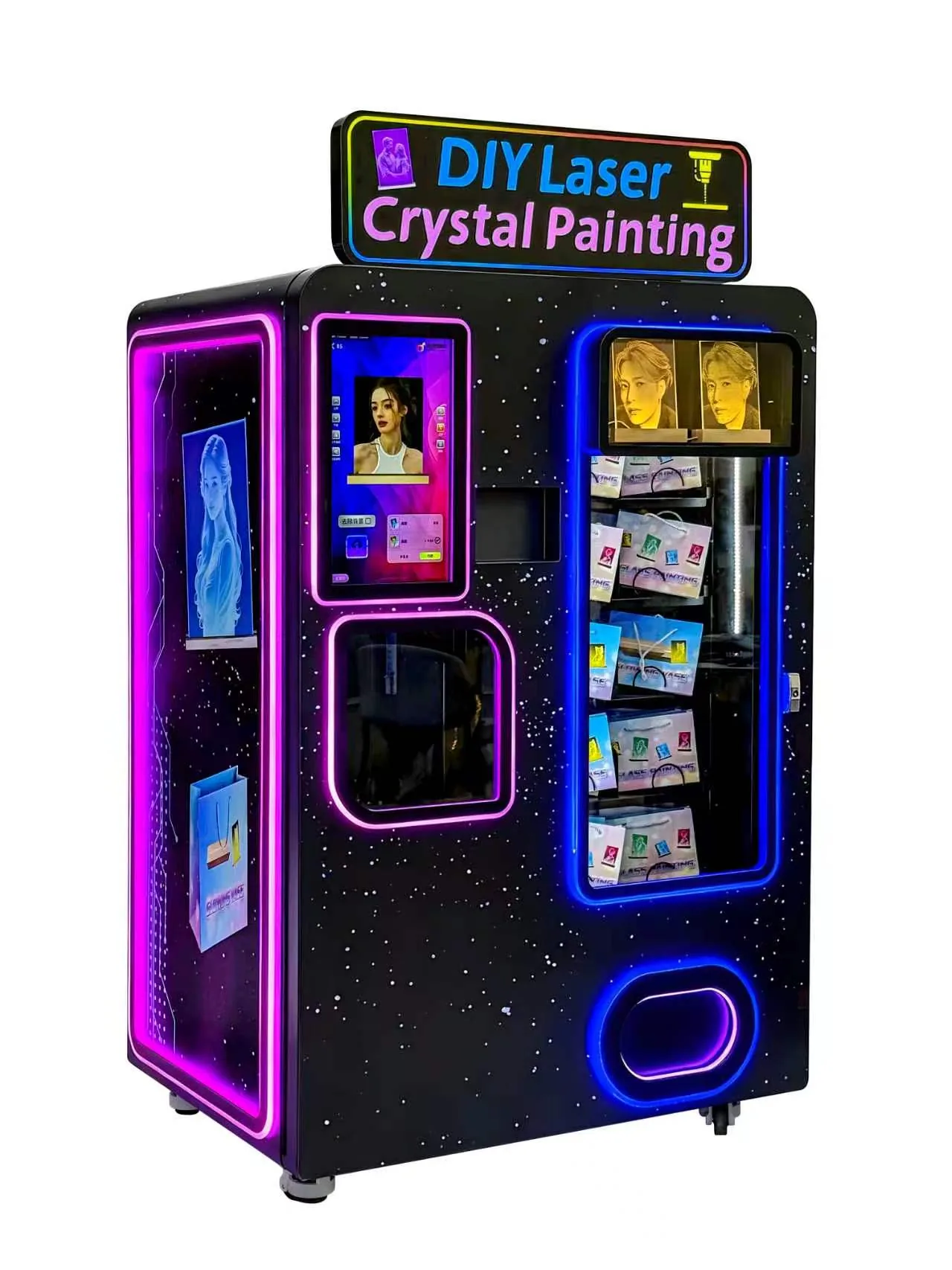
Want to see exactly what a glass engraving vending machine can put on a wine glass or photo frame? Red Rabbit builds these machines in Guangzhou and ships to more than 130 countries. See the full machine specs here.
The operator in Florida picked the engraving machine, because his corner sat beside a family arcade and a gift kiosk. Six weeks later he told me the machine was doing what he hoped, but the detail that stuck with him was not the numbers. It was watching a kid type his grandmother’s name and watching her cry when the glass came out. That is the kind of corner a machine earns. Match the machine to the moment, and the moment does the selling.
Related machines from Red Rabbit
Red Rabbit vending machine | Red Rabbit vending machine | contact Red Rabbit