“DIY cotton candy” may mean an attendant using a countertop spinner or customers choosing a design from an automated vending machine. These are different use cases. A manual unit suits parties and attended events; a commercial vending machine is designed around customer orders, enclosed production, and an operator’s refill and maintenance routine.
What to compare
Red Rabbit lists CT-206 with 56 shapes and 4 flavor or color options; CT-606 with 2 toppings, 136 shapes, and 6 options; and CT-608 with 2 toppings, 144 shapes, 6 options, and automatic front-window cleaning. CT-103 is a mini desktop semi-automatic model with 56 shapes and 4 options. Verify the current configuration, footprint, electrical requirements, and cleaning tasks.
Manual or commercial vending?
A manual spinner gives an attendant direct control and can work for an event, but a person prepares every serving. A vending unit puts the ordering interface and production in one machine; the venue still needs a plan for stocking, cleaning, monitoring, and helping customers. Compare staff time and service expectations as carefully as purchase price.
Try the workflow
Ask the supplier to demonstrate an ordinary order, a refill, and a cleaning task. Have the intended operator test the menu and ask how the unit reports errors. Confirm service clearance and how the machine will be moved into the venue. Request written instructions your staff can use. A commercial vending machine should not be treated as a home appliance or assumed to work without oversight.
Machine images


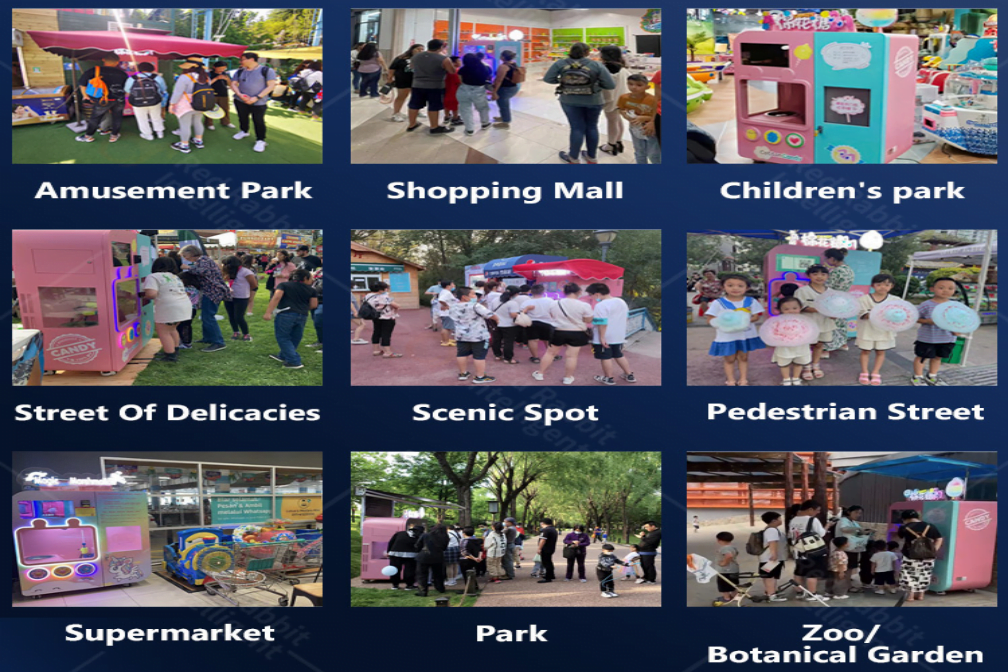
Before choosing a self-service unit, confirm payment and language support, warranty, training, parts, and support in your market. Automation does not remove the need to stock and clean the machine. Build a site-specific cost forecast without assuming guaranteed sales. See the automatic cotton candy vending machine range and request written model details.