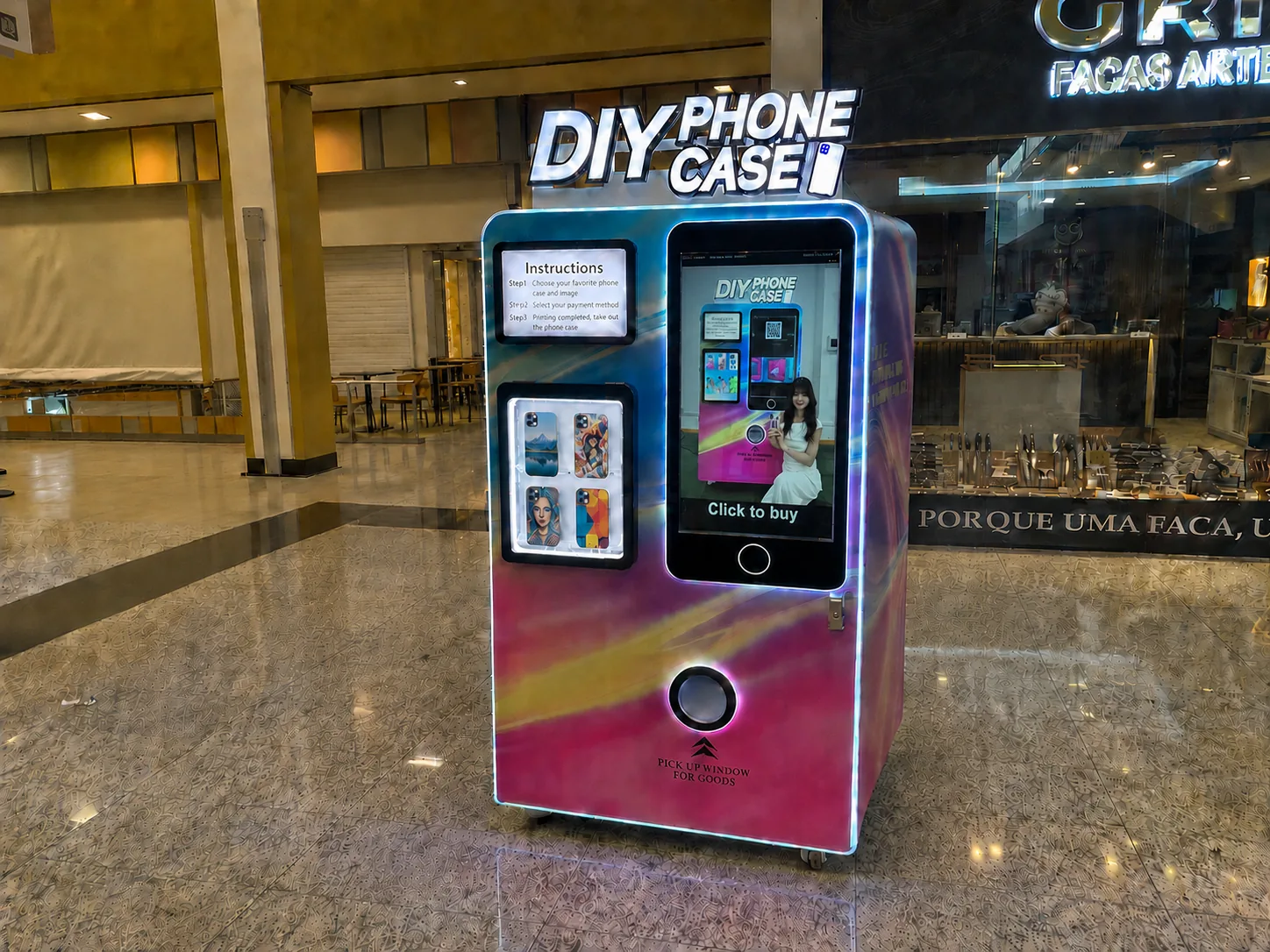
The first time I stood beside a phone case printing machine in a mall, I watched a woman in her twenties stop mid-stride, glance at the sample wall, and then wait six minutes to see a photo of her dog wrapped around a case. She did not plan to buy a phone case that day. She already had a case on her phone. She bought it anyway, and she smiled when the case slid out.
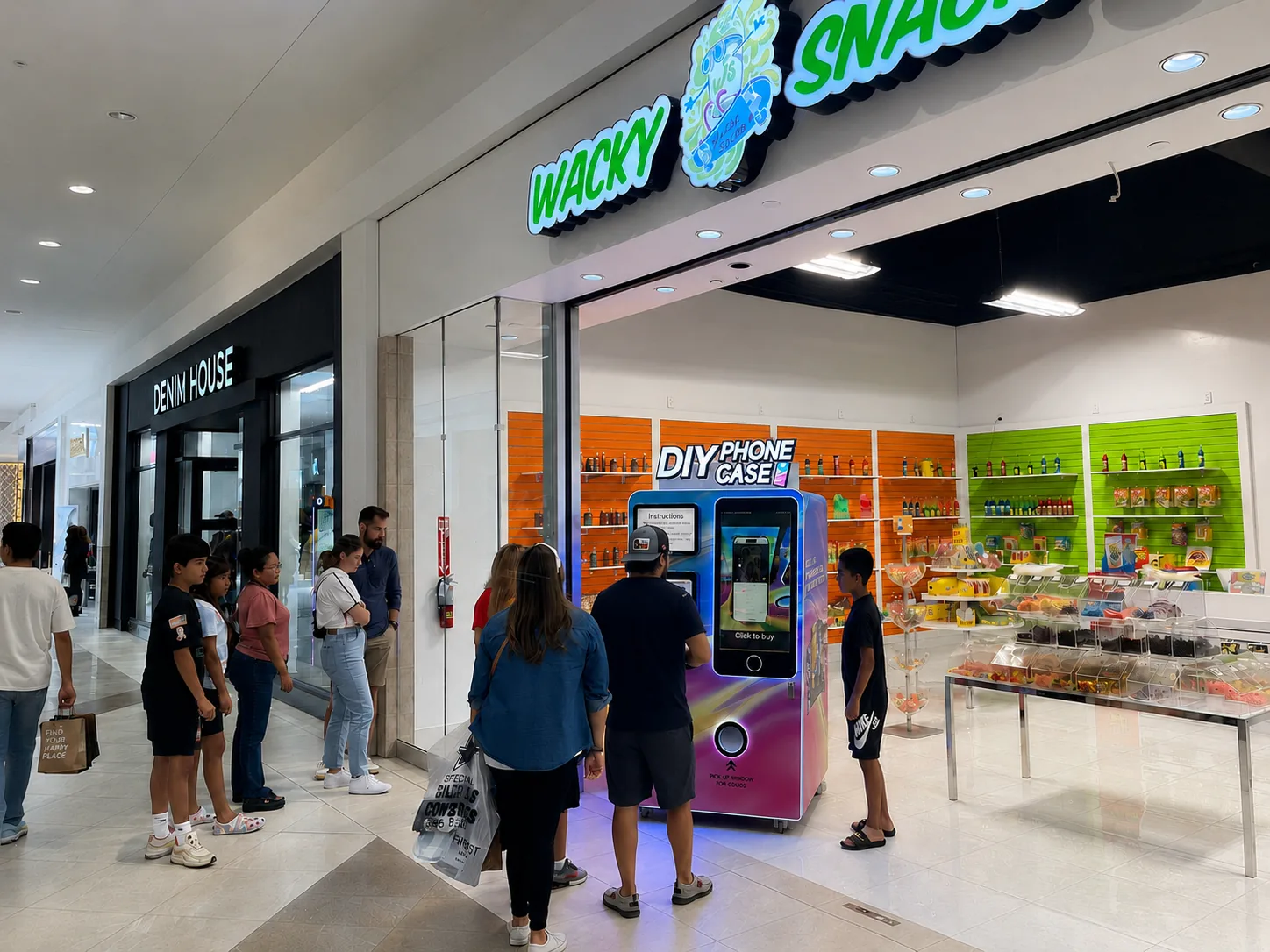
That is the whole business in one scene. A phone case printing vending machine does not win customers with price or necessity. It wins them with the way it makes a person feel in the moment. If you understand that feeling, you understand where to put the machine, what to charge, and why some locations print nonstop while others sit quiet.
The thing you made is worth more to you
Behavioral researchers have a name for this. When someone puts effort into something, or when it reflects their own choices, they value it more than an identical item they simply bought. Economists call it the endowment effect. You can see a cousin of it in the well-known IKEA studies, where people who assembled a piece of furniture themselves were willing to pay more for it than people who bought it ready-made.
A custom phone case taps straight into this. The customer chooses the photo, watches it render, and owns the result. It is not a mass-produced case off a rack. It is their photo, their dog, their partner, their kids. That small act of co-creation raises what the case is worth in their mind, which is exactly why a machine can charge more for a printable case than the shop next door charges for a generic one.
A phone case is a mirror people carry
There is a second layer. A phone is the most public object most people own. It sits on the table at lunch, it comes out in every meeting and every selfie. The case is a tiny billboard for who a person is, or who they want to be. A photo of a favorite band, a holiday, a pet, or a partner says something the person does not have to say out loud.
That is why personalization sells. It is not really about protecting the phone. A three dollar clear case protects the phone just fine. The custom case sells identity, and identity is something people pay for without much hesitation. This is why the machine works best when the samples on the wall show faces, pets, and personal moments, not just abstract patterns. Show someone a wall of other people’s holiday photos and their brain starts building their own.
Instant is the trigger
Impulse purchases almost always share one trait, the gap between wanting and having is short. A phone case printing machine closes that gap in about two minutes. The customer does not upload a photo, wait a week, and pay shipping. They watch the print happen in front of them and walk away holding it. That immediacy removes the moment where a rational shopper talks themselves out of it.
It also creates a small piece of theatre. Other shoppers stop to watch the print head move. That is social proof doing its quiet work. When people see someone else happily collecting a custom case, the machine looks popular, and popularity is its own advertisement. This is the same reason operators should keep the machine visible, well lit, and running a sample print during slow hours instead of letting it sit dark.
The gift angle is the quiet multiplier
Not every purchase is for the buyer. A meaningful share of phone case prints are gifts, a photo of the grandkids for a grandparent, a couple’s picture for an anniversary, a pet for a friend who just lost theirs. Gift purchases behave differently from self-purchases. The buyer feels time pressure, wants the gift to feel personal, and is less price sensitive because spending more signals how much they care.
For an operator, this means timing matters as much as placement. The machine earns more in the week before Valentine’s Day, Mother’s Day, and the end of the school year than in a random February week. It also means the sample wall should include a few emotional prompts, couples, families, pets, to plant the gift idea before the customer has even decided to buy.
Price feels different when the product is personal
A generic phone case is a commodity, and commodities compete on price. A custom case is a one-off, and one-offs are not compared to the shelf next door the same way. When a shopper is holding a case with their own photo on it, the reference point shifts from what a clear case costs to what a memory is worth.
That is why custom cases at ten to twenty dollars do not feel expensive in the right location. The key is anchoring. A visible sample, a clean display, and one clear price rather than a menu of options keeps the customer in an emotional frame instead of a calculating one. When the decision becomes “do I want this memory in my hand right now,” price stops being the obstacle.
Where to put the machine so the feeling can happen
Psychology only converts to revenue if the machine sits where the right shopper passes with time and money on their hands. High foot traffic with dwell time is the sweet spot. Malls near the food court, family entertainment centers, arcades, tourist areas, and event spaces all work because people are already in a spending and browsing mood, not rushing between errands.
The worst spots are transit corridors where people move fast and never glance sideways. An impulse machine needs a pause, not a blur. If you want to dig into how the machine performs in specific settings, our 휴대폰 케이스 인쇄 자판기 page walks through the hardware and the typical buyer. If you are thinking about a keepsake machine for a family venue, our 직소 퍼즐 자판기 rides the same personalization impulse. And the 문의 페이지 is the fastest way to ask about a location you have in mind.
The consumer psychology behind vending and automated retail is well documented. NAMA publishes research on what drives unplanned purchases in unattended retail, and the SBA business guide covers the basics of testing a location before you commit. Both are worth a read, but the real lesson is the one the woman with the dog taught me. She did not need a case. She wanted to carry her dog around with her, and the machine let her do it in two minutes.
A phone case printing machine does not sell cases. It sells a fast, personal, walk-away moment. Sell that moment and the hardware takes care of itself.
Related machines from Red Rabbit
Red Rabbit vending machine | Red Rabbit vending machine