Nadia runs fourteen machines across a mid-sized city. Most are snack and drink units in office buildings, plus two in a transit plaza and one in a gym. For three years the route did fine. Then, slowly, it did not. By late 2025 two of her spots, a converted warehouse office park on the edge of town, were barely covering their monthly placement fee. She was ready to pull the machines and walk away.
What happened next is a useful study in where automated retail is heading in 2026. The global retail vending market sits around 79 billion dollars this year, but it is not growing because plain snack dispensers are selling more chips. It is growing in a different direction, toward connected machines, cashless payments, and made-to-order experiences. Nadia’s slow spots were failing for exactly the reasons the old model is failing, and they recovered for exactly the reasons the new model works.
問題は場所ではなかった
Her first instinct was to blame the address. The office park is small, maybe six hundred workers across three buildings, and it sits a five minute drive from any retail strip. On paper that sounds weak. But when she stopped to look, the foot traffic was actually steady. People arrived by nine, took breaks, and lingered in a shared courtyard at lunch. The machines were getting seen. They were just not getting used.
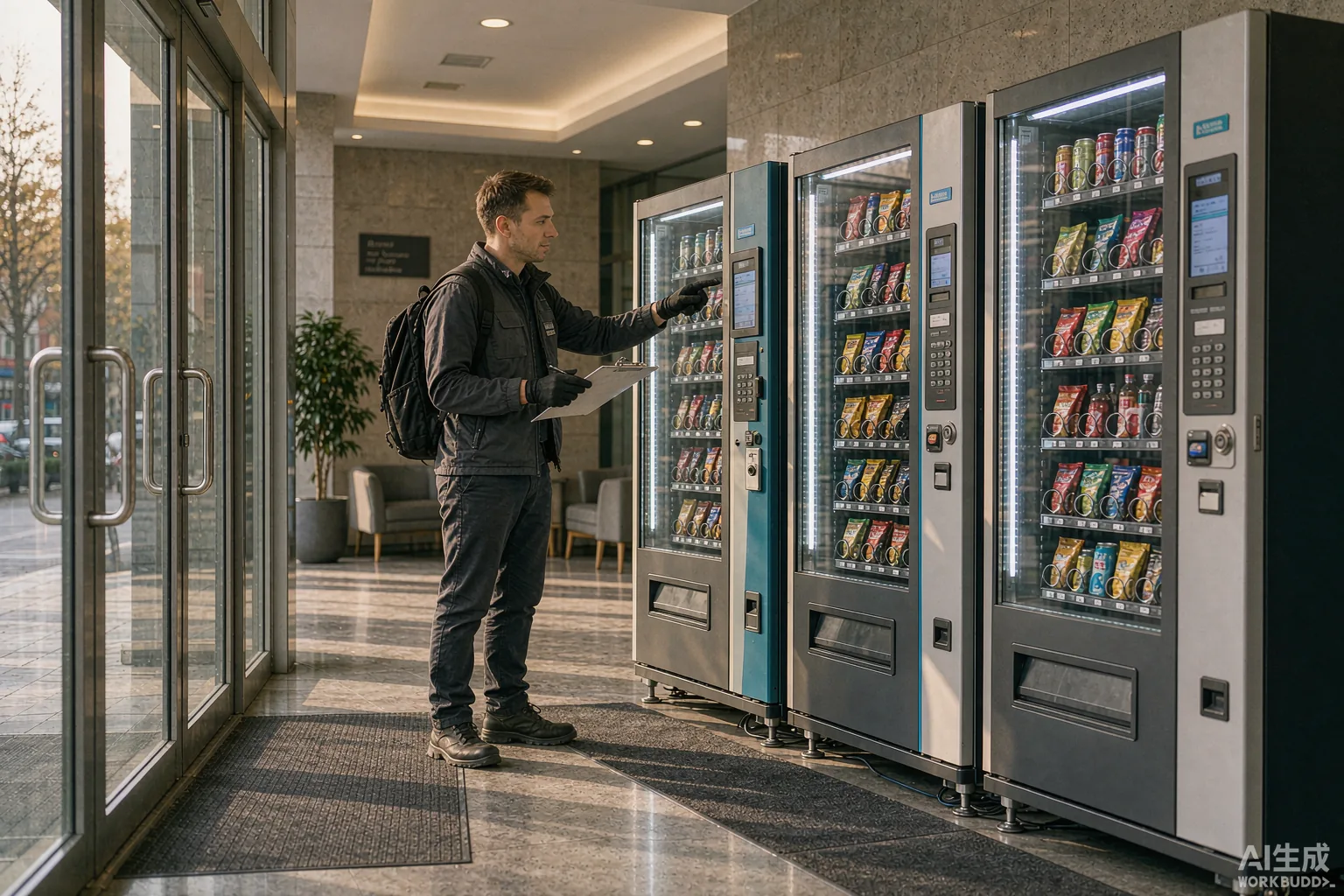
Three specific problems stood out. First was payment. The machines took coins and an old card reader that rejected contactless taps about half the time. Workers in that park rarely carried cash, and they had learned to not bother trying a card. Second was blindness. Nadia had no telemetry on the units, so she only learned what sold when she opened the cash box each week. She was restocking on a fixed schedule, not on demand. Some items sold out by Tuesday and sat empty until Friday. Other items sat full for a month. Third was the offer itself. The assortment was the same mixed bag of candy bars and sodas she had loaded for years, with nothing that gave anyone a reason to walk over.
これらの問題はどれも地域性とは無関係だった。それらは運用上の問題であり、解決可能だった。.
2026年のデータが示す変化
Nadia’s situation tracks a broader industry story. Research published this year points to a market still growing, but in the low single digits overall, roughly three and a half percent a year. The energy is not in the core commodity machines. It sits in a few places.
キャッシュレスはもはや機能ではなく、デフォルトになった。報告書は繰り返し、カード、QR、ウォレットの受け付けが今やアップグレードではなく基本要件であると述べている。硬貨に依然として依存している機械は、人々が何年も前から小銭を持ち歩かなくなったオフィス、キャンパス、交通拠点で、静かに自らを失格させている。.
Telemetry is the second shift. Connected machines report stock levels, temperature, and transaction patterns back to the operator, so restocking follows actual demand instead of a calendar. The payoff is fewer empty slots and fewer wasted trips, both of which show up directly on the profit line.
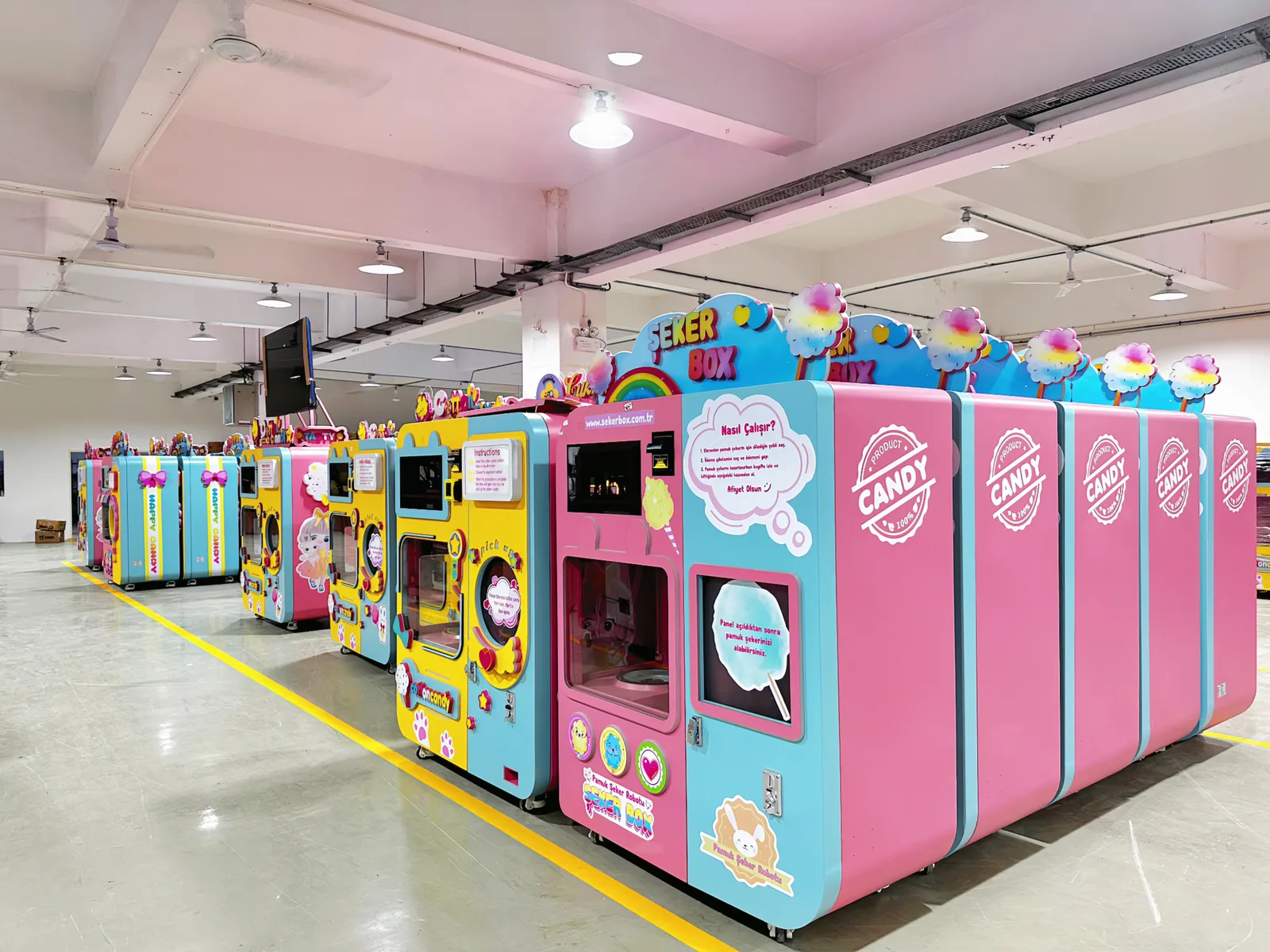
The third shift is the one Nadia found most surprising. The fastest growing category is not a new snack. It is experiential and made-to-order equipment, machines that build or craft a product in front of the customer. Cotton candy spinners, custom photo keepsakes, engraved glass, freshly blended drinks. These units turn a purchase into a small show, and a show pulls foot traffic that plain dispensers cannot.
再構築、機械ごとに
Nadia did not replace her whole fleet. She kept the profitable core alone and focused on the two failing spots. For the first, she swapped in a connected snack machine with cashless acceptance and telemetry. For the second, in the courtyard where workers gathered at lunch, she placed a made-to-order cotton candy machine instead of another snack unit.
The reasoning was simple. The snack machine would fix the two mechanical failures, payment and blindness. The cotton candy machine would fix the third, giving people a reason to walk over. It also had a side benefit she had not fully planned for. When one person stopped to watch sugar spin into a fluffy cloud, two more drifted over to watch, and some of them bought a snack from the machine beside it while they waited.
The Ninety Day Numbers
Here is what changed at the two spots over the first ninety days.
| メートル法 | 以前 | 90日後 |
|---|---|---|
| 接続型スナックマシンの週間売上 | 約210ドル | 410ドル |
| オーダーメイドマシンの週間売上 | 約180ドル | 540ドル |
| 週あたりの在庫切れ件数 | 3〜4件 | 1件未満 |
| 週あたりの補充訪問回数 | 3 | 2 |
| キャッシュレス決済比率 | 約30パーセント | 81パーセント |
The snack machine roughly doubled. The made-to-order machine tripled, and it did something the numbers do not show. It changed how people used the courtyard. Groups started meeting there for the ten minutes it took a fresh cotton candy to form. That dwell time fed the snack machine next to it, which is part of why both spots rose together rather than one cannibalizing the other.
その後に続いた調整
Telemetry changed how Nadia worked. She stopped guessing. The data showed a clear pattern. Candy bars sold before eleven and after three, while sparkling water and protein snacks sold hard over lunch. She reshuffled the planogram to match, and she dropped three slow sellers that had quietly eaten shelf space for a year. She also started restocking the snack machine in the afternoon instead of the morning, because the machine itself told her the lunch rush did the most damage.
綿あめのほうでは、色の選択が思った以上に重要だと分かった。タッチスクリーンでピンクかブルーを選んでもらうと数秒余分にかかるが、購入率は明らかに上がった。人は小さな選択でも選ぶ感覚を好む。また価格を少し上げても販売量は落ちず、購入は価格に敏感ではなく感情によるものだと分かった。.
ここから学べること
いくつかの教訓はこのルート以外にも当てはまる。立地が最初に責められることはほとんどない。場所を切り捨てる前に、決済、データ、提供内容を見ることだ。2026年、キャッシュレスは選択肢ではない。マシンがタッチ決済に対応していなければ、誰かが商品を見る前に売上を失っている。テレメトリーはルートを勘頼みから管理された業務へ変え、節約できた移動や空きスロットの減少でたいてい元が取れる。.
最も重要なのは、今注目を集めるマシンは何かをしてくれるものだということだ。オーダーメイド機は単なる販売機ではない。小さなアトラクションであり、アトラクションは周囲すべてを押し上げる滞在時間を生む。この種のマシンを検討しているなら、スナックをイベントに変える綿あめやその他の体験型オプションをよく見てほしい。 綿あめ自動販売機 は良い導入点であり、 レーザー彫刻自販機 のようなオーダーメイドの記念品は同じ発想をギフトや思い出へと広げる。.
ルートを構築したり立て直したりする運営者にとって、 全米自動販売機協会 の業界ガイダンスは標準とベストプラクティスの確かな参考になり、 Small Business Administration business guide は小規模ルートを適切に運営するための計画面と法務面を助けてくれる。接続型やオーダーメイドのマシンが自分の拠点でどんな形になるか話し合いたい場合は、 お問い合わせページ から連絡して場所について説明してほしい。.
ナディアは両方のマシンを残した。オフィスパークの拠点は今や彼女の稼ぎ頭の一つであり、彼女が繰り返す教訓は2026年のデータが繰り返し示すものと同じだ。ベンディングビジネスは縮んだのではない。移動したのだ。それに合わせて動いた運営者が今も成長している。.
Red Rabbitの関連マシン