Why glass engraving vending stands out
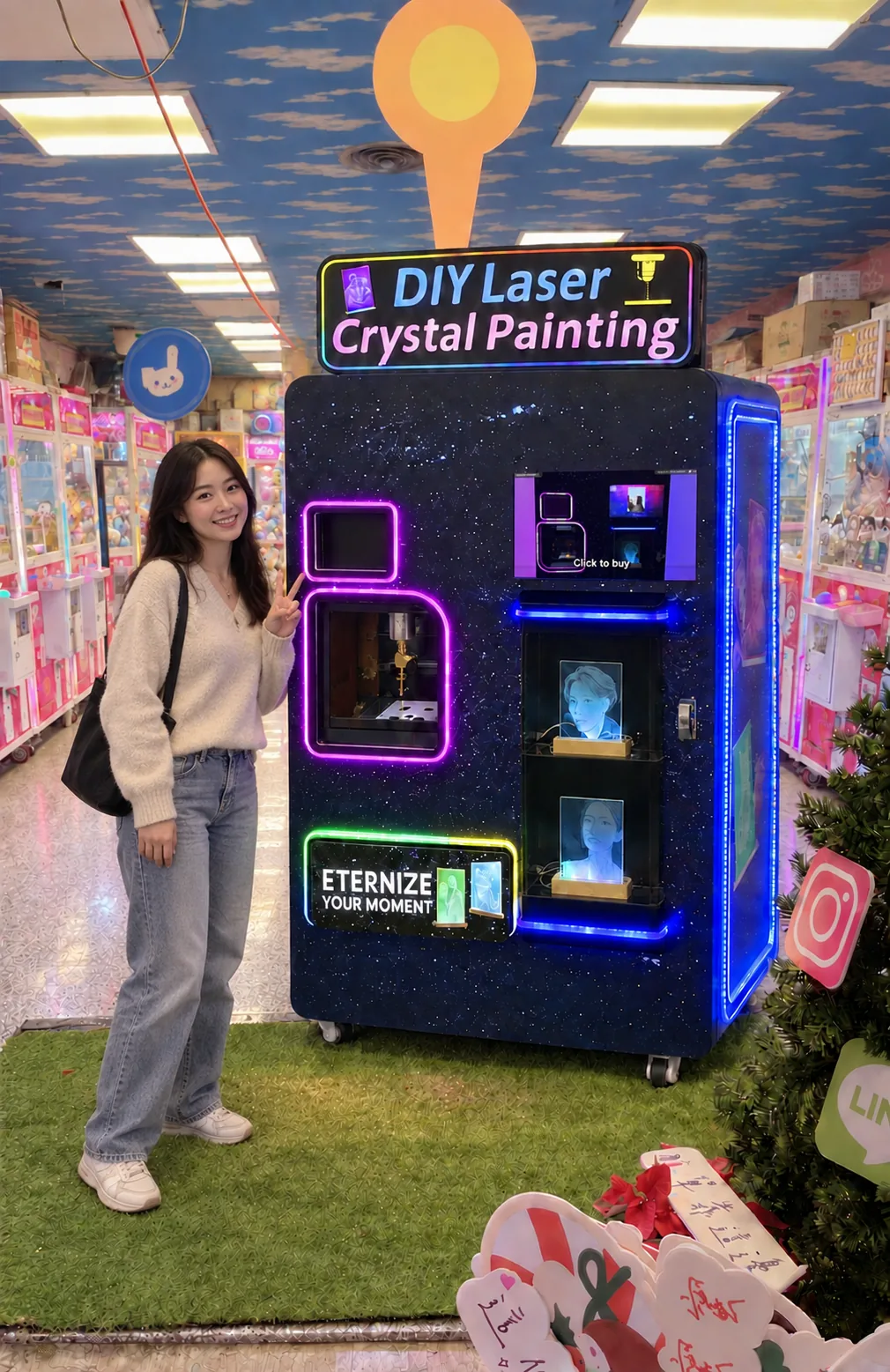
I watched a Red Rabbit CT-DK320 run for three hours on a Saturday afternoon in a Shenzhen shopping mall. It sat between a bubble-tea kiosk and a phone accessories stand, and every few minutes someone stopped, tapped the screen, and walked away with a personalized glass tumbler. The operator told me the machine had been there for eleven weeks and had already covered half of its purchase price. That kind of payback speed is what makes glass engraving vending interesting.
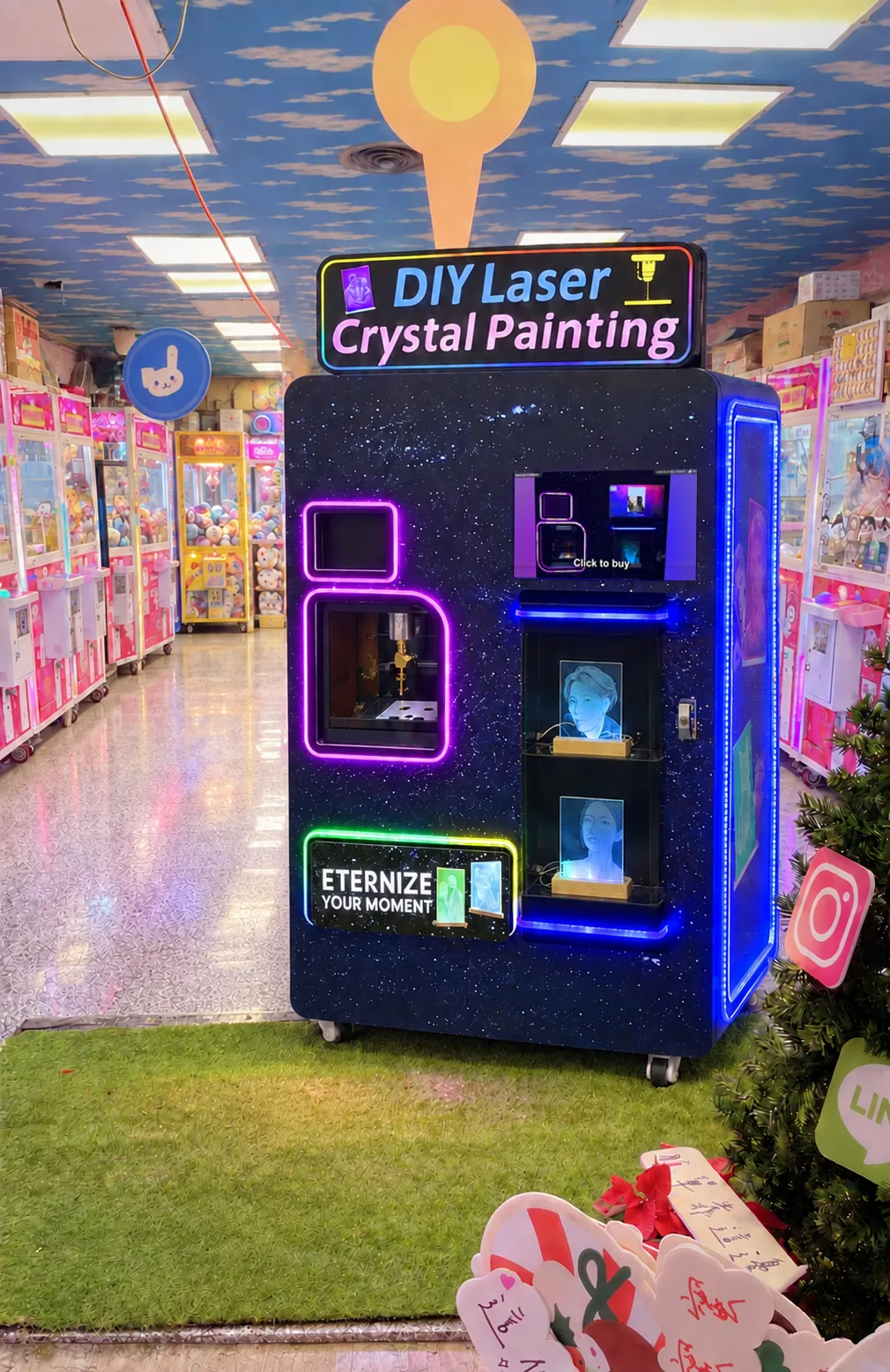
The product is a personalization machine. Customers bring a design, choose a blank, and the laser engraves the image or text onto the surface. The CT-DK320 from Red Rabbit, also known as Chitu VEM, is built at our factory in Guangzhou Panyu. We have more than ten years of vending manufacturing experience and export to over 130 countries. The machine is designed for commercial public spaces and runs mostly unattended.
One important clarification: the CT-DK320 engraves the 2D surface of glass or acrylic items. It does not engrave inside 3D crystal blocks. This matters because the blanks are cheaper, the cycle time is shorter, and the finished product is a usable everyday item rather than a display-only keepsake. Mugs, wine glasses, ornaments, plaques, and acrylic keychains are all common blanks.
The unit economics of a CT-DK320
The economics are attractive because the material cost is low and the perceived value is high. A blank glass or acrylic item usually costs between one and two dollars. The customer pays anywhere from twenty to fifty dollars depending on the venue and the item. That leaves a large gross margin even after rent, payment fees, and maintenance.
| 品目 | 値 |
|---|---|
| 機械モデル | Red Rabbit CT-DK320 |
| Blank material cost | $1-$2 |
| 一般的な小売価格 | $20-$50 |
| 機械投資額の範囲 | $4,900-$6,100 |
| Gross margin per sale | 90%以上 |
| 一般的な回収期間 | 2〜6か月 |
What a 90-day mall location can look like
To make the numbers concrete, here is a realistic 90-day projection for a CT-DK320 placed in a mid-tier shopping mall. The figures assume a $25 average sale and a $1.50 average blank cost.
| シナリオ | Daily sales | 90-day revenue | Blank cost | Gross profit | Rent estimate (15%) | Net profit | Payback progress |
|---|---|---|---|---|---|---|---|
| Low footfall | 3 | $6,750 | $405 | $6,345 | $1,013 | $5,333 | 97% of $5,500 |
| Medium footfall | 8 | $18,000 | $1,080 | $16,920 | $2,700 | $14,220 | 259% of $5,500 |
| High footfall | 15 | $33,750 | $2,025 | $31,725 | $5,063 | $26,663 | 485% of $5,500 |
At the medium scenario, the machine clears roughly $14,220 in net profit over three months after estimated rent. That is enough to pay back a $5,500 machine investment more than twice over.
Which locations work best
Glass engraving vending performs best where people are already in a buying mood and have time to wait a couple of minutes. Shopping malls are the classic example, especially near cinemas, food courts, or children’s play areas. Tourist attractions, museums, aquariums, and zoo gift shops also work well because visitors want souvenirs that feel personal.
Wedding venues and event halls are less obvious but can be extremely profitable on a per-event basis. A machine placed at a wedding reception can engrave guest names on champagne flutes or acrylic place cards. The host pays nothing upfront, and guests pay per item. The operator typically charges a placement fee plus a revenue share.
What does not work is high-traffic commuter locations where people are rushing. A subway station may have ten thousand people passing by, but if they are walking fast they will not stop to design an engraving. The machine needs dwell time.
What designs actually sell
The most popular engravings are simple. Names, initials, dates, short quotes, and logos. Customers do not want a design session. They want to pick a template, type a name, and watch the laser work. The best operators preload thirty to fifty templates organized by occasion: birthday, wedding, graduation, holiday, corporate gift.
The item itself matters too. Wine glasses and beer mugs sell well as gifts. Acrylic keychains and luggage tags are popular with younger buyers. Ornaments spike in November and December. A smart operator rotates the blank inventory by season rather than trying to stock everything at once.
Daily operation and maintenance
The CT-DK320 is designed to run with minimal attention. A typical engraving cycle takes one to three minutes depending on the complexity of the design. The machine needs a stable power supply and a small amount of ventilation space. The touchscreen guides the customer through the design process, so no staff member is needed to operate it.
Maintenance is straightforward. The laser lens needs cleaning every few hundred cycles to keep engraving quality sharp. The exhaust path should be checked for dust. Blank inventory needs restocking, and the payment terminal needs a paper roll if it prints receipts. Most operators visit once or twice a week.
Pairing engraving with other personalization machines
Many operators build a small route around personalization rather than food. A glass engraving machine can share a venue with a phone case printer or a jigsaw puzzle machine because the same customer wants a custom keepsake. Red Rabbit also offers the スマホケースプリント自販機 and the ジグソーパズル自販機 for exactly this reason.
If you already run a cotton candy or slush machine in an entertainment venue, adding a personalization unit can capture spending from parents while children wait for their treat. The machines complement each other because they target different moments in the same visit.
Safety and compliance basics
Laser equipment requires basic safety awareness. The CT-DK320 is a Class 1 laser product when operated with the enclosure closed, which means the laser beam is fully contained during normal use. Operators should still read the manual, train any on-site staff, and follow local workplace safety rules. The OSHA laser hazards page is a useful reference for understanding laser safety classifications.
For business setup, the SBAビジネスガイド covers registration, taxes, and record keeping in the United States. The 全米自動販売機協会 publishes placement and operational guidance for vending operators.
Is a glass engraving vending machine right for you
This category suits operators who want a high-margin, low-perishability product and are willing to invest in a good location. There is no food spoilage to manage, no daily cleaning of refrigeration parts, and no complex supply chain. The main variables are footfall, rent, and your ability to market personalization.
Start by scouting three to five potential locations and counting footfall during peak hours. Ask the property manager about revenue-share terms. Then calculate whether the projected sales can cover the machine cost within your target payback window.
Want a location-specific ROI estimate for the CT-DK320? View the Red Rabbit laser glass engraving vending machine specifications or contact Red Rabbit to discuss shipping, blanks, and pricing for your market.