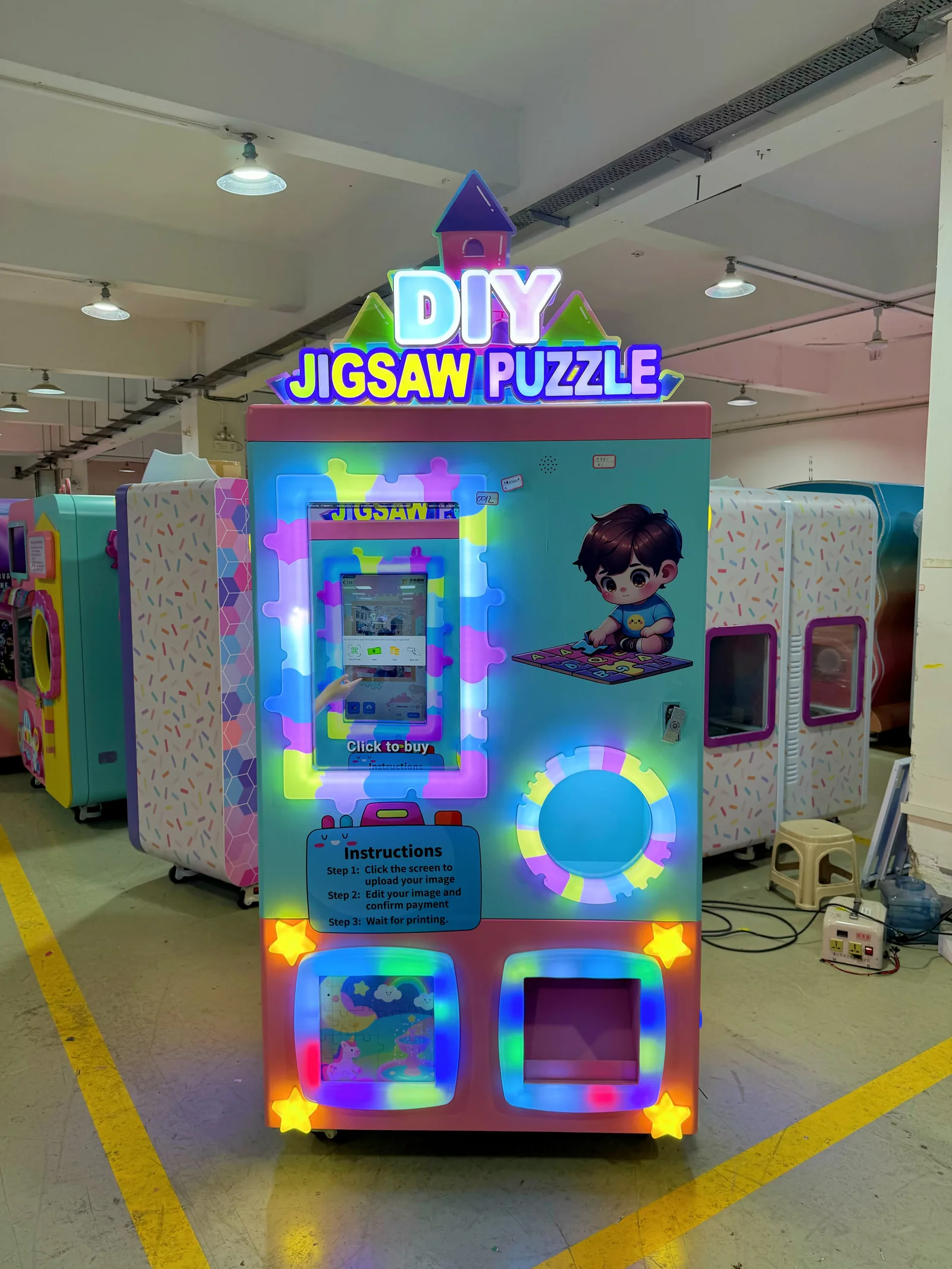
The print head test bench sits against the far wall of the Panyu workshop, humming as it lays a photo of a family onto a blank puzzle board. A technician named Wei watches the registration marks, two thin lines that tell him the image is landing exactly inside the die-cut edge. He does this a few dozen times a day, on purpose. It is the fastest way to catch a machine that is about to misbehave before it ever leaves the building.
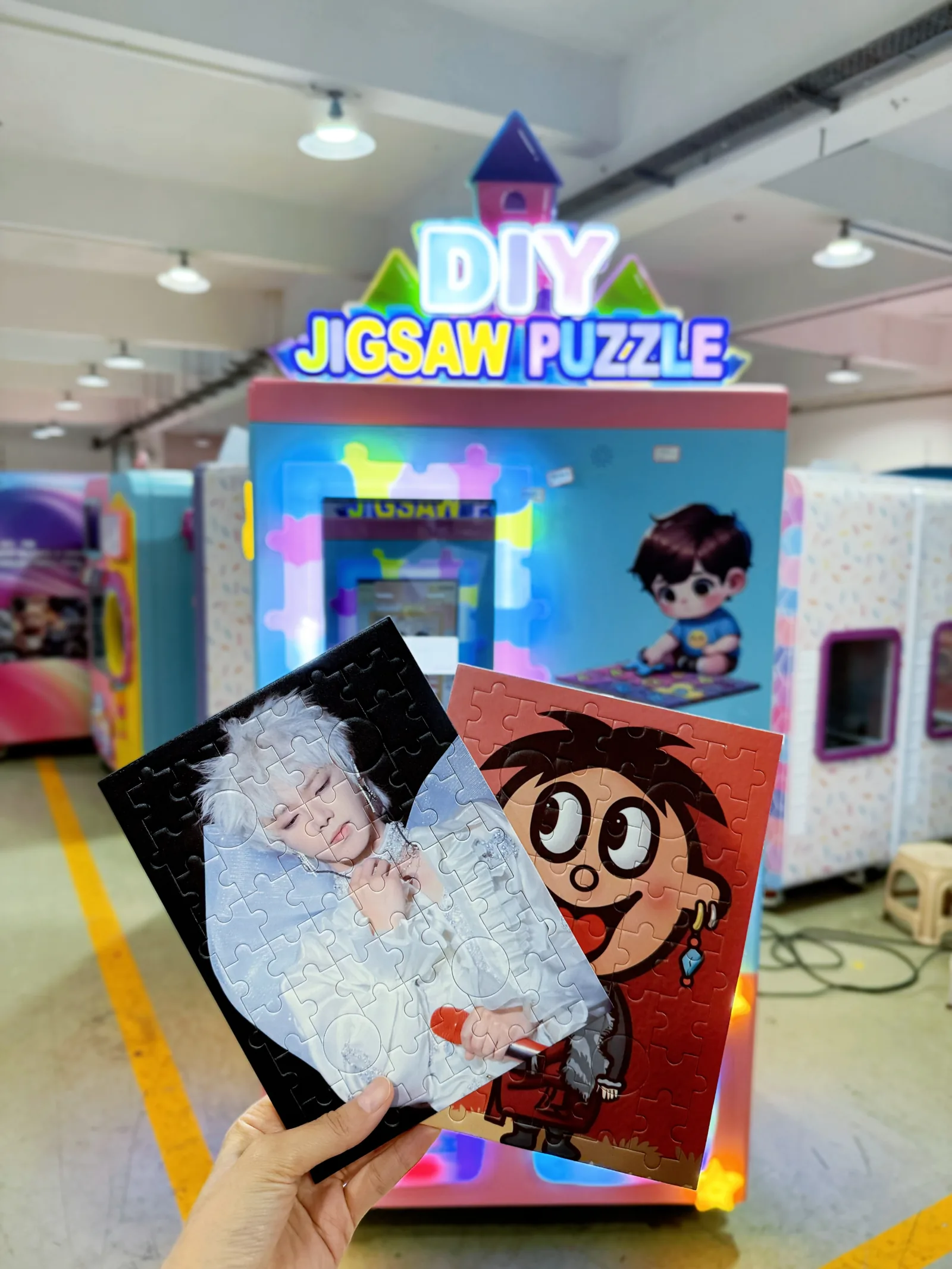
Most operators never see this side of the equipment. They see a finished machine on a truck, then a queue of kids watching a puzzle print itself. But the decisions made on this factory floor are the reason the machine either runs quietly for years or turns into a service headache. I want to walk you through how we build and test the CT-PTJ370, and more important, why we made the design choices we did.
Why we print on the puzzle board only
There is a question we get constantly from buyers who have seen other photo printing equipment. Why not make a machine that prints on everything, postcards, photo paper, T-shirts, mugs? The honest answer is that every extra format adds failure points and forces the operator to stock more blanks and learn more maintenance routines.
So we made a deliberate choice. The CT-PTJ370 prints directly onto a blank jigsaw puzzle board and nothing else. No flat photo prints, no postcards, no separate trimming step. The photo becomes the puzzle itself. That sounds like a limitation, but it is the opposite. It means the operator restocks one consumable, learns one loading routine, and never has to wrestle with a separate cutter or a print that has to be trimmed to size by hand.
There is a practical reason too. When an image prints straight onto a die-cut board, the machine has to know exactly where each cut line sits so a face is not sliced in half at the edge. We spend a lot of time on that registration. A machine that prints flat sheets and expects the operator to align a die cut later simply will not hold that tolerance in a busy location, and every misaligned puzzle is a refund or a reprint.
One puzzle, two formats
Simplicity is the second design pillar. We make a single puzzle product in two formats. The standard board carries the photo on a plain puzzle. The framed board prints the image with a border frame around it, the kind families put on a shelf rather than break apart. That is the entire menu, and we keep it that way on purpose.
| Format | What it looks like | Costo dei materiali |
|---|---|---|
| Standard puzzle | Photo printed edge to edge on the board | About $1.05 |
| Framed puzzle | Photo with a printed border frame around it | About $1.85 |
Two formats mean two material costs to remember. Operators set the retail price for their own location, whether that is a beach kiosk or an indoor play center, and the machine does not care which photo a customer picks. A photo of a dog costs the same to print as a photo of a birthday party. There are no SKUs to split by image type and no piece count to advertise. That keeps the pricing conversation simple for whoever is standing at the machine.
We deliberately do not sell this machine as a do-everything photo printer. Operators who buy it know exactly what it makes. That clarity cuts down the support calls we get in year one, and it keeps the consumable drawer from turning into a storage room full of half-used stock.
How the image gets onto the board
The process is not magic, but it is fast. The customer picks a photo or takes one at the machine, the image renders, and the print head lays down UV-cured ink onto the puzzle substrate. The ink cures under a lamp almost instantly, so the board comes out dry and ready to handle. The whole cycle, from image to finished puzzle, runs in well under two minutes on most designs.
UV-cured ink matters for the location, not just the speed. A puzzle handled by children, carried to a car, or left on a hot table in summer has to resist smearing and fading. The cure step is what makes the print durable. We test that durability constantly, not just on the bench but in the kind of rough handling a family arcade dishes out every weekend.
What a machine goes through before it ships
Every unit runs a 48-hour burn-in on the bench before we crate it. That is two full days of continuous printing, stopping only to swap in fresh boards. We watch for the small failures that show up only after heat builds up, a print head that drifts, a curing lamp that dims, a sensor that starts reading late.
After the burn-in, the unit goes through thermal and vibration testing. We run it in a warm room, then a cool one, because a machine in a cold storage unit or a sunny storefront behaves differently than one in a climate-controlled test room. We shake the chassis to make sure the print registration does not shift during transport. Then we run a 500-cycle endurance pass, loading and unloading boards to confirm the feeder does not jam or double-feed.
Finally, every machine is checked for ink adhesion and color consistency before it is packed. We would rather find a weak print head in the workshop than have an operator discover it on their busiest Saturday.
Why this matters to an operator
You do not see any of this testing when you buy the machine, but you feel it later. A puzzle printer that jams twice a day in a busy play center kills the line and makes the operator look unreliable. A print head that drifts out of registration produces puzzles with faces cut in half, and every one of those is a refund or a reprint.
The point of the factory work is to make the machine boring, in the best sense of the word. Boring means it sits in the corner, prints, and takes money while the operator handles one simple restock and a wipe-down. The excitement is supposed to happen in front of the machine, where a child watches their own photo turn into a puzzle they can take home, not behind it, where an operator is fighting a paper jam.
Good vending equipment is not the machine with the most features. It is the machine with the fewest things that can go wrong. That is the whole design brief for the CT-PTJ370.
If you want to see how the CT-PTJ370 fits into a real location, read our breakdown of the distributore automatico di puzzle. If you are also weighing other personalized keepsake equipment, our distributore automatico per la stampa di custodie per telefoni runs on the same simple, low-maintenance philosophy. And if you want to talk numbers for a specific site, reach out on the pagina dei contatti.
The industry association NAMA tracks how downtime and service cost shape operator margins, and the SBA business guide is a solid primer if you are turning a single machine into a small business. But the short version is what we already said. The machine that needs less service earns more over its life, and that starts right here on the factory floor.
Related machines from Red Rabbit
Red Rabbit vending machine | Red Rabbit vending machine