You have watched the machine spin sugar into a cloud for years, at the county fair or outside the trampoline park, and somewhere along the way you started wondering if it could be your side business. This is the guide I wish someone had handed me before a first-time operator plugs in their first cotton candy machine. It covers the real steps in order, the ones nobody puts in the brochure, and the three mistakes that trip up almost every beginner.
Step 1: Know what the machine actually does before you buy
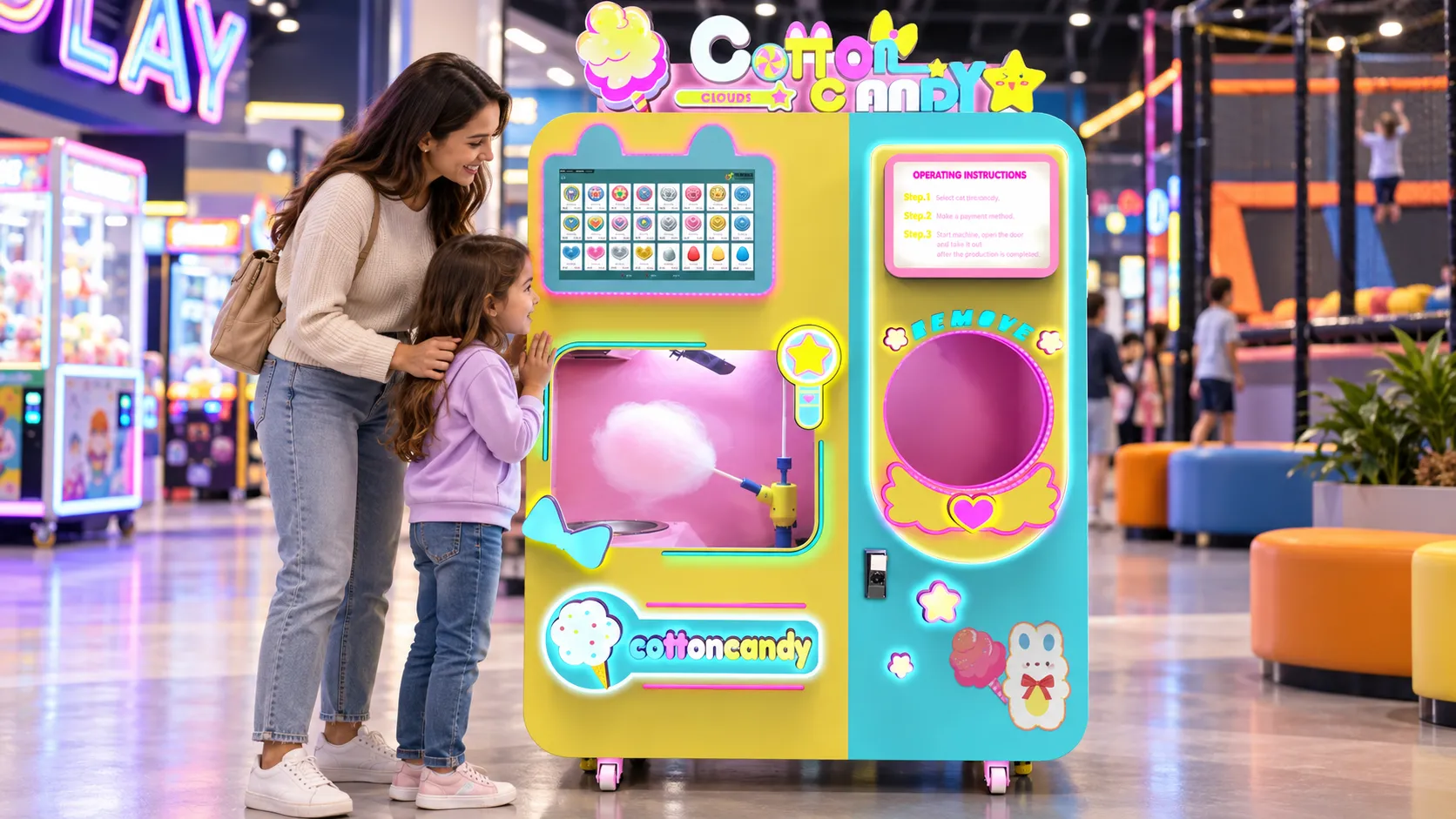
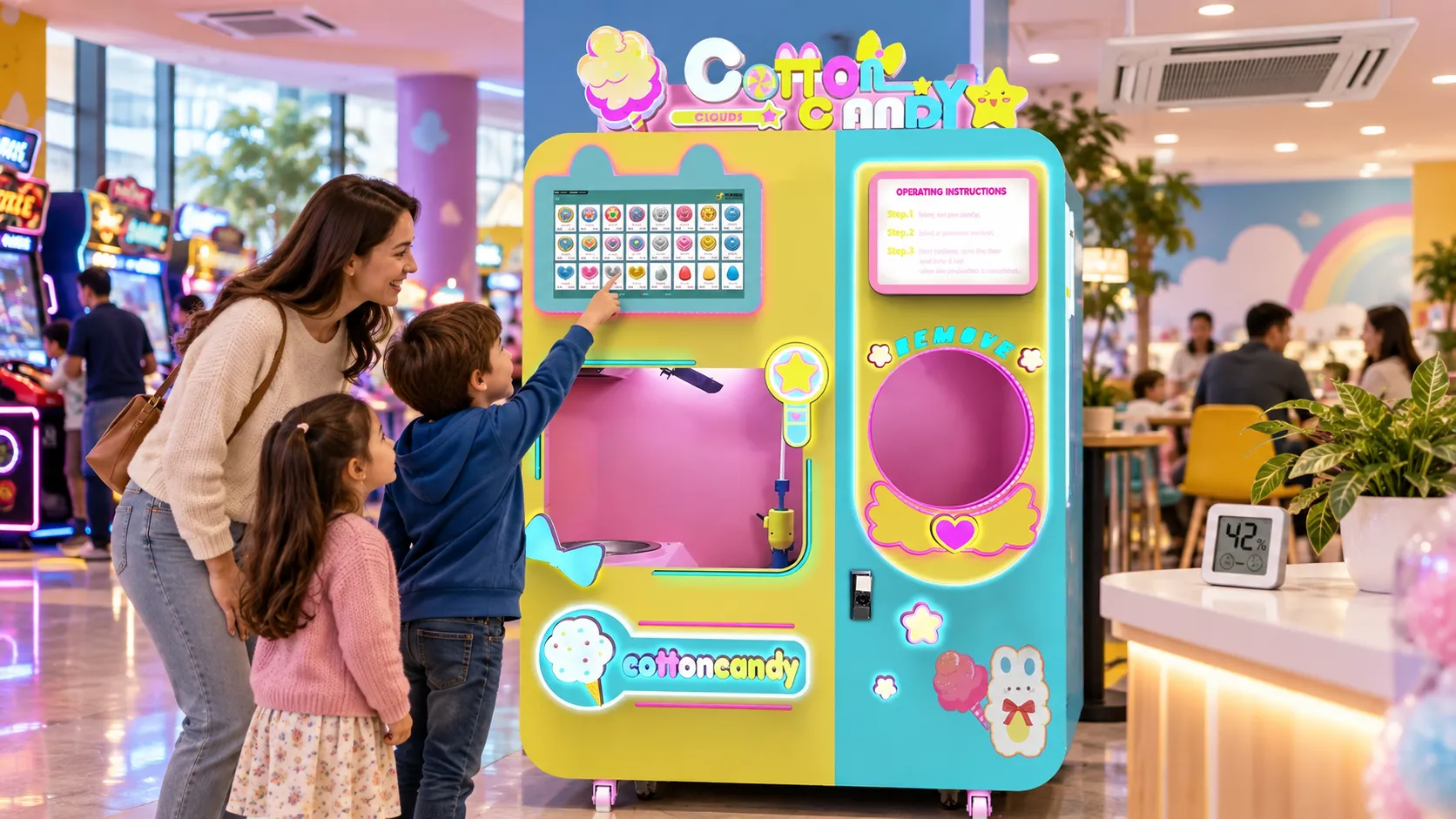
A cotton candy vending machine is not a vending machine in the old sense of a box that drops a bag. It is a small theater. A spinning head heats sugar and flings fine strands against the inside of a bowl, and a wand or a bowl catches them into shape in about a minute. The show is the product as much as the sugar is, which is why placement matters more than any spec sheet. The Red Rabbit CT-606 does the whole job without a human watching, so the trick is not the machine. The trick is giving the machine a room full of people who want to watch it work.
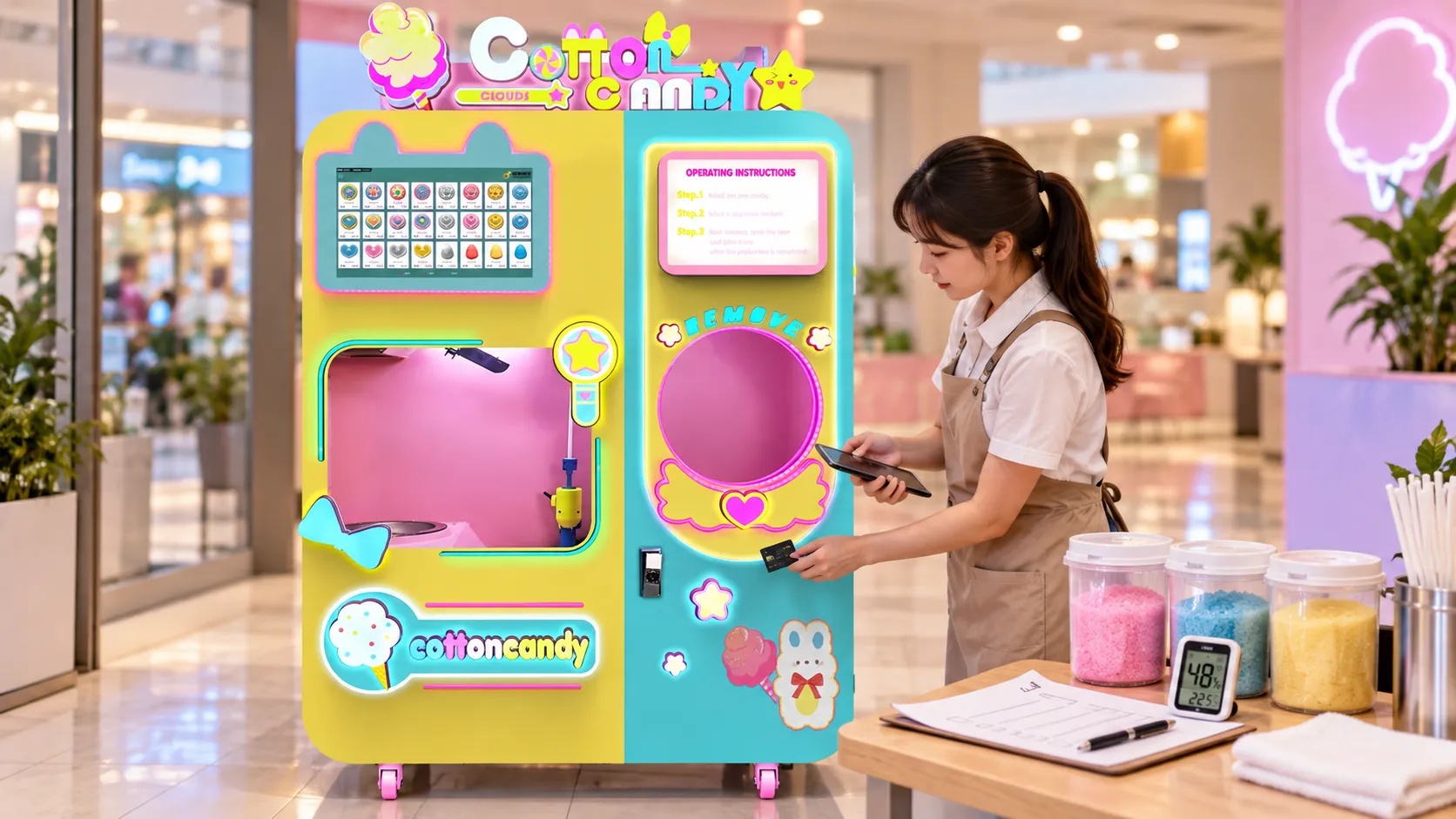
The thing most beginners miss is humidity. Cotton candy pulls moisture out of the air almost instantly, and a humid day turns a proud cloud into a sad, sticky clump in minutes. This is the single detail that decides whether your machine makes money, so it gets its own step later.
Step 2: Pick the location for the audience, not the rent
Cotton candy sells to kids and to adults having a soft, nostalgic moment. The best spots are places where both show up with time to spare, a trampoline park, a family arcade, a zoo exit, a beach boardwalk, a mall’s family wing. A busy train station looks great on a traffic map, but the person rushing for a train is not your customer. A quiet corner near a birthday-party venue will often out-earn a loud, fast hallway.
Watch the foot traffic for an hour before you sign anything, and do it on the same day of week and time you plan to operate. Count the families, not just the people. That number is your real market, and it is the one a landlord’s traffic sheet rarely shows you.
Step 3: Sort out power, water, and humidity before install day
The machine needs a stable outlet on its own circuit, not a shared strip behind a fridge. Cotton candy also wants dry air, so an air-conditioned indoor spot beats a humid outdoor one. If the location tends to run damp, you want the machine somewhere the air actually moves, and you want to ask about humidity control up front rather than retrofitting a damp corner after the fact. This is the step where first-timers lose a month they did not plan for, and that lost month is rent with no revenue.
Step 4: Do the permits and food-safety homework early
Even a machine that sells spun sugar is a food operation, and the local health department will want to see the basics, a clean sugar source, food-grade contact surfaces, and hand-washing access if a human restocks. In the United States the FDA Food Code is the framework most local rules build on, so read it before you call the inspector rather than after. A short visit and a few questions now saves you a shutdown later. Every location is different, and guessing is how people get fined.
Step 5: Set up payments the way your audience actually pays
Kids do not carry cash the way they used to, and the parent holding the card does not want to dig for coins while a child melts down beside them. Card and phone payments are not optional, they are the difference between a sale and a tantrum. Make sure the machine takes contactless, and test it yourself before launch with a real card, not a guess. A payment that fails in front of a queue is a machine that looks broken to everyone watching, and that impression sticks.
Step 6: Soft launch and the first week
Do not announce a grand opening on day one. Run the machine for a week with a small sign, watch what breaks, and fix it quietly. The first week is where you learn the machine’s rhythm, how long a sugar refill really lasts, and what a full bowl looks like. Keep a log of every refill and every jam, because that log is what tells you your real cost per cup and your real refill schedule. Nobody’s brochure gives you those numbers. Only your own machine does.
Step 7: First-month review and the three rookie mistakes
After a month, sit down with the numbers. The first rookie mistake is treating the machine as passive income and never visiting it. Cotton candy needs a human eye on the sugar level and the humidity more than a soda machine does, and a machine left alone too long turns into a pile of stale sugar. The second is buying cheap sugar or skipping a food-grade source to save a few cents, which shows up in taste and in a health inspection. The third is signing a long lease before you have run the location for a full month and seen the real foot traffic. Walk away from any landlord who will not let you test the spot first.
If you want the full specification and current pricing on the machine itself, the cotton candy vending machine page on chituvem.com covers the CT-606 in detail, and the contact page is where you can ask about lead times and shipping. If you are thinking about a cold drink to sit next to the sweet one, a slush vending machine pairs naturally with cotton candy and shares the same family-friendly audience. For the regulatory side, the FDA Food Code is the place to check food-safety requirements, and the SBA business guide walks you through the basics of permits and licenses.
A cotton candy machine is one of the friendliest ways to start in automated retail, but friendly is not the same as automatic. The operators who do well treat the first month as a lab, not a launch party. Learn the machine, learn the room, and let the location earn its keep before you commit to it. That is the whole secret, and it works whether you run one machine or ten.