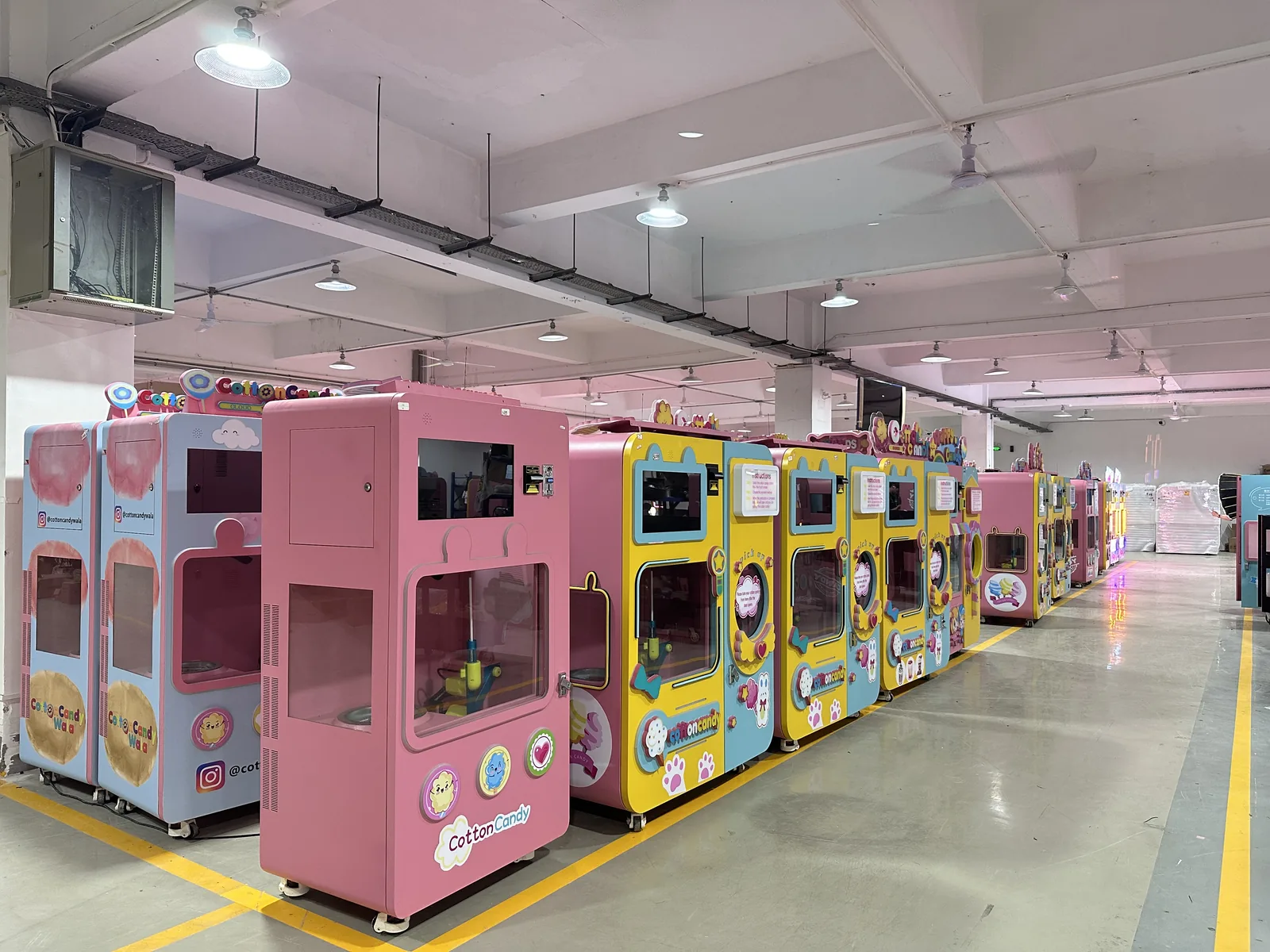
The ice cream vending machines we ship start as a bare steel frame on a factory floor in Panyu, Guangzhou. By the time one leaves, it has to hold soft serve at a steady temperature through a summer heatwave, dose a clean swirl on demand, and keep doing it unattended for years. This is what happens in between.
The problem the machine has to solve
Soft serve is harder than it looks. The mix has to stay cold enough to be safe and warm enough to flow. Too cold and the dasher binds against the cylinder wall. Too warm and the ice cream turns to soup, which becomes a food safety problem fast. An unattended machine has to walk that line all day without a person checking a thermometer every hour.
That is why the design starts with the refrigeration system, not with the touchscreen. The screen is the part customers see. The compressor is the part that decides whether the machine still works next summer.
The refrigeration system and the overrun
A compressor drives refrigerant through an evaporator wrapped around the freezing cylinder. The mix sits in a hopper above and flows down into the cylinder. Inside, a dasher spins and scrapes frozen mix off the walls while folding in air. That folding in air is the overrun, and it is the difference between a dense scoop and the soft, generous swirl people expect.
Get the air ratio wrong and you get a heavy, icy product that costs you more per cone. Get it right and the machine turns an inexpensive liquid mix into a swirl that looks and tastes right. The overrun is tuned during testing, not guessed at, and it stays consistent because the temperature stays consistent.
Single cylinder or two
We build the CT-XG210 as a single-cylinder unit and the CT-XG260 as a two-cylinder unit. For a quiet kiosk, one flavor is enough and one cylinder keeps the power draw lower. For a busy location, two cylinders let you run vanilla and chocolate side by side, or two flavors that suit the crowd. The choice comes down to foot traffic, not ambition.
A two-cylinder machine does not just double the flavors. It keeps selling when one side runs low, because the other side can carry the line while you refill. That kind of detail sounds small on a spec sheet and matters a lot on a Saturday afternoon.
The hopper and the refill rhythm
The hopper above the cylinder holds the liquid mix, and its size sets how often an operator has to visit. A bigger hopper means fewer trips, which is why the capacity matters more in a location that is hard to reach than in a shop you walk past every day.
Operators learn the rhythm quickly. A busy beach stand might refill twice on a hot day. A quiet lobby might go days on one fill. The machine does not care either way. It just draws mix down from the hopper and keeps the cylinder full, and the operator tops it up on a schedule that fits the location.
Food safety is designed in, not bolted on
Soft serve is a dairy product, which means the FDA Food Code rules on holding temperatures and cleaning apply. The machine is built around that. The mix path uses parts that come apart without tools, so an operator can pull the dasher and the hopper for a proper wash instead of wiping around corners.
The machine also runs a sanitize cycle between product batches. The holding temperature is monitored continuously, and the unit can hold a safe night mode when the location is closed. None of this is glamorous, and all of it is the reason a machine can serve the public day after day without a health inspector raising an eyebrow.
Built for humid and coastal sites
A lot of our machines end up near the water, in seaside towns and boardwalks where the air is salty and damp. That environment is hard on metal, so the frame and panels get a treatment that resists corrosion. It is a small choice on the factory floor that shows up years later as a machine that still opens and closes cleanly instead of rusting at the hinges.
The same thinking goes into the electronics. Seals and gaskets keep moisture out of the control board, because a short circuit from condensation is the kind of failure that only shows up on the worst possible day, a packed holiday with a line of customers.
How we test one before it ships
Every machine goes through a series of tests on the floor before it gets boxed. A soak test runs it for hours at high room temperature to confirm it holds the freeze. A freeze test pushes the cylinder down to the lowest setting to confirm the compressor does not stall. A cycle test opens and closes the dispensing door hundreds of times, because that is the part customers actually touch.
Then there is the taste test. We run a real mix through the machine and check the overrun and the texture, adjusting the dasher speed and temperature until the swirl looks like what a customer would pay for. A machine that passes the electrical test but pours a watery cone gets sent back, not shipped.
“The swirl is the product. If it does not look right, nobody buys it, and it does not matter how good the compressor is.”
Why any of this matters to an operator
An operator buys a machine once and worries about it for years. Every hour it runs unattended is an hour it has to get the temperature, the texture, and the cleaning right on its own. A machine that drifts out of spec means melted product, a health code risk, and a service call that eats a week of margin.
The factory work is invisible to customers. They only see the swirl. But the swirl is the whole business, and it is only consistent because someone on the other side of the world spent an afternoon dialing in the overrun on your exact unit.
If you want to see how these machines run next to our other frozen drink lines, the slush vending machines share a lot of the same refrigeration thinking in a different product. And if you are ready to talk about a machine for your own location, the ice cream vending machine page has the specs, or just reach us through the contact page.
Related machines from Red Rabbit
Red Rabbit vending machine | Red Rabbit vending machine | Red Rabbit vending machine