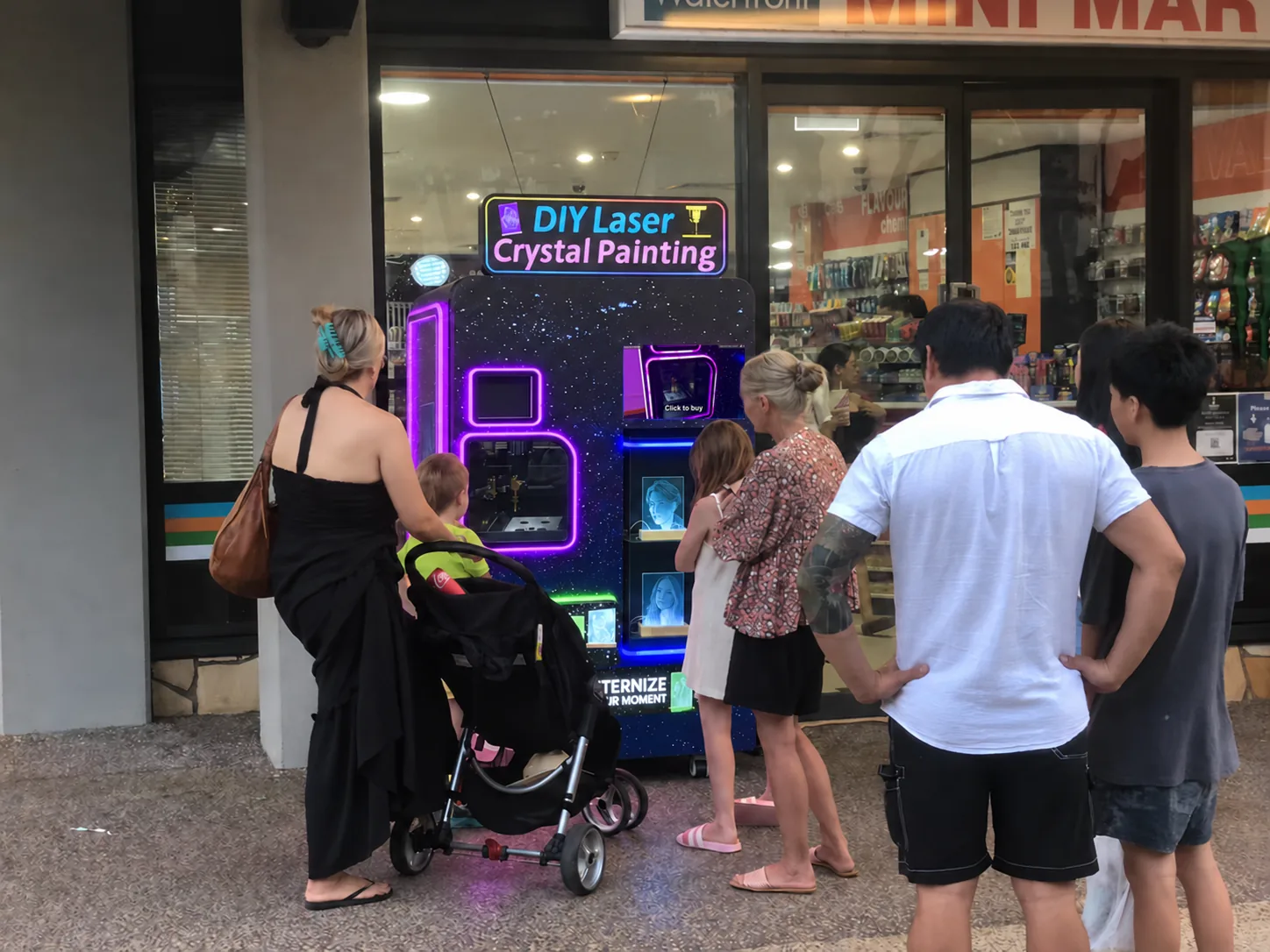
When an operator starts asking about a glass engraving vending machine, the questions arrive fast and they tend to be the same ones every time. Is it like those crystal blocks with a face floating inside? Do I need a laser license? Will it survive a busy tourist shop? I have answered these enough times that I can give you the straight version without the sales fog.
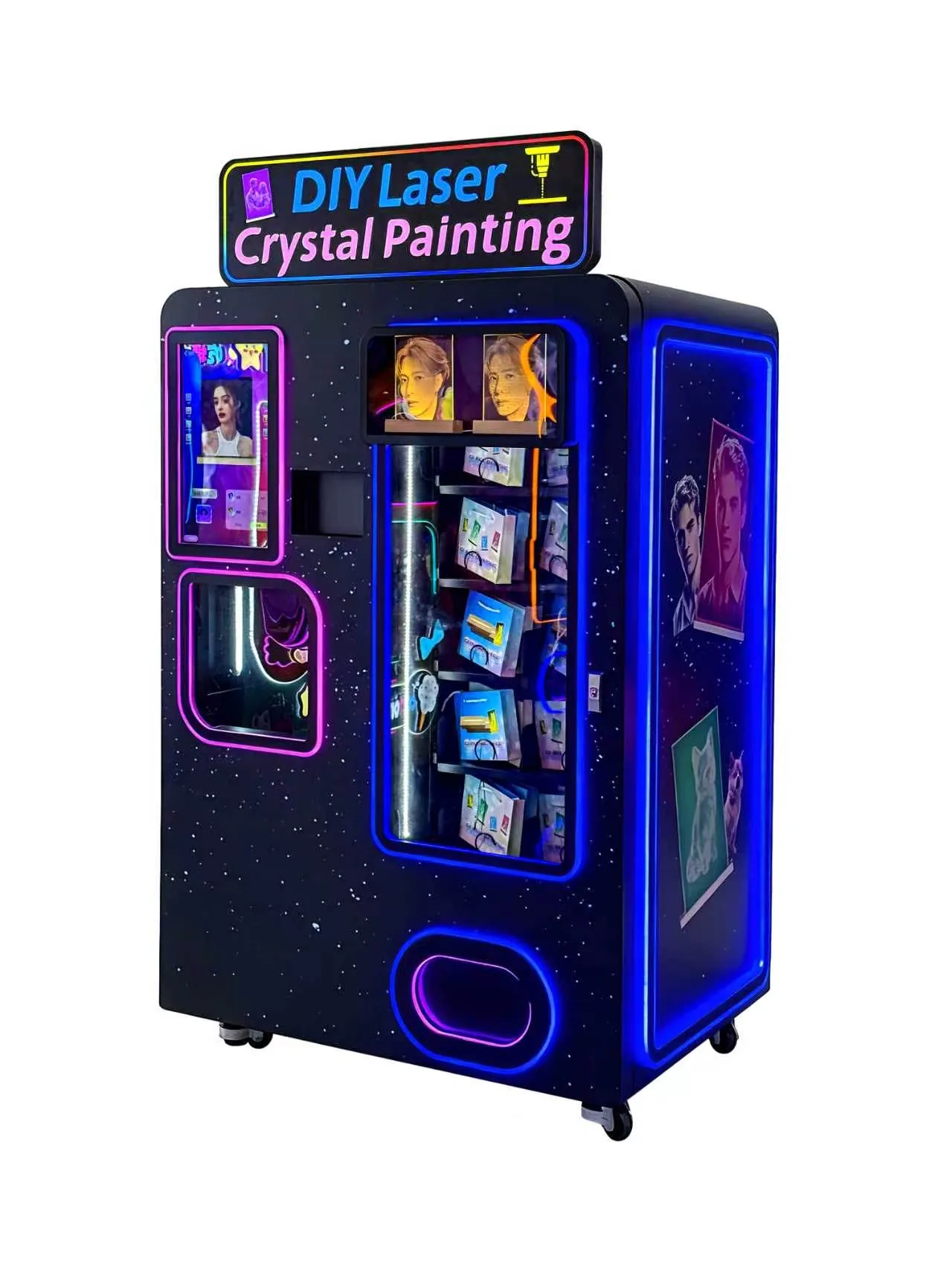
What does the machine actually engrave?
This one clears up most of the confusion. A glass engraving machine etches the surface of a piece. It takes a photo, a name, a logo, or a date and frosts it into flat or curved glass and acrylic. It is not the same as a 3D crystal with an image suspended inside a solid block. That internal style uses a different process that fuses points inside the material, and it is a separate product entirely.
On a surface engraving machine, the laser moves across the glass and removes a thin layer to leave a permanent frosted mark you can feel with a fingertip. It handles drinking glasses, bottles, awards, plaques, mirrors, and acrylic sheets. If a customer walks in with a vineyard bottle, you can put their name and the date on it in a couple of minutes and hand it back as a gift. You can see the full spec and what it produces on the glass engraving vending machine page.
Is the laser dangerous? Do I need a permit?
Every laser deserves respect, and this machine is built with shielding around the work area. The enclosure holds the beam inside while a job runs, which is what lets operators run one in a normal shop without a special license in most regions. Local rules always win, so check with your local authority before you commit.
You do not need goggles while the door is shut. You should never run the machine with the lid propped open or the interlock bypassed. The OSHA guidance on laser hazards is the clearest place to understand beam safety, eye protection, and why a proper enclosure matters more than any permit.
How fast does it finish one item?
It depends on the image and the surface, but a name or date on a tumbler often finishes in one to two minutes. A dense photograph on a large plaque takes longer. Operators learn to quote the simple jobs for impulse buyers and save the big photo pieces for shoppers who have already decided.
What matters more than raw speed is that the machine works while you do something else. A customer picks a design, the job runs, and you are free to greet the next person. Throughput is rarely the bottleneck. Getting the machine in front of the right crowd is the bottleneck, and that is a location problem, not a speed problem.
What can customers put on the glass?
Most operators keep a short menu of proven sellers. Names and dates on flutes and tumblers. A couple’s names on two glasses for a wedding. A family photo on a framed acrylic panel. A company logo on a set of awards. A pet photo on a small plaque. You do not need a huge library. Eight to twelve templates cover most walk-up orders, and the rest come from customer photos they upload on the spot.
The machines that do best lean into moments. A tourist wants a keepsake from the trip. A parent wants the graduation date on a glass. That emotional hook is what turns a browsing window into a sale, and it matters more than the size of the template folder.
What does each engraving cost me in materials?
The running cost is small because the blank is the main expense. A plain drinking glass or a sheet of acrylic is inexpensive at volume, and the engraving itself adds almost nothing in consumables beyond power and an occasional lens wipe. That is why this category attracts operators who are tired of machines that need constant restocking of pricey cartridges or ink.
You set the retail price by the location, the same way a gift shop prices a keepsake by what the crowd will pay. A tourist-facing store and a local awards shop will land on different numbers for the same glass. The machine does not care. It just etches.
Where do these machines earn the most?
Places where people already buy keepsakes and gifts. Tourist attractions, wineries and distilleries, wedding venues, zoos, aquariums, malls, and specialty gift stores all work. The common thread is a shopper who is already in a spending mood and wants something with their own name or photo on it.
“I put one next to a photo booth at a wedding venue. The first weekend it paid for the glass stock three times over. Nobody asked about the laser. They asked if we could fit the dog’s name on the back.”
This is not a machine you drop in a lobby and forget. It earns by being visible and by having someone nearby who can explain the menu in ten seconds. The best locations are busy and personal, not just busy.
Does it need a trained operator?
No. A store employee can learn the flow in an afternoon. Load the blank, pick or upload a design, start the job, hand over the finished piece. The machine does the skilled part. What it needs is a person willing to greet customers and suggest an occasion, because a friendly “do you want a name on that glass” closes more orders than a silent machine ever will.
How much upkeep does it need?
Less than you might expect. Wipe the lens and the work surface, empty the small debris tray, and check the exhaust filter on a schedule. There is no ink to change and no print head to clog. The moving parts are simple, which is why operators who run one for a year report fewer surprises than with ink-based printing machines.
If you are weighing one of these against another keepsake machine, it helps to look at the two side by side. A phone case printer is quick and cheap to run but sells a case, not a memory. A glass engraving machine sells a moment carved into something people keep on a shelf for years. Different shoppers, different margins, different floor space.
The questions above are the ones that separate a real operator from a tire kicker. If you want to talk through your specific location and see whether a glass engraving machine fits it, reach out through our contact page. Bring the questions, and you will get straight answers.
Related machines from Red Rabbit