When I walk the floor at Red Rabbit’s factory in Panyu, Guangzhou, the phone case printing line looks different from the food machines in the same building. There is no freezer, no syrup pump, no vending spiral. There is a print engine, a stack of blank cases, and a small curing lamp. The whole thing is built around one idea: a customer walks up, picks a photo, and around a minute later a finished case drops into the tray.
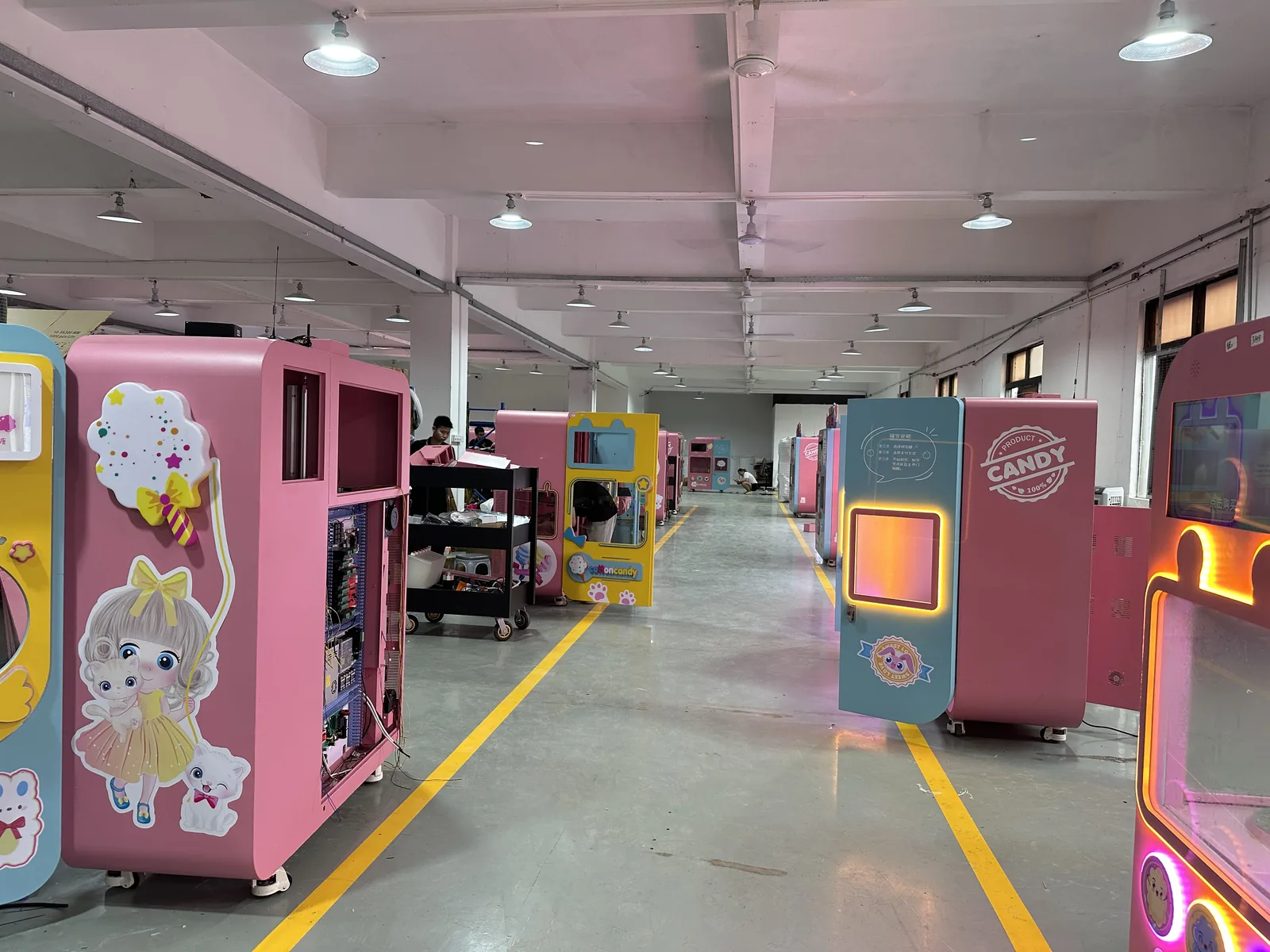
That single idea drives every design decision, and it is worth walking through them one by one, because the way a phone case printing vending machine is built decides whether it keeps working for years or becomes a service headache after a few months. This is the same factory that builds Red Rabbit’s phone case printing vending machine, and the same team behind the keepsake and frozen treat lines.
Start with the print engine
The heart of the machine is the print engine, and the first question is always which printing method to use. Red Rabbit builds these machines around UV printing, which lays down ink and cures it almost instantly with a UV LED lamp. The reason is simple. A phone case is a smooth, slightly flexible plastic surface, and UV ink bonds to it and hardens in seconds without a long drying wait. A customer who just paid wants the case in their hand now, not in twenty minutes.
UV ink also matters for durability. A case lives in a pocket, in a bag, under a palm, and gets scuffed every single day. The ink has to survive that. So the machine is tuned so the color sits deep in the coating and does not peel off the first time someone drops their phone onto a table.
The blank case magazine
Next comes the part operators touch most often: the blank case magazine. The machine holds a stock of blank cases in a magazine that feeds one at a time into the print bed. The goal of the design is to make restocking something a shift manager can do in two minutes without tools. The magazine slides out, the empties come out, the new blanks drop in, and the magazine slides back.
Red Rabbit keeps the blank inventory simple on purpose. The machine prints onto a standard case, and the operator chooses which blank sizes to stock based on the phones in their market. There is no reason to overcomplicate it. When a customer orders, the software tells the magazine which blank to pull, the case is printed, cured, and dropped.
The ink system and the curing station
The ink system is designed for the same kind of person who restocks the magazine. Cartridges sit behind a panel that opens from the front, and the machine reads the levels so it can warn an operator before a color runs low. A dry ink cartridge in the middle of a busy Saturday is exactly the kind of failure the design tries to catch early. The warning shows up on the screen and in the operator’s dashboard, so the fix happens before a customer ever sees an error.
The curing station is small but it matters more than its size suggests. After the ink lands, the case passes under the UV LED lamp and the ink hardens before the case reaches the drop tray. The lamp is shielded so the light stays inside the machine and a customer never looks at it directly. Shielding is a safety detail that is easy to skip and expensive to skip, because a bright UV lamp in a public space is not something you leave exposed.
The software and the customer flow
The part the customer actually sees is the screen, and the screen flow is built to be shorter than a person’s patience. Pick a category, upload a photo from the phone or scan a QR code to send it from their own device, drag it into place, confirm, pay, wait. That is the whole journey, and the design target is to keep it under a minute of active tapping.
Uploading from a personal phone is a deliberate choice. A customer’s best photos already live on their phone, so the machine accepts a QR code upload rather than forcing them to type or use a cable. This is also where a phone case machine differs from a keepsake puzzle machine. The case is personal, made for the person holding it, so the flow leans on their own camera roll instead of a shared family photo.
Testing before it ships
No machine leaves the floor without a burn in test. Each unit runs a long print cycle, case after case, while the team watches the print bed temperature, the ink flow, the lamp intensity, and the drop sensor. The point of the test is to catch the failures that only show up after hundreds of cycles, a feed jam, a misaligned case, a lamp that drifts. Fixing those on the floor is cheap. Fixing them in a mall kiosk on the other side of the world is expensive.
Red Rabbit also runs the machines through a range of phone case thicknesses and finishes to make sure the bed holds the case flat and the color lands the same on a matte case as on a glossy one. Flatness matters more than people expect. A case that lifts by even half a millimeter prints a blurred edge, so the bed is built to clamp without scratching.
Why this matters to an operator
All of this engineering shows up as one thing for the person who owns the machine: less downtime and fewer service calls. A phone case printing vending machine that jams every afternoon is not a business, it is a part time job. The reason to care about how the machine is built is that every skipped test or cheap ink pump becomes a call from a mall manager about a broken machine on a busy Saturday.
The National Automatic Merchandising Association tracks reliability and best practices across the vending industry, and the Small Business Administration has a guide for anyone turning a machine purchase into a real business. Both reward the same habit the factory does: understand the equipment before you commit to it.
If you are comparing machines, ask the same questions a factory would ask. What print method does it use? How fast does the ink cure? How is the blank magazine loaded? What does the burn in test cover? The answers tell you more than a brochure ever will. For a closer look at the machine itself, the spec page for the phone case printing vending machine is a good place to start, and the team at Red Rabbit can walk you through the details that matter for your location.
Good equipment does not advertise itself with a long feature list. It advertises itself by still running, quietly, a year after the warranty expires. That is what the floor is built for.
Related machines from Red Rabbit
Red Rabbit vending machine | Red Rabbit vending machine | Red Rabbit vending machine