Nadia runs fourteen machines across a mid-sized city. Most are snack and drink units in office buildings, plus two in a transit plaza and one in a gym. For three years the route did fine. Then, slowly, it did not. By late 2025 two of her spots, a converted warehouse office park on the edge of town, were barely covering their monthly placement fee. She was ready to pull the machines and walk away.
What happened next is a useful study in where automated retail is heading in 2026. The global retail vending market sits around 79 billion dollars this year, but it is not growing because plain snack dispensers are selling more chips. It is growing in a different direction, toward connected machines, cashless payments, and made-to-order experiences. Nadia’s slow spots were failing for exactly the reasons the old model is failing, and they recovered for exactly the reasons the new model works.
The Problem Was Not the Location
Her first instinct was to blame the address. The office park is small, maybe six hundred workers across three buildings, and it sits a five minute drive from any retail strip. On paper that sounds weak. But when she stopped to look, the foot traffic was actually steady. People arrived by nine, took breaks, and lingered in a shared courtyard at lunch. The machines were getting seen. They were just not getting used.
Three specific problems stood out. First was payment. The machines took coins and an old card reader that rejected contactless taps about half the time. Workers in that park rarely carried cash, and they had learned to not bother trying a card. Second was blindness. Nadia had no telemetry on the units, so she only learned what sold when she opened the cash box each week. She was restocking on a fixed schedule, not on demand. Some items sold out by Tuesday and sat empty until Friday. Other items sat full for a month. Third was the offer itself. The assortment was the same mixed bag of candy bars and sodas she had loaded for years, with nothing that gave anyone a reason to walk over.
None of those problems had anything to do with the neighborhood. They were operational, and they were fixable.
What 2026 Data Says About the Shift
Nadia’s situation tracks a broader industry story. Research published this year points to a market still growing, but in the low single digits overall, roughly three and a half percent a year. The energy is not in the core commodity machines. It sits in a few places.
Cashless has stopped being a feature and become the default. Reports repeatedly describe card, QR, and wallet acceptance as a baseline expectation now, not an upgrade. Machines that still depend on coins are quietly disqualifying themselves in offices, campuses, and transit hubs where people stopped carrying change years ago.
Telemetry is the second shift. Connected machines report stock levels, temperature, and transaction patterns back to the operator, so restocking follows actual demand instead of a calendar. The payoff is fewer empty slots and fewer wasted trips, both of which show up directly on the profit line.
The third shift is the one Nadia found most surprising. The fastest growing category is not a new snack. It is experiential and made-to-order equipment, machines that build or craft a product in front of the customer. Cotton candy spinners, custom photo keepsakes, engraved glass, freshly blended drinks. These units turn a purchase into a small show, and a show pulls foot traffic that plain dispensers cannot.
The Rebuild, Machine by Machine
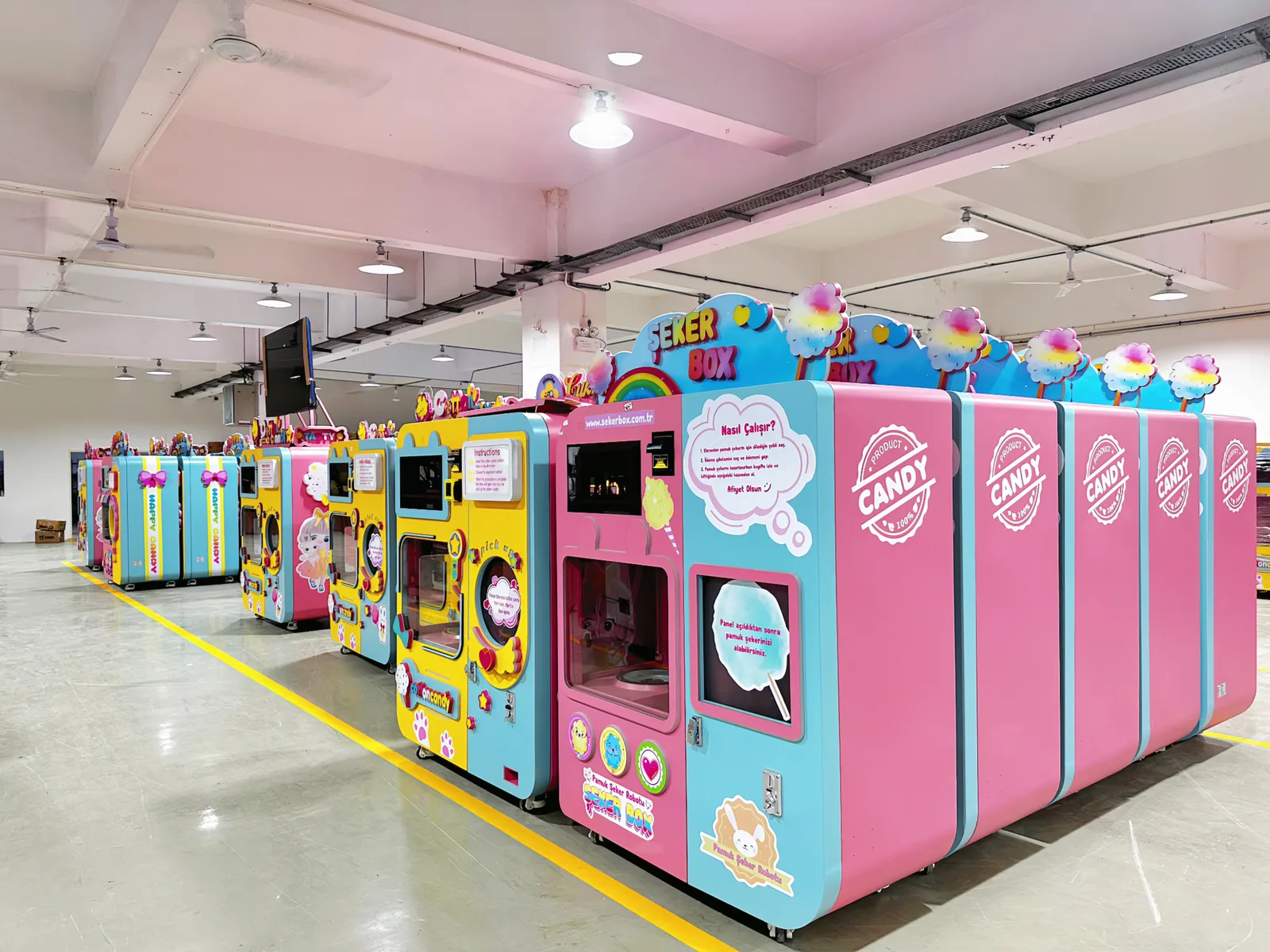
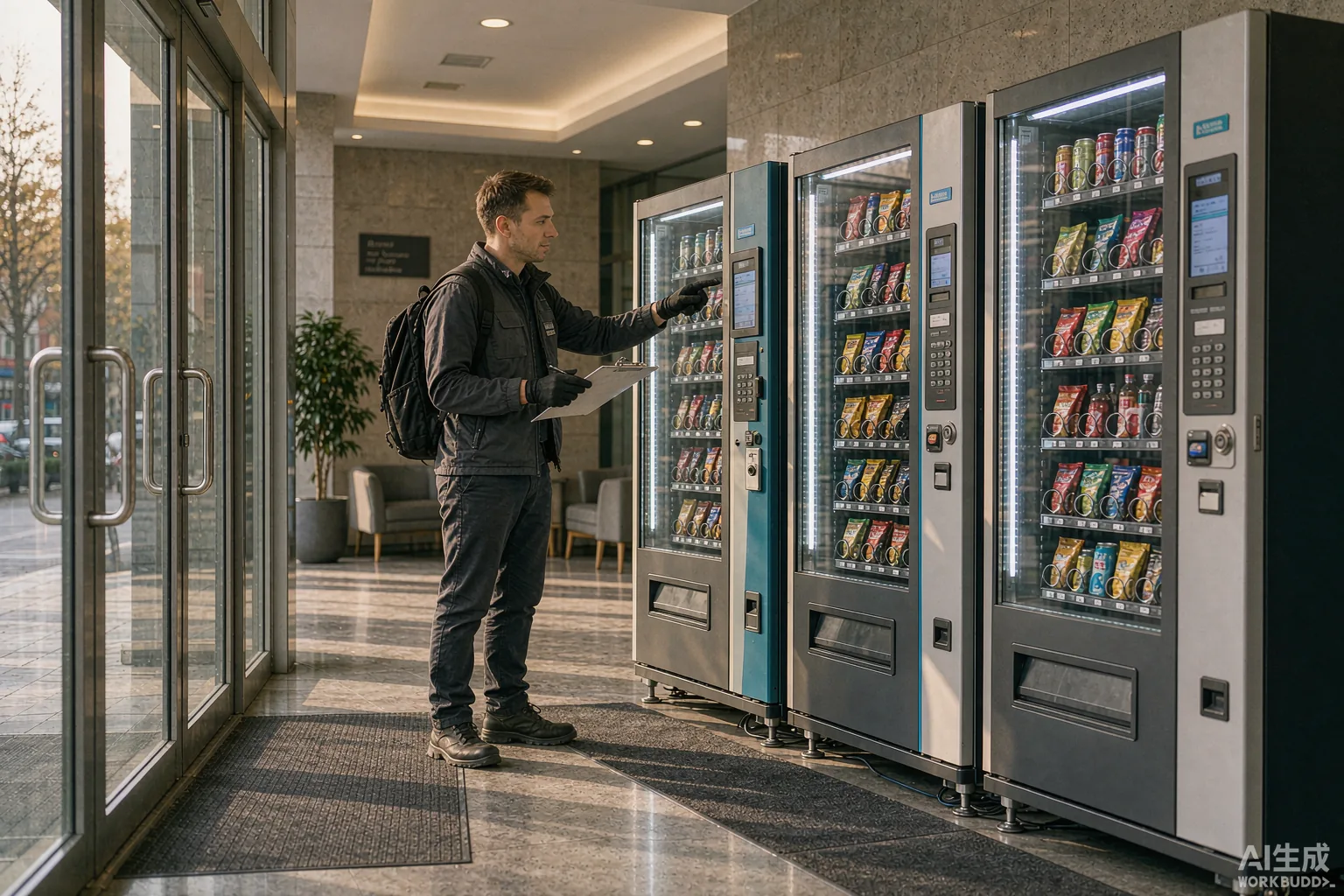
Nadia did not replace her whole fleet. She kept the profitable core alone and focused on the two failing spots. For the first, she swapped in a connected snack machine with cashless acceptance and telemetry. For the second, in the courtyard where workers gathered at lunch, she placed a made-to-order cotton candy machine instead of another snack unit.
The reasoning was simple. The snack machine would fix the two mechanical failures, payment and blindness. The cotton candy machine would fix the third, giving people a reason to walk over. It also had a side benefit she had not fully planned for. When one person stopped to watch sugar spin into a fluffy cloud, two more drifted over to watch, and some of them bought a snack from the machine beside it while they waited.
The Ninety Day Numbers
Here is what changed at the two spots over the first ninety days.
| Metric | Before | After 90 days |
|---|---|---|
| Weekly sales, connected snack machine | about 210 dollars | 410 dollars |
| Weekly sales, made-to-order machine | about 180 dollars | 540 dollars |
| Stockout incidents per week | 3 to 4 | under 1 |
| Restocking trips per week | 3 | 2 |
| Cashless share of transactions | about 30 percent | 81 percent |
The snack machine roughly doubled. The made-to-order machine tripled, and it did something the numbers do not show. It changed how people used the courtyard. Groups started meeting there for the ten minutes it took a fresh cotton candy to form. That dwell time fed the snack machine next to it, which is part of why both spots rose together rather than one cannibalizing the other.
The Adjustments That Followed
Telemetry changed how Nadia worked. She stopped guessing. The data showed a clear pattern. Candy bars sold before eleven and after three, while sparkling water and protein snacks sold hard over lunch. She reshuffled the planogram to match, and she dropped three slow sellers that had quietly eaten shelf space for a year. She also started restocking the snack machine in the afternoon instead of the morning, because the machine itself told her the lunch rush did the most damage.
On the cotton candy side, she learned that color choice mattered more than she expected. Letting a customer pick pink or blue on the touchscreen took a few extra seconds but lifted the buy rate noticeably. People like the feeling of choosing, even when the choice is small. She also raised the price slightly and saw no drop in volume, which told her the purchase was emotional, not price sensitive.
What to Take from This
A few lessons hold up beyond this one route. The location is rarely the first thing to blame. Look at payment, data, and offer before you write off a spot. Cashless is not optional in 2026. If your machine cannot take a contactless tap, you are losing sales before anyone even looks at the product. Telemetry turns a route from guesswork into a managed operation, and it usually pays for itself in saved trips and fewer empty slots.
Most importantly, the machines that win attention now are the ones that do something. A made-to-order unit is not just a dispenser. It is a small attraction, and attractions create the dwell time that lifts everything around them. If you are considering this kind of machine, look closely at cotton candy and other experiential options that turn a snack into an event. The cotton candy vending machine is a good entry point, and made-to-order keepsakes like a laser engraving vending machine extend the same idea into gifts and memories.
For operators building or fixing a route, the industry guidance from the National Automatic Merchandising Association is a solid reference on standards and best practice, and the Small Business Administration business guide helps with the planning and legal side of running a small route properly. If you want to talk through what a connected or made-to-order machine would look like in your own locations, reach out through the contact page and describe your spot.
Nadia kept both machines. The office park spot is now one of her better earners, and the lesson she repeats is the same one the 2026 data keeps repeating. The vending business did not shrink. It moved. The operators who moved with it are the ones still growing.
Related machines from Red Rabbit