I watched an operator lose a whole Saturday’s worth of sales last summer, and it had nothing to do with his location. He had a brand new cotton candy machine, a busy beach promenade, and a line of kids waiting. The problem was the humidity. He had stored his floss sugar in the back of a van for a week, the sugar drank up the moisture, and the spinning head turned it into hard candy instead of a fluffy cloud. Every vend came out wrong, and by the time he figured it out the afternoon was gone. Most launch problems look like that. They are small, boring, and completely avoidable if you check the right things before you switch the machine on. Here is the checklist.
1. Power and Placement Before Anything Else
Start with the boring stuff because the machine will not run without it. Check that the outlet is grounded and on its own circuit. Cotton candy machines pull steady power while the spinner runs and the sugar heats, and a shared circuit that trips mid-vend means a ruined serving and a customer who walks away. Confirm the machine sits level and stable, and that the spinning head has clearance so nothing touches it while it runs. Cotton candy machines do not need a water line. They run on granulated or floss sugar, which makes them far simpler to place than a frozen drink machine. But they do need dry, cool storage for the sugar itself, which is the next point.
2. Sugar, Flavors, and the Humidity Problem
Humidity is the number one reason a cotton candy machine underperforms on day one, and it is the easiest thing to miss. Floss sugar is designed to spin into fine threads, but it is hygroscopic, which means it absorbs moisture from the air. Damp sugar clumps, clogs the spinner, and comes out as a hard, grainy blob. Store your sugar in sealed, airtight containers, and keep a pack of food-grade desiccant in each one if you are working near the coast or in a hot, muggy climate. Stock a handful of flavors to start, and do not overstock. Fresh sugar spins better than sugar that has been sitting open for a month.
3. Food Safety and the Paperwork
Cotton candy is food, which means the same rules apply as any food business. The 美国食品药品监督管理局(FDA)《食品法典》 sets the baseline for hand washing, clean equipment, and safe handling, and your local health department may have its own permit requirements on top of that. Before you switch on, make sure you have hand washing available or sanitizer within reach for the person stocking sugar and handing out servings. Confirm you have whatever local license or permit your city or county requires for selling food from a machine. This is the step people skip because it is not fun, and it is the step that costs the most when an inspector shows up.
4. Pricing and the Payment You Actually Take
Set your price before the first customer arrives, and make it easy to change later. More important, decide how people will pay. The industry has moved hard toward cashless, a shift the 美国自动售货协会 has tracked for years. Around 78% of vending transactions are now cashless, and most of those are contactless taps. If your machine only takes coins, you are turning away the exact people most likely to buy an impulse treat. Check that the card reader and the tap-to-pay function both work, and test them with a real card, not just in demo mode. Test the refund and void flow too, because the moment you need it will be the moment a customer has a question.
5. The Test Run You Actually Do
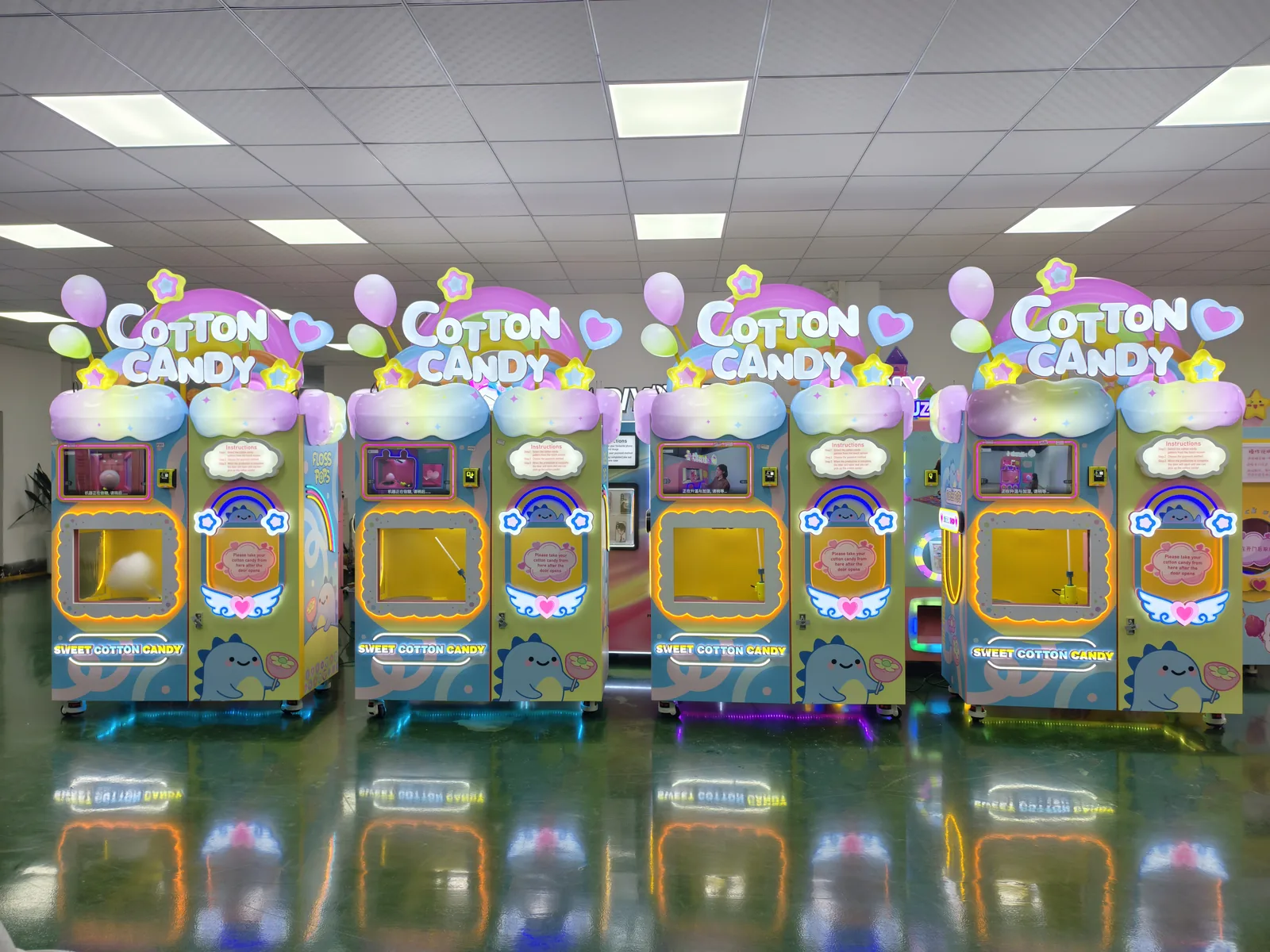
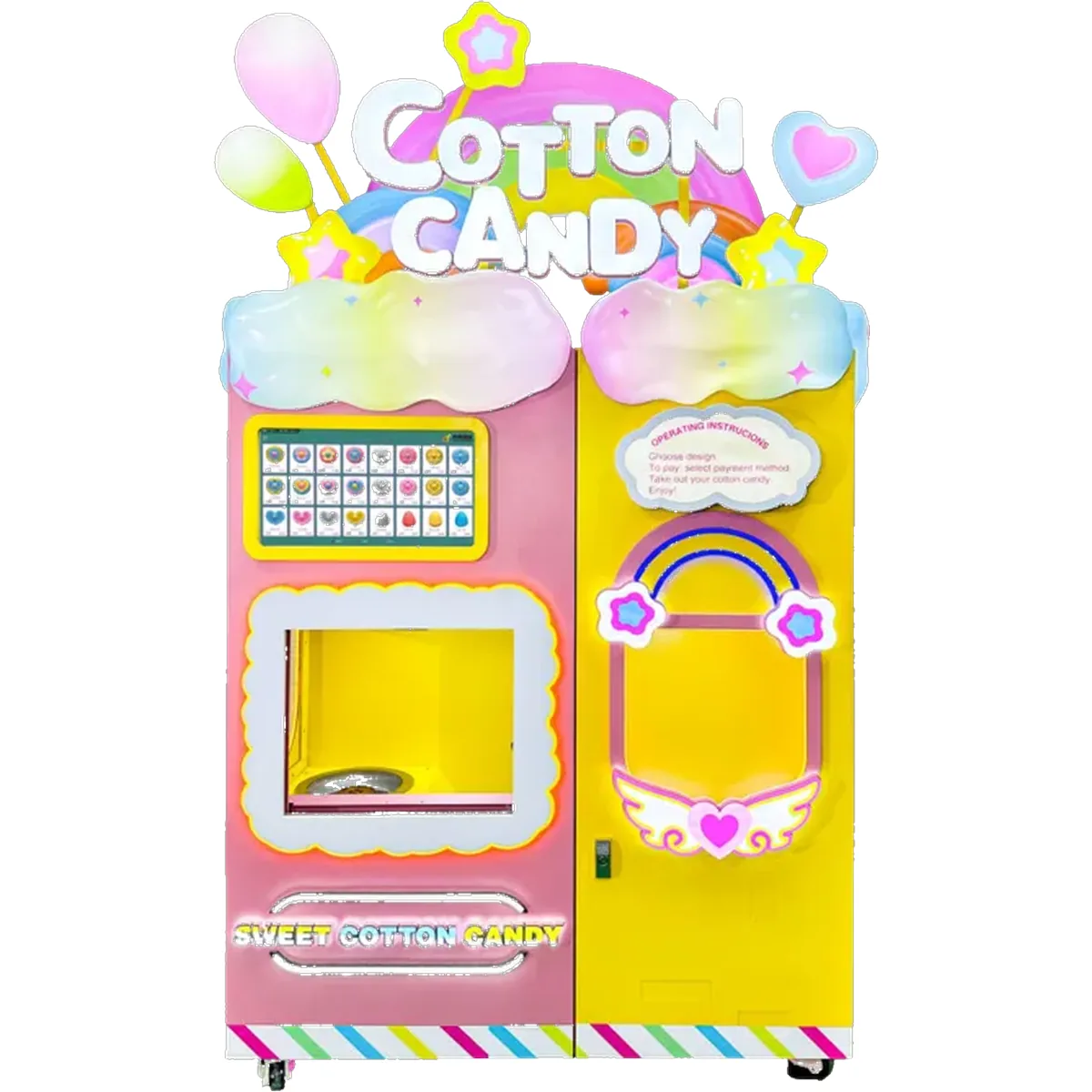
Run a full vend cycle before you open. Watch the sugar feed, the spin, and the serving size. The first few vends after a machine is unpacked are the ones that reveal problems, so do them with no customers in line. Check that the serving comes out full and even, and that the machine returns to ready after each cycle. If it uses a stick or a cone, make sure those dispense or are stocked within reach. A cotton candy machine is at its best when the customer can see the whole process, so angle it where the spinning sugar is visible from the walkway. That visible show is part of why a machine like ours works, and you can see the model and what it does on the 棉花糖自动售货机页面.
6. The First Week Routine
Once you are open, the checklist becomes a small daily routine. Wipe down the spinner and the sugar catch area every day, because residue from one flavor will bleed into the next. Empty any stray sugar from the tray so it does not attract ants. Check the sugar level at the end of each day and restock dry sugar from sealed containers, not from whatever is left in the hopper. If you are in a humid area, keep an eye on the weather and pull the sugar into a dry box if a storm is coming. These are five-minute jobs that keep the machine consistent.
7. The Mistakes That Show Up in the First Week
A few predictable problems hit new operators in the first week, and they are all fixable. Hard, grainy cotton candy is almost always damp sugar, not a broken machine, so change the sugar before you call for a repair. Uneven servings usually mean the spinner needs a clean or the machine is not level. Slow sales in a good spot often come down to visibility, so move the machine where the spinning sugar catches the light and the eye. And the busiest hours are the worst time to skip cleaning, because a clogged spinner at peak time is lost revenue you cannot get back.
Here is the whole checklist in one place so you can print it or keep it on your phone.
| 检查项 | What to Look For | When |
|---|---|---|
| 电源 | Grounded outlet, own circuit, no tripping | Before opening |
| Placement | 水平、稳固,从通道可见转盘 | Before opening |
| 食糖储存 | 密封、干燥,潮湿区域放置干燥剂 | 每日 |
| 许可证 | 当地食品许可证,洗手设施触手可及 | Before opening |
| 支付 | 用真实银行卡测试刷卡和感应支付 | Before opening |
| 测试出货 | 饱满、均匀出糖,机器恢复就绪状态 | Before opening |
| 转盘清洁 | 口味之间无残留 | 每日 |
| 糖量 | 从密封容器中补料 | 每日结束 |
棉花糖机是最容易操作的机器之一,因此启动时的失误几乎从不来自硬件,而是来自湿度、支付,以及没人愿意做的五分钟检查。开机前把这些做好,机器就会替你完成剩下的工作,你只需看着队伍排起来。如果你正在权衡棉花糖机与另一种冲动消费型机器(比如冷冻饮品选项),我们可以带你了解每种机器如何适配不同的位置。 沙冰自动售货机页面. 。当你准备好开始时,请通过 联系页面 联系我们,我们将帮助你完成第一台机器的选址、备货和清洁运行。.
来自Red Rabbit的相关机器