For years the story of vending was simple. You put a machine full of soda and chips in a break room, and it sold itself. That story is over. In 2026 the strongest growth in automated retail is not coming from the classic spiral box. It is coming from machines that actually make something, a fresh meal, a cup of coffee, a cloud of cotton candy, right there in front of the customer.
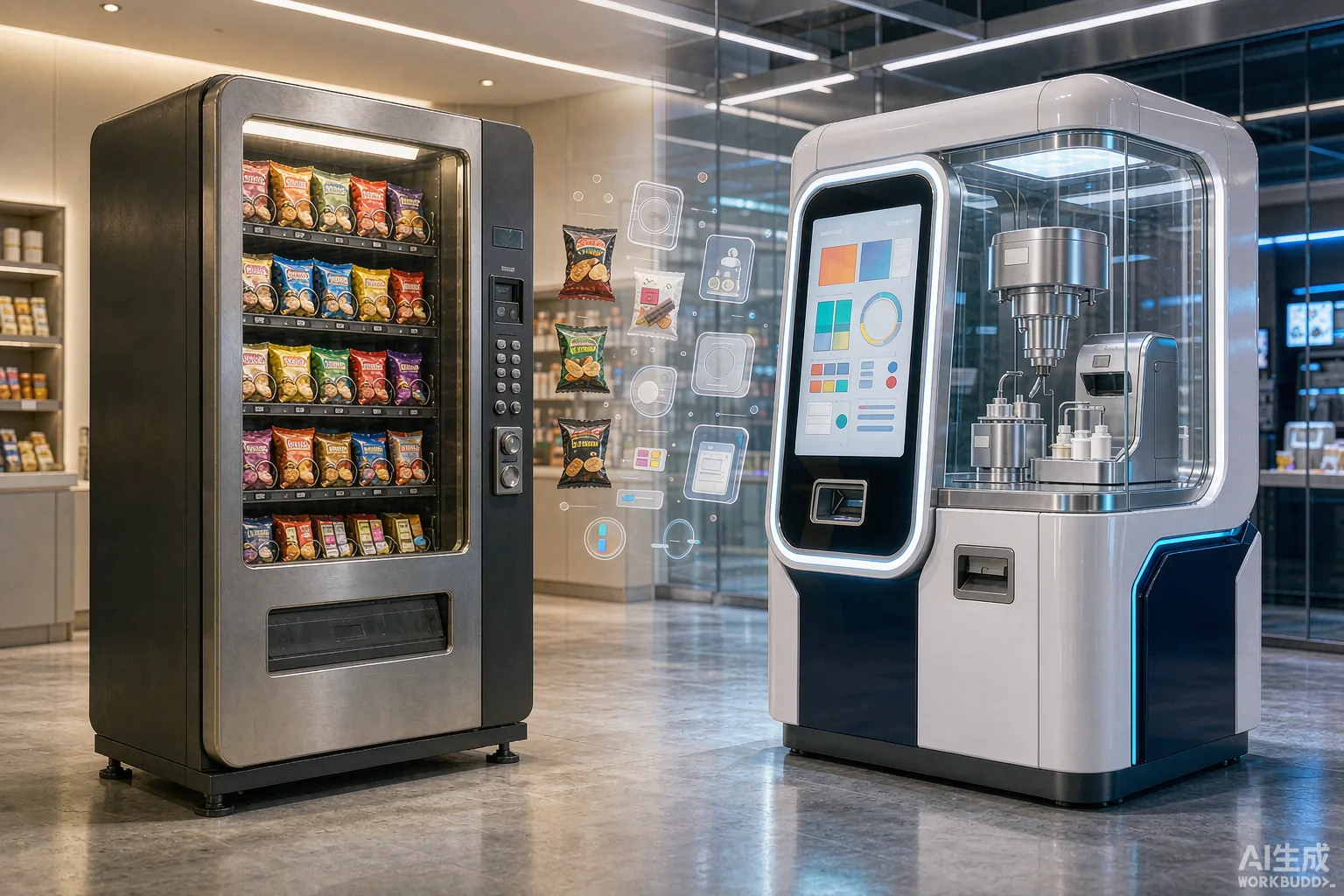
I spent the last week going through the newest market reports and talking to operators who run both old and new machines. What keeps coming up is a quiet but real split. The overall vending market is growing at a modest single digit pace. The machines that build, cook, or pour are growing several times faster. If you are deciding where to put money this year, that split matters more than any single headline number.
The numbers are pointing away from the classic box
Global vending machine revenue is expected to land around 8.05 billion US dollars in 2026, up from roughly 7.77 billion in 2025. That is real growth, but it is slow, around 3.6 percent a year through 2035. The market is mature. Most of that growth is just replacing old machines and adding cashless readers, not opening new ground.
Now look at the smart vending segment on its own, and the picture changes. One widely cited forecast puts the smart vending machine market at about 13.4 billion dollars in 2026, climbing to over 53 billion by 2034. That is a compound annual growth rate near 18.8 percent. The slow, steady box and the fast, smart machine are not the same business anymore.
Fresh food tells the same story. Five years ago fresh food vending was around 6 percent of installed units. Today it is close to 11 percent, and it keeps climbing. The machine is no longer just a shelf. It is becoming a small, unattended kitchen.
Three places the growth actually is
Strip away the hype and 2026 growth concentrates in three places.
The first is hot food and robotic restaurants. This is no longer a science fair demo. Food service giants are rolling out branded machines that heat a real meal in minutes. You can now find a Chick-fil-A, White Castle, or California Pizza Kitchen machine in a hospital or transit hub. Companies like Sodexo have partnered with automation firms to put robotic kiosks into facilities where staffing a kitchen around the clock makes no sense. The machines hold strict temperature control, dispense at accessible heights, and run all night without a shift change.
The second is smart coolers and micro markets. For convenience services operators, micro markets have been the fastest growing format for a while. Smart coolers take the same idea, a customer opens a door, grabs several items, and is charged automatically, and shrink it down to fit a location too small for a full market. The appeal is the multi item sale. One customer buying a sandwich, a drink, and a snack is worth far more than a single can.
The third is made to order experience machines. This is where our own product line sits, so I will be direct about it. A автомат по продаже сахарной ваты, an автомат по продаже мороженого, or a машина для приготовления слякоти does not dispense a wrapped product. It performs. A customer watches something get made in under a minute. That theater is exactly what the stagnant spiral box cannot offer, and it is why these machines hold value in malls, family entertainment centers, and tourist spots even as packaged snack sales flatten.
The cautionary tale of the heavy store
There is a useful counter signal in all of this. Amazon opened its first cashierless Go store back in 2018 with huge fanfare. By 2026 it had quietly closed the Go stores and pulled Just Walk Out out of its Fresh grocery stores. The reason, as the company put it, was that the experience never became distinctive enough to justify the economics at scale.
That matters because it draws a clean line through the whole industry. The very heavy, very expensive version of unattended retail, a whole store with ceiling cameras and no staff, is retreating. The light, focused version, a single machine that does one thing exceptionally well, is growing. A cotton candy machine does not need to solve every retail problem. It needs to make one product reliably for thousands of cycles. That focus is why it pencils out where a full autonomous store does not.
What this means for an independent operator
The takeaway is practical. If you are running machines today, the slow growth is in the traditional snack aisle. The fast growth is in machines that prepare, pour, cook, or create. A few things follow from that.
Cashless is not optional anymore. Roughly two thirds to three quarters of machines now take cards and mobile wallets, and the gap is closed. If your machine is coin only, you are leaving the highest value transactions on the table. Energy efficiency is becoming a selling point to landlords too. New machines draw meaningfully less power, which matters when a location quotes you a utility split.
Location logic is changing as well. The old playbook was office break rooms and transit walls. Those still work. But the new growth is in places where a machine can be the main event, a birthday party, a festival, a resort lobby, a mall atrium. A made to order machine превращает мёртвый угол в маленькую достопримечательность. Это совсем иное решение в сфере недвижимости, чем поиск стены для автомата с газировкой.
Операторы, с которыми я общаюсь и которые растут в этом году, не покупают больше того, что у них уже есть. Они добавляют один автомат, который умеет то, чего не умеют старые. Именно это единственное дополнение и приносит новую выручку.
Мнение отраслевой ассоциации с этим совпадает. NAMA продолжает указывать на автономную розницу как на канал роста, а на умные холодильники, роботизированные киоски и форматы «сделано на заказ» — как на его двигатели. Для тех, кто хочет действительно начать собственный розничный бизнес, руководство для бизнеса Администрации малого бизнеса США — это надёжное, нейтральное место, где можно изучить основы, прежде чем подписывать договор аренды.
Куда движутся деньги
Всё это не значит, что автомат с газировкой умер. Это значит, что автомат с газировкой больше не там, где происходит рост. Операторы, которые читают отчёты и действуют по ним, движутся к автоматам, которые что-то создают: горячее блюдо, свежий напиток, сувенир. Автоматы — это продукт, а представление — это точка продажи.
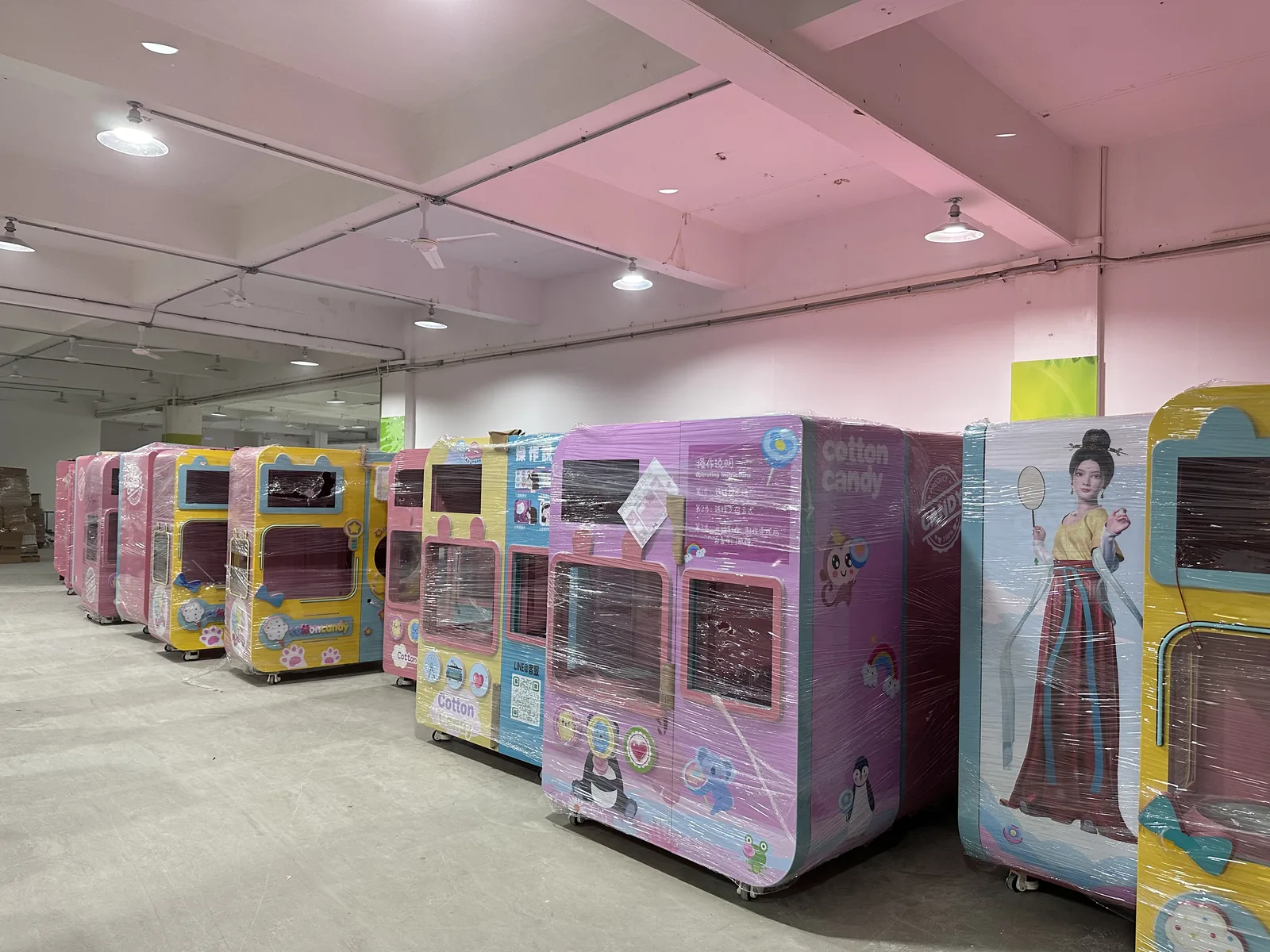
Это самое ясное, что я могу сказать вам о 2026 годе. Коробка замедляется. Кухня, холодильник и маленький автомат, который на глазах у толпы делает сахарную вату, — они ускоряются. Если вы хотите расти, идите туда, где скорость.