I spent an afternoon with an operator who runs two glass engraving machines on a boardwalk gift strip. We will call him Marco, because he asked me not to use his real name. What he told me changed how I think about this machine. It is not a vending machine in the usual sense. It is a tiny piece of live theater, and the audience pays to watch the show.
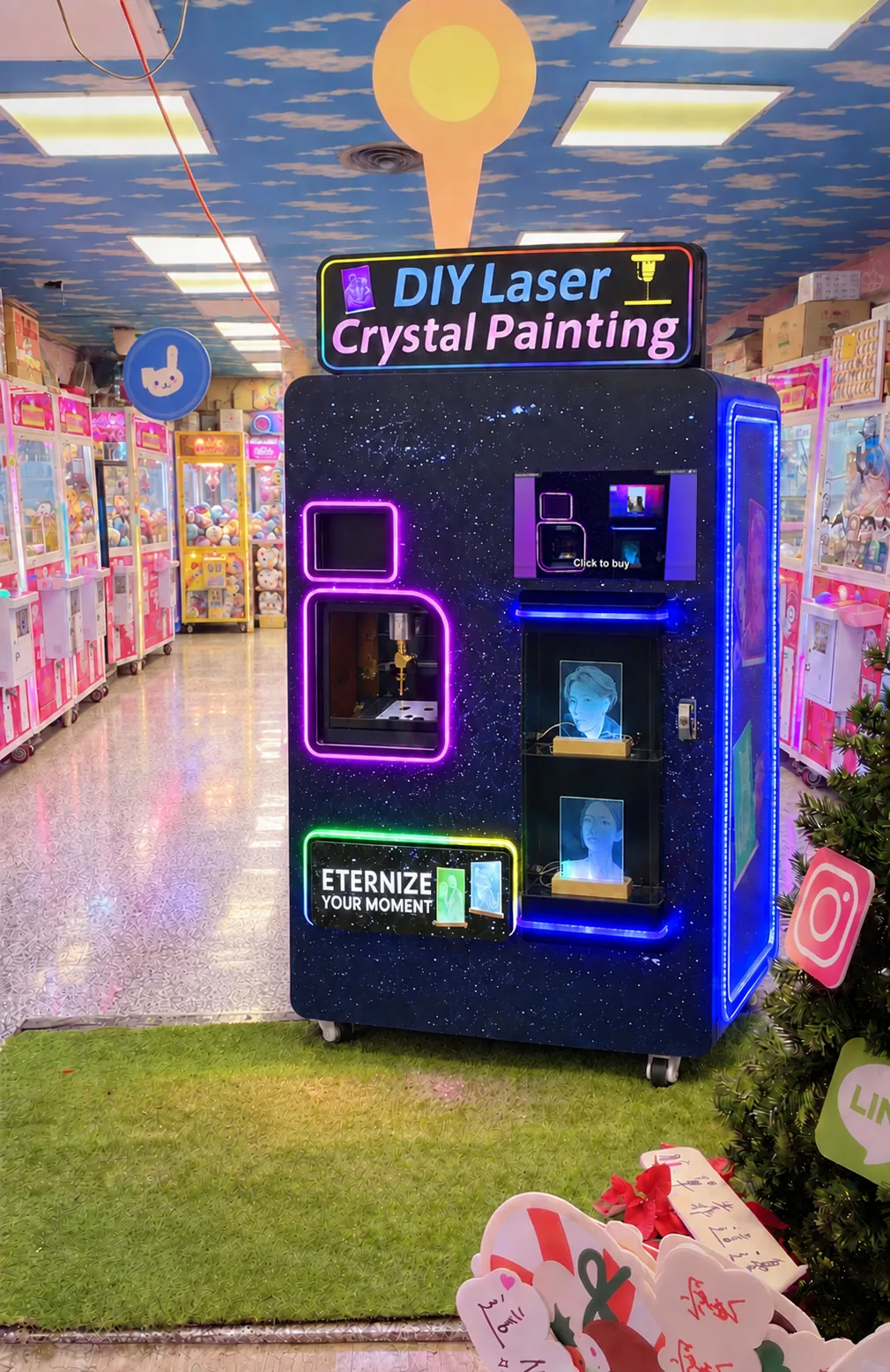
Marco is not a tech person. He ran a small souvenir stall for years, selling the same keychains and fridge magnets as everyone else on the block. When a supplier told him to look at a glass engraving machine, he laughed. A machine that etches photos onto glass, sitting in a gift shop, seemed like a gimmick. He bought one anyway, mostly to fill a dead corner near the window.
The first two weeks were quiet
For the first two weeks the machine mostly sat there, powered on, with a looping demo. People glanced at it and kept walking. Marco told me he nearly wrote it off as a bad decision. Then a grandmother stopped with two kids. She asked if the machine could put a photo of the three of them onto a small glass block. Marco said yes, took the photo, and started the job.
That is when he noticed something. The kids did not look at their phones. They watched the laser move across the glass, the image appearing line by line. The grandmother watched too. When it finished and Marco handed her the block, she held it up to the light. Marco says she teared up, just a little. That single sale taught him the real product was not the glass. The real product was the sixty seconds people spent watching their memory get made.
Customers kept asking the wrong question
Over the next month the same question came up again and again. Is this the thing where you put a photo inside a crystal cube? Marco had to learn how to answer it, because the answer matters. The machines Red Rabbit builds do surface engraving on glass and acrylic. The image sits on the surface of the material, etched in fine detail, catching the light. It is not a photo suspended inside a clear block. Both look good, but they are different processes, and surface engraving is what makes a walk-up machine practical. It is faster, it works on flat glass and acrylic, and it lets a customer watch the whole thing happen.
Once Marco understood the difference, it became his best selling tool. Instead of dodging the question, he leaned into it. He would say, watch this, and run a small demo. The live process sold more finished pieces than any poster or price list ever did.
If you want to see what these machines actually do, the details are on the laser engraving vending machine page.
The wedding party that changed everything
The turning point came on a Saturday in the summer. A group of about ten people, dressed for a wedding, walked past his stall. One of them spotted the demo and asked if Marco could engrave a photo of the couple onto a glass panel as a gift. Marco did one. Then two more people in the party wanted one. Then a fourth. By the end of the hour he had done a small stack of them, each with a slightly different photo.
That afternoon taught Marco to think in occasions, not in single customers. Engraving is not an impulse snack you buy alone. It is a gift, a keepsake, a memory made solid. Weddings, anniversaries, graduations, new babies, a family trip to the coast. Each one is a reason to stop and pay a little more. He started asking one simple question at the till: is this for a gift or for yourself? The answer changed how he framed the sale.
He also learned that location does half the work. A glass engraving machine earns its keep where people already feel sentimental. Boardwalks, tourist piers, wedding venues, holiday parks, anywhere a visitor wants to take a piece of the place home. Put the same machine in a quiet suburb with no foot traffic and it will underperform. This is not a machine that creates a crowd. It converts a crowd that already exists.
Nobody buys an engraved glass because it is cheap. They buy it because it is theirs. The machine just has to be fast enough to keep them from walking away.
The daily rhythm is simpler than people expect
Marco was worried about maintenance before he started. He assumed a laser meant constant fiddling and safety paperwork. It turned out to be the calmest machine he owns. His routine is short. Clean the glass bed at the start of the day. Check that the ventilation is clear and the machine is level. Wipe the lens gently and test one engraving before opening. At the end of the day he powers down and covers the unit.
He is careful about one thing, and he told me to put it in writing. Lasers demand respect, not fear. He keeps the cover in place while the machine runs, he never looks directly at the beam, and he keeps the area clear of anything reflective. The safety basics are the same ones you will find in the OSHA guidance on laser hazards. They are short and they matter. Most of what people call maintenance is just keeping the glass clean and the lens free of dust.
The numbers matter less than the moment
Marco keeps it simple on pricing. He does not chase the lowest price in town, because a customer who wants a memory is not comparison shopping. He prices by occasion and by location, a little more on a holiday weekend, a little less on a slow Tuesday. He does not publish a big spreadsheet. What he tracks is how many people stop to watch, because the watchers become buyers more often than the passers-by.
The exact machine price, the per-piece material cost, the payback math, all of that changes with your location and your volume, and it is the kind of thing you settle with a supplier once you know your traffic. What does not change is the core of the business. People carry phones full of photos. A machine that turns one of those photos into something they can hold, in sixty seconds, while they watch, is a product that sells itself to the right crowd.
What Marco would do differently
I asked him what he would change if he started over. His answer came fast. He would build a gallery of finished pieces before day one, a small shelf of engraved samples showing photos, names, dates, and a few dog portraits. He would not hide the etching process behind a counter. He would put the machine where people can watch it work. And he would stop thinking of it as a vending machine and start thinking of it as a keepsake counter that happens to run itself.
He would also lean on the supplier more. When he hit a snag with acrylic settings early on, he spent a week guessing instead of calling. One call to Red Rabbit sorted it in a few minutes. That is the kind of thing that feels obvious in hindsight and costs real money in the moment.
The machines themselves, the materials, the settings, the support, they are all details you can check before you spend a dollar. Start with the laser engraving machine page to see the current line, or reach out through the página de contacto with your location and a rough idea of your foot traffic. Marco’s whole business started with one machine in a dead corner. It ends, for now, with two machines and a waitlist on summer weekends.
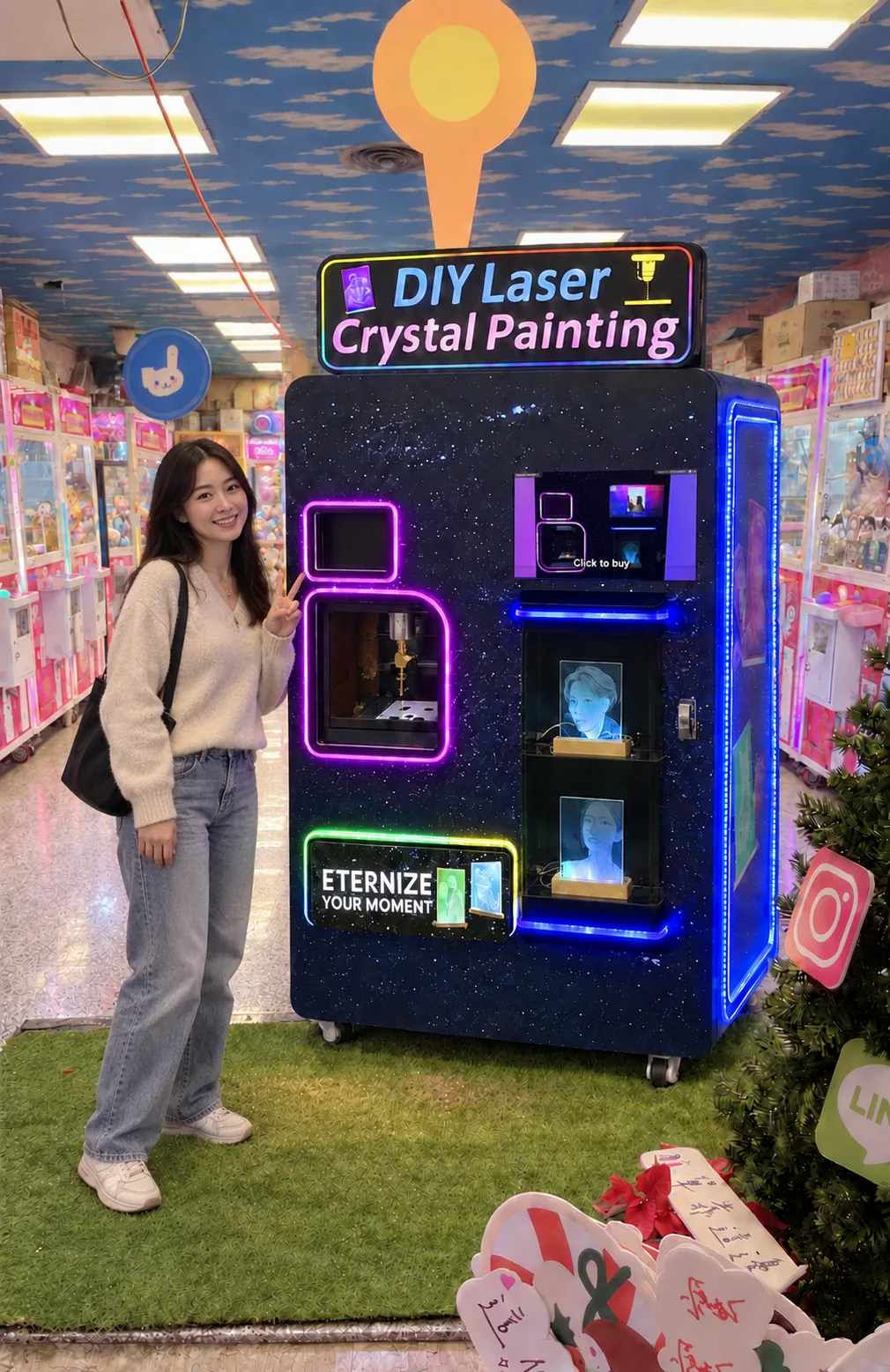
Related machines from Red Rabbit
Máquina de venda automática Red Rabbit | Máquina de venda automática Red Rabbit | Máquina de venda automática Red Rabbit